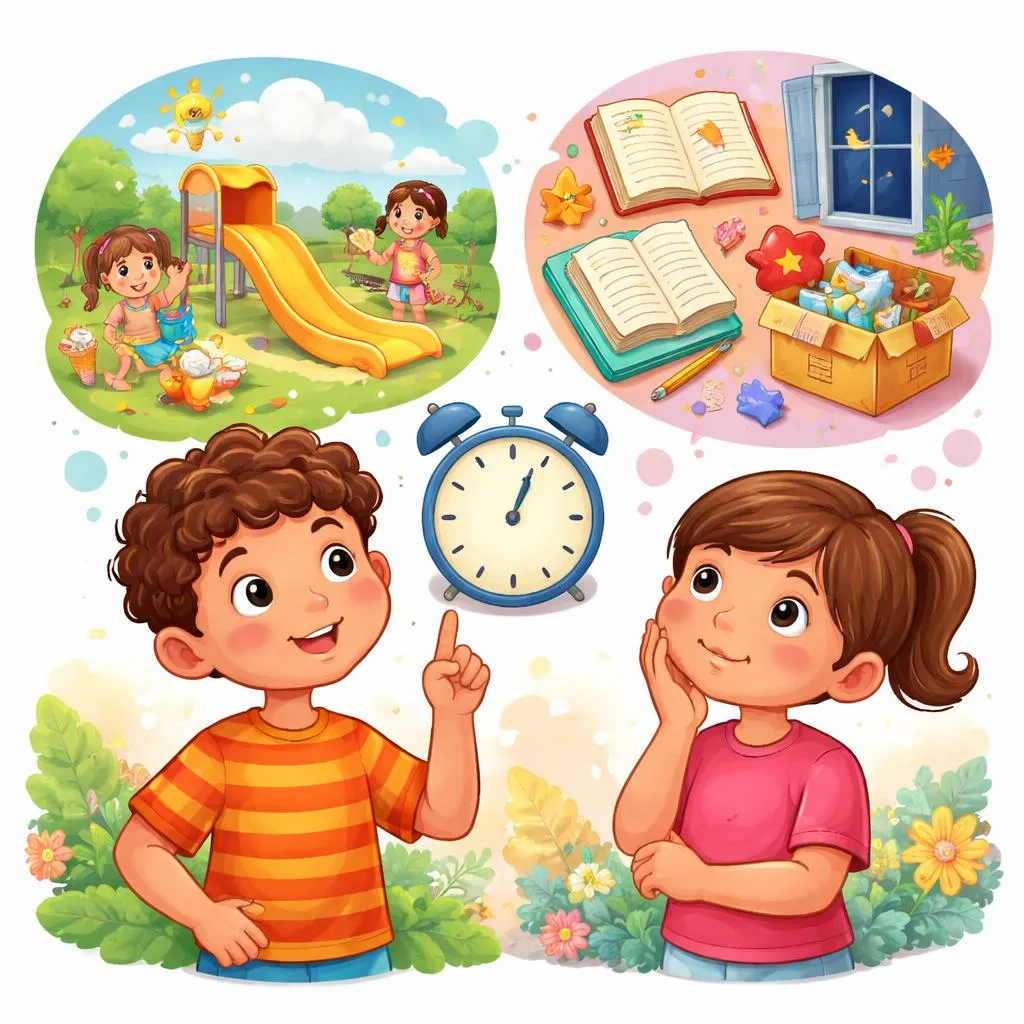

Fun Introduction
Last Saturday, Mia and Leo planned a backyard adventure. Mia said she would climb the oak tree then to explore the branches. Leo replied he would build a fort later to hide his treasures. Both felt excited about their plans. Mia pictured herself high above. Leo imagined secret compartments. Dad listened nearby. He smiled and explained the difference. Then means immediately after. Later means some time after. Mia understood now. She skipped to the kitchen happily.
Mia loved the idea of instant action. The tree waited outside. Leo preferred delayed fun. Dad nodded slowly. He said then is like a quick jump. Later is like a slow walk. Mia felt clever. She started planning her own day.
Word Breakdown
Core Principle
We reject boring dictionary definitions. We use pictures in your mind. We add functions and memory hooks. This helps you remember forever.
Then To Do
Image: Imagine being then to eat your sandwich. You take a bite right after opening it. That is then to do. It means doing something immediately after.
Function: It is for actions that follow directly. Like then to run outside after the bell. Or then to wash hands after playing.
Sensory Description: You hear a quick command. You feel your body move fast. Your feet start stepping.
Memory Anchor: A child jumping at a starting signal. See the instant motion? That is then to do.
Later To Do
Image: Think of being later to clean your room. You finish playing first. That is later to do. It means doing something some time after.
Function: It is for actions delayed on purpose. Like later to call your friend. Or later to feed the cat.
Sensory Description: You hear a reminder alarm. You feel relaxed waiting. Your hands stay busy elsewhere.
Memory Anchor: A child setting a reminder note. See the planned delay? That is later to do.
Advanced Comparison
Then is immediate and connected. Later is delayed and separate. Then links actions tightly. Later creates space between. Use then for direct sequences. Use later for flexible timing.
Scene Comparison
Scene One happens at school. Mia is then to line up after the bell. She walks straight to the door. Teacher counts students. This is then to do—immediate following.
Scene Two takes place at home. Leo is later to do his homework. He plays video games first. Mom reminds him twice. This is later to do—delayed action.
Scene Three occurs at the park. Ben is then to chase the ball. It rolls near the fence. Mia is later to push the swing. She waits for her turn. Notice the shift. Then is automatic response. Later is chosen postponement.
Pitfalls Deep Reminder
Mistake One: Saying "I later to eat my ice cream now." Why wrong? Later means delaying. Eating now is immediate. Funny result? You put the ice cream back. Correct phrase: I then to eat my ice cream now. Memory trick: Later needs waiting time.
Mistake Two: Saying "I then to clean my room tomorrow." Why wrong? Then means immediate. Tomorrow is delayed. Funny result? You start cleaning right away. Correct phrase: I later to clean my room tomorrow. Memory trick: Then is for now.
Mistake Three: Saying "I later to answer the phone ringing." Why wrong? Phone needs immediate answer. Later is too slow. Funny result? You let it ring out. Correct phrase: I then to answer the phone. Memory trick: Then is for urgent responses.
Mistake Four: Saying "I then to visit grandma next week." Why wrong? Next week is future. Then is for immediate. Funny result? You pack bags instantly. Correct phrase: I later to visit grandma next week. Memory trick: Later is for scheduled delays.
Interactive Exercises
Mini Dialogue
A: I am then to grab my backpack. B: Rush before the bus leaves. A: I am later to practice piano. B: Finish your snack first.
Mini Theater
A: (Whispering) The bell rings then to me. B: Stand up straight away. A: (Nodding) My chore is later to me. B: Set a timer for after lunch.
Spot The Mistake
Which sentence sounds odd? Explain why.
I was later to catch the falling book. Catching needs immediate action. Use then instead.
I was then to go shopping next month. Shopping is delayed. Use later instead.
I was later to help my friend now. Helping now is immediate. Use then instead.
Create Sentences
Use both phrases.
Then to do: I am then to close the door behind me. Later to do: I am later to walk the dog after dinner.
Bonus Challenge
The fire alarm sounds. Then or later? Answer: Then. Immediate action required.
Rhyme Time
Then is now, later is wait. One acts fast, one comes late. Bell rings? Then, go. Chore planned? Later, slow.
Homework Task
Pick one activity. Complete it this week. Share with family.
Option One: Observation Journal. Get a small notebook. Draw three pictures. Write a sentence under each.
Picture One: You feel then. Sentence: I was then to put on shoes after socks. Picture Two: You feel later. Sentence: I was later to read before bedtime. Picture Three: You feel then. Sentence: I was then to wash hands after painting.
Show your journal to a parent. Explain the differences.
Option Two: Role Play. With a parent, act out moments. Use phrases correctly.
You: Mom, I am then to finish my juice. Parent: Drink it before we leave. You: Dad, I am later to organize my desk. Parent: Do it after your game.
Practice until it feels natural.
Option Three: Sharing Time. Tomorrow at school, tell a friend. Describe one then and one later. Say: Yesterday I was then to raise my hand. I was later to start my project. Ask your friend about theirs.
Life Practice
Week Challenge: Try one task. Complete within seven days. Share your success.
Task One: Observation Log. For three days, note then and later moments. Draw icons.
Day One: Then moment. Draw a lightning bolt. Day Two: Later moment. Draw a clock. Day Three: Then moment. Draw an arrow.
Show your log to your teacher. Place it on the classroom wall.
Task Two: Action Demo. Use both phrases in real actions.
Step One: Show then by responding instantly. Say: I am then to do this. Step Two: Show later by setting a reminder. Say: I am later to do that.
Demonstrate to a sibling. Explain the difference.
Task Three: Social Mission. Use phrases with others.
Feel then to help a friend. Say: I am then to share my crayons. Feel later to help a friend. Say: I am later to help you move boxes.
Record a short voice message. Send it to your teacher.
Task Four: Creative Story. Write a short tale. Include both phrases.
Title: The Double Plan.
Story: I was then to save the kitten from the tree. Then I was later to give it milk. Both made me happy.
Share your story in class.
Remember, practice makes perfect. Use these phrases often. Soon they will feel easy.