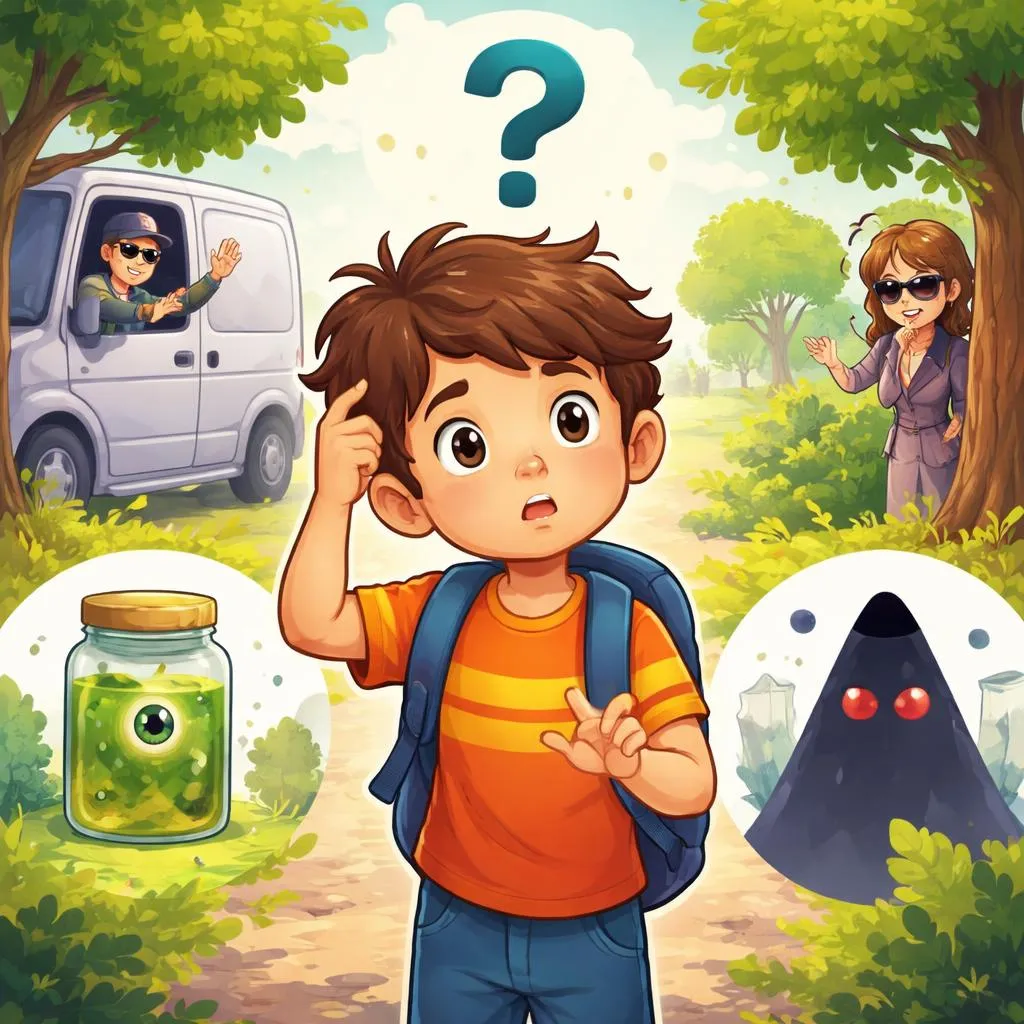

Fun Introduction
Last rainy afternoon, Mia and Leo explored the attic. Mia found an old brass key. It was unknown to her what it opened. Leo discovered a dusty music box. It played a strange to him melody. Both felt curious and puzzled. Mia turned the key in her hand. Leo wound the box slowly. Dad watched them from the ladder. He smiled and explained the difference. Unknown means no one told you about it. Strange means it feels weird or unusual. Mia understood now. She skipped downstairs.
Mia felt the key's cool ridges. It looked mysterious. Leo listened to the tinkling tune. Dad nodded slowly. He said unknown is like a secret map. Strange is like a purple banana. Mia felt clever. She started imagining treasures.
Word Breakdown
Core Principle
We reject boring dictionary definitions. We use pictures in your mind. We add functions and memory hooks. This helps you remember forever.
Unknown To Do
Image: Imagine being unknown to find a hidden door. You never heard about it before. That is unknown to do. It means lacking information.
Function: It is for things you have not learned. Like unknown to name the new kid. Or unknown to solve the riddle.
Sensory Description: You hear a puzzled hum. You feel your brow furrow. Your eyes blink in confusion.
Memory Anchor: A child shrugging at a locked chest. See the question mark? That is unknown to open.
Strange To Do
Image: Think of being strange to taste a green cookie. It looks weird and unnatural. That is strange to do. It means feeling odd or unfamiliar.
Function: It is for things that feel unusual. Like strange to wear socks on ears. Or strange to hear a cat meow backwards.
Sensory Description: You hear a giggle of disbelief. You feel your nose wrinkle. Your tongue touches something odd.
Memory Anchor: A child poking a purple cookie. See the disgusted face? That is strange to taste.
Advanced Comparison
Unknown is about missing facts. Strange is about odd feelings. Unknown means you lack knowledge. Strange means you feel weird. Use unknown when you do not know. Use strange when it feels bizarre.
Scene Comparison
Scene One happens at school. Mia is unknown to spell the new word. Teacher writes it on the board. She stares blankly. This is unknown to do—missing information.
Scene Two takes place at home. Leo is strange to wear his sister's dress. It feels funny and wrong. Mom laughs gently. This is strange to do—feeling odd.
Scene Three occurs at the park. Ben is unknown to play the new game. No one taught him the rules. Mia is strange to hear the rusty swing squeak. It sounds like a ghost. Notice the shift. Unknown involves facts. Strange involves feelings.
Pitfalls Deep Reminder
Mistake One is saying “I was strange to meet the president.” Why wrong? Strange means feeling weird. Meeting president is unknown to you. Funny result? You think the president looks like a purple alien. Correct phrase is I was unknown to meet him. Memory trick: Unknown is new.
Mistake Two is saying “I was unknown to eat broccoli.” Why wrong? Unknown means lacking info. Broccoli tastes strange to you. Funny result? You think broccoli is a secret spy. Correct phrase is I was strange to eat it. Memory trick: Strange feels weird.
Mistake Three is saying “I was strange to learn multiplication.” Why wrong? Strange means feeling odd. Learning is unknown to you. Funny result? You think math is a purple monster. Correct phrase is I was unknown to learn it. Memory trick: Unknown is not taught.
Mistake Four is saying “I was unknown to hear the loud thunder.” Why wrong? Unknown means lacking info. Thunder sounds strange to you. Funny result? You think thunder is a secret code. Correct phrase is I was strange to hear it. Memory trick: Strange feels odd.
Interactive Exercises
Mini Dialogue
A: I am unknown to find the hidden page. B: Have you checked the index? A: No, it is strange to see no numbers. B: Let us ask the librarian.
Mini Theater
A: (Whispering) This room is unknown to me. B: Really? It is strange to see pink walls. A: Everything feels upside down. B: Even the chairs are floating.
Spot the Mistake
Which sentence sounds odd? Explain why.
I was strange to visit Paris. Visiting Paris is unknown to you. Use unknown instead.
I was unknown to taste the sour candy. Tasting candy is strange. Use strange instead.
I was strange to read the ancient book. Reading book is unknown. Use unknown instead.
Create Sentences
Use both phrases.
Unknown to do: I am unknown to speak French. Strange to do: I am strange to wear a hat.
Bonus Challenge
You see a cat with six legs. Do you feel unknown or strange? Answer: Strange. It feels weird.
Rhyme Time
Unknown lacks, strange feels. One misses facts, the other reels. No info? Unknown, blank. Odd vibe? Strange, rank.
Homework Task
Pick one activity. Complete it this week. Share with family.
Option One: Observation Journal. Get a small notebook. Draw three pictures. Write a sentence under each.
Picture One: You feel unknown. Sentence: I was unknown to name the star. Picture Two: You feel strange. Sentence: I was strange to hear the echo. Picture Three: You feel unknown. Sentence: I was unknown to play chess.
Show your journal to a parent. Explain the differences.
Option Two: Role Play. With a parent, act out moments. Use phrases correctly.
You: Mom, I am unknown to fix this toy. Parent: Let us read the manual. You: Dad, I am strange to wear this tie. Parent: It feels funny, right?
Practice until it feels natural.
Option Three: Sharing Time. Tomorrow at school, tell a friend. Describe one unknown and one strange. Say: Yesterday I was unknown to solve the puzzle. I was strange to see the giant bug. Ask your friend about theirs.
Life Practice
Week Challenge: Try one task. Complete within seven days. Share your success.
Task One: Observation Log. For three days, note unknown and strange moments. Draw icons.
Day One: Unknown moment. Draw a question mark. Day Two: Strange moment. Draw a wonky shape. Day Three: Unknown moment. Draw a locked door.
Show your log to your teacher. Place it on the classroom wall.
Task Two: Action Demo. Use both phrases in real actions.
Step One: Show unknown with a shrug. Say: I am unknown to do this. Step Two: Show strange with a grimace. Say: I am strange to do that.
Demonstrate to a sibling. Explain the difference.
Task Three: Social Mission. Use phrases with others.
Feel unknown to help a friend. Say: I am unknown to explain this. Feel strange to help a friend. Say: I am strange to try your game.
Record a short voice message. Send it to your teacher.
Task Four: Creative Story. Write a short tale. Include both phrases.
Title: The Purple Key.
Story: I was unknown to find the purple key. Then I was strange to unlock the tiny door. A mouse bowed low.
Share your story in class.
Remember, practice makes perfect. Use these phrases often. Soon they will feel easy.