
Fun Introduction
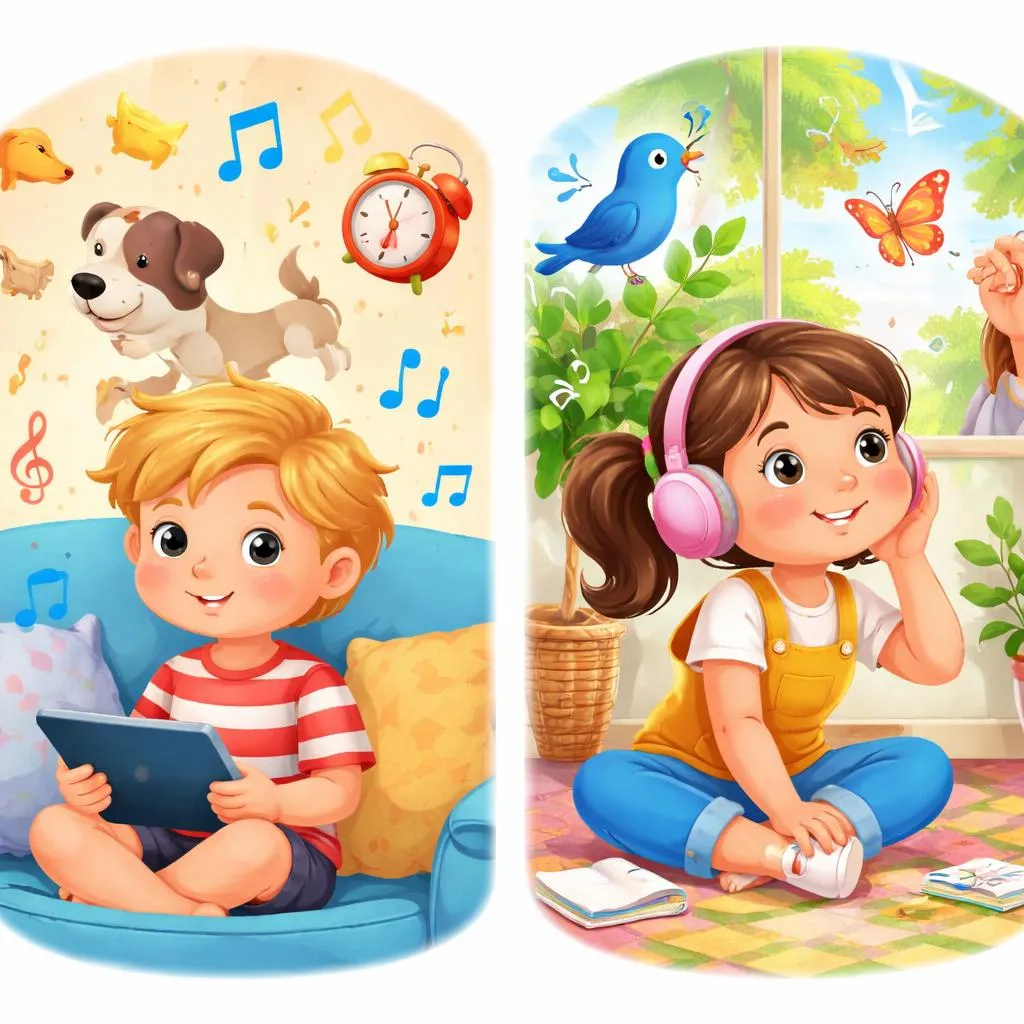
Last Monday, Mia and Leo sat in the classroom. The teacher spoke about dinosaurs. Mia heard a bird chirping outside. She smiled and looked away. She said she was hearing to enjoy the bird. Leo leaned forward in his chair. He wrote notes about dinosaurs. He said he was listening to learn facts. Both used ears. Mia heard without trying. Leo listened with full focus. Dad watched them later. He explained the big difference. Hearing happens naturally. Listening takes effort. Mia understood now. She skipped to tell Leo.
Mia felt happy hearing birds. Her ears caught soft sounds. Leo felt smart learning facts. Dad nodded slowly. He said hearing is like wind blowing. Listening is like a magnet pulling. Mia felt clever. She started planning her own sound chart.
Word Breakdown
Core Principle
We reject boring dictionary definitions. We use pictures in your mind. We add functions and memory hooks. This helps you remember forever.
Hearing To Do
Image: Imagine being hearing to catch a dog bark. You sit and relax. That is hearing to do. It means doing something with automatic ears.
Function: It is for actions with passive receiving. Like hearing to notice a noise. Or hearing to enjoy music.
Sensory Description: You feel sounds enter your ears. You hear without moving. Your body stays still and calm.
Memory Anchor: A child with hands behind head relaxing. See the peaceful face? That is hearing to do.
Listening To Do
Image: Think of being listening to follow instructions. You lean in close. That is listening to do. It means doing something with active attention.
Function: It is for actions with focused understanding. Like listening to learn math. Or listening to help a friend.
Sensory Description: You feel your brain work hard. You hear every word clearly. Your eyes stay fixed on the speaker.
Memory Anchor: A child with pencil and paper taking notes. See the serious eyes? That is listening to do.
Advanced Comparison
Hearing is automatic and effortless. Listening is intentional and hard. Hearing lets sounds pass by. Listening grabs meaning. Use hearing for background noise. Use listening for important talks.
Scene Comparison
Scene One happens at home. Mia is hearing the dishwasher hum. She reads a book nearby. She says I am hearing to know it is working. This is hearing to do—passive sound.
Scene Two takes place at school. Leo is listening to the teacher explain fractions. He nods and asks questions. He says I am listening to understand numbers. This is listening to do—active focus.
Scene Three occurs at the park. Ben is hearing kids laugh on swings. He walks past eating ice cream. Mia is listening to her coach teach soccer drills. She practices each move. Notice the shift. Hearing is relaxed. Listening is engaged.
Guide Summary
Hearing is like a gentle breeze. Listening is like a spotlight. Choose hearing to notice sounds. Choose listening to gain knowledge.
Pitfalls Deep Reminder
Mistake One
Saying I listening to the alarm clock ring. Why wrong? Alarm rings automatically. You hear it without trying. Funny result? Family thinks you are studying clocks. Correct phrase: I hearing to the alarm clock ring. Memory trick: Automatic sounds need hearing.
Mistake Two
Saying I hearing to my mom give directions. Why wrong? Directions need careful listening. Hearing is too careless. Funny result? You get lost on the way. Correct phrase: I listening to my mom give directions. Memory trick: Important info needs listening.
Mistake Three
Saying I listening to rain fall outside. Why wrong? Rain is background noise. You hear it naturally. Funny result? Friends think you are analyzing drops. Correct phrase: I hearing to rain fall outside. Memory trick: Nature sounds need hearing.
Mistake Four
Saying I hearing to the story in class. Why wrong? Story needs listening for plot. Hearing misses details. Funny result? You cannot answer questions. Correct phrase: I listening to the story in class. Memory trick: Learning needs listening.
Interactive Exercises
Mini Dialogue
A: I am hearing to enjoy the wind chimes. B: They sound like tiny bells. A: I am listening to learn the guitar chords. B: Practice the G chord slowly.
Mini Theater
A: (Relaxing on couch) I am hearing the neighbors talk. B: Their voices are muffled through walls. A: (Leaning forward) I am listening to my coach explain plays. B: Repeat the play back to me.
Spot The Mistake
Which sentence sounds odd? Explain why.
I was listening to the thunder boom. Thunder is heard automatically. Use hearing instead.
I was hearing to the safety rules. Rules need listening. Use listening instead.
I was listening to the bees buzz. Bees buzz naturally. Use hearing instead.
Create Sentences
Use both phrases.
Hearing to do: I am hearing to catch the ice cream truck song. Listening to do: I am listening to follow the recipe steps.
Bonus Challenge
You hear your name called. Hearing or listening? Answer: Listening. You focus on it.
Summary Rhyme
Hearing flows, listening stays. One plays, one obeys. Background noise? Hearing, light. Full attention? Listening, right.
Homework Task
Option One
Observation Journal. Get a small notebook. Draw three pictures. Write a sentence under each.
Picture One: You feel hearing. Sentence: I was hearing cars drive by my house. Picture Two: You feel listening. Sentence: I was listening to my teacher read aloud. Picture Three: You feel hearing. Sentence: I was hearing my sister sing in the shower.
Show your journal to a parent. Explain the differences.
Option Two
Role Play. With a parent, act out moments. Use phrases correctly.
You: Mom, I am hearing to the timer ding. Parent: The cookies are ready. You: Dad, I am listening to your advice about biking. Parent: Always wear your helmet.
Practice until it feels natural.
Option Three
Sharing Time. Tomorrow at school, tell a friend. Describe one hearing and one listening. Say: Yesterday I was hearing the bell ring. I was listening to my friend tell a story. Ask your friend about theirs.
Life Practice
Week Challenge
Try one task. Complete within seven days. Share your success.
Task One
Observation Log. For three days, note hearing and listening moments. Draw icons.
Day One: Hearing moment. Draw an ear with sound waves. Day Two: Listening moment. Draw an ear with a thinking bubble. Day Three: Hearing moment. Draw a child hearing a bird.
Show your log to your teacher. Place it on the classroom wall.
Task Two
Action Demo. Use both phrases in real actions.
Step One: Show hearing by reacting to a door slam. Say: I am hearing to do this. Step Two: Show listening by repeating a whispered message. Say: I am listening to do that.
Demonstrate to a sibling. Explain the difference.
Task Three
Social Mission. Use phrases with others.
Feel hearing to help a friend. Say: I am hearing to enjoy our laughter. Feel listening to help a friend. Say: I am listening to understand your problem.
Record a short voice message. Send it to your teacher.
Task Four
Creative Story. Write a short tale. Include both phrases.
Title: The Whispering Woods.
Story: I was hearing leaves rustle in the wind. Then I was listening to a fox call far away. Both sounds made the forest magical.
Share your story in class.
Remember, practice makes perfect. Use these phrases often. Soon they will feel easy.