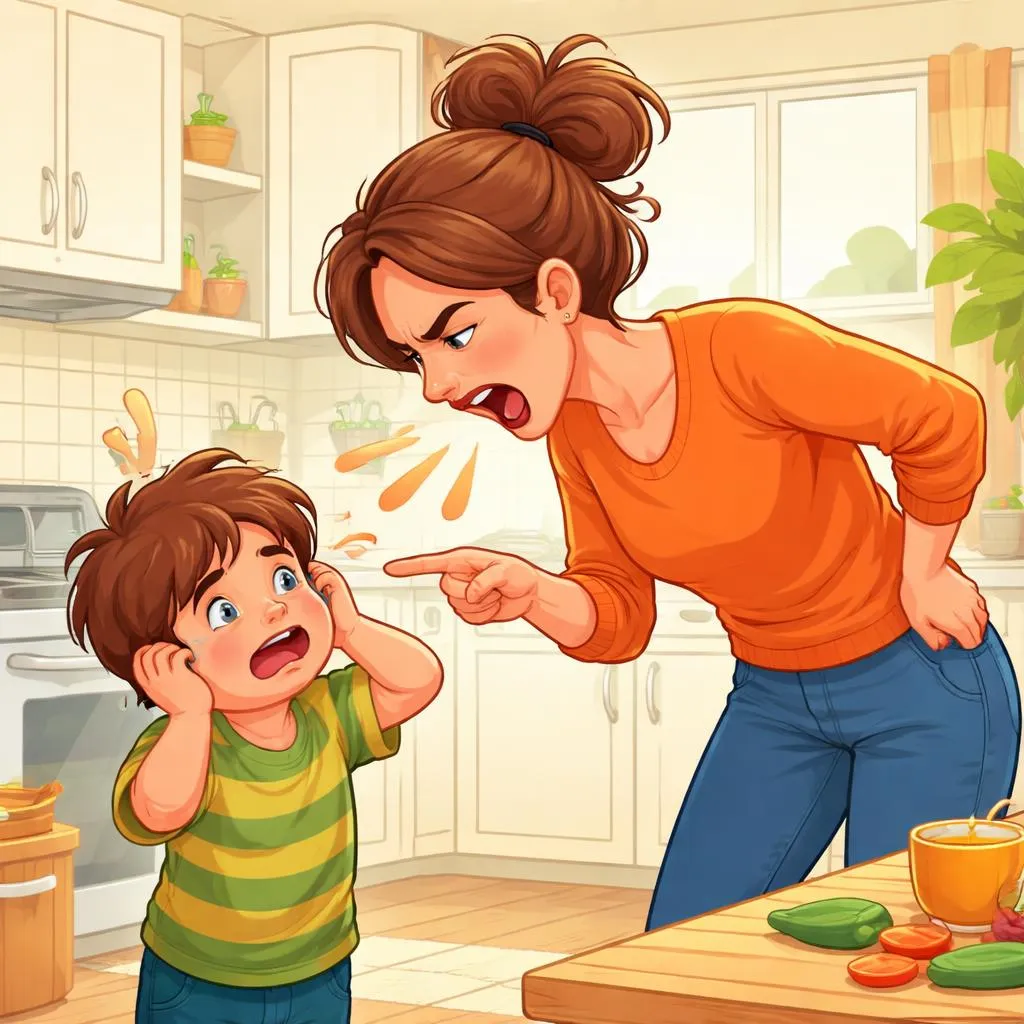

Fun Introduction
Last Saturday, Mia and Leo played soccer in the park. The ball flew over the fence. Mia ran to get it. She saw a big dog nearby. She shouted loudly to warn Leo. Leo kicked the ball high. He yelled happily when he scored. Both made big sounds. Mia used sharp loud calls. Leo used excited loud cheers. Dad watched them. He smiled and explained the difference. Shouting means calling with purpose. Yelling means expressing strong feelings. Mia understood now. She skipped to the water fountain happily.
Mia liked the urgent sound. Her voice carried far. Leo loved the joyful noise. Dad nodded slowly. He said shouting is like a fire alarm. Yelling is like a victory cheer. Mia felt clever. She started planning her own loud game.
Word Breakdown
Core Principle
We reject boring dictionary definitions. We use pictures in your mind. We add functions and memory hooks. This helps you remember forever.
Shouting To Do
Image: Imagine being shouting to call your friend. You push voice out strongly. That is shouting to do. It means doing something with loud purposeful sound.
Function: It is for actions with important messages. Like shouting to warn about danger. Or shouting to get attention.
Sensory Description: You feel chest vibrate. You hear sharp echoes. Your ears ring a little.
Memory Anchor: A child cupping hands around mouth. See the determined face? That is shouting to do.
Yelling To Do
Image: Think of being yelling to celebrate a goal. You let voice burst out wildly. That is yelling to do. It means doing something with loud emotional sound.
Function: It is for actions with strong feelings. Like yelling to show excitement. Or yelling to express frustration.
Sensory Description: You feel throat open wide. You hear rough loud noise. Your heart beats faster.
Memory Anchor: A child jumping with raised arms. See the wide open mouth? That is yelling to do.
Advanced Comparison
Shouting is controlled and purposeful. Yelling is wild and emotional. Shouting tells people something. Yelling shows how you feel. Use shouting for warnings. Use yelling for celebrations.
Scene Comparison
Scene One happens at the park. Mia is shouting to warn Leo about the dog. She stands tall and calls. Leo stops playing immediately. This is shouting to do—important message.
Scene Two takes place at the game. Leo is yelling to celebrate his goal. He jumps and screams. Friends join his loud cheer. This is yelling to do—pure excitement.
Scene Three occurs at home. Ben is shouting to ask for dinner. He calls from upstairs clearly. Mia is yelling because she lost her toy. She stomps and shouts angrily. Notice the shift. Shouting is informative. Yelling is expressive.
Pitfalls Deep Reminder
Mistake One: Saying "I yelling to tell my mom I am home." Why wrong? Telling needs clear shouting. Yelling sounds too emotional. Funny result? Mom thinks you are angry. Correct phrase: I shouting to tell my mom I am home. Memory trick: Messages get shouting.
Mistake Two: Saying "I shouting to cheer for my team." Why wrong? Cheering needs wild yelling. Shouting is too controlled. Funny result? Team thinks you are bored. Correct phrase: I yelling to cheer for my team. Memory trick: Celebrations get yelling.
Mistake Three: Saying "I yelling to ask for help with homework." Why wrong? Asking needs calm shouting. Yelling disturbs others. Funny result? Teacher thinks you are fighting. Correct phrase: I shouting to ask for help with homework. Memory trick: Requests get shouting.
Mistake Four: Saying "I shouting to show I am happy." Why wrong? Happiness needs loud yelling. Shouting seems too formal. Funny result? Friend thinks you are giving orders. Correct phrase: I yelling to show I am happy. Memory trick: Joy gets yelling.
Interactive Exercises
Mini Dialogue
A: I am shouting to call you for dinner. B: Coming downstairs right now. A: I am yelling to celebrate my new bike. B: Let us ride together fast.
Mini Theater
A: (Cupping hands) I am shouting to warn you about the hole. B: Thanks for telling me quickly. A: (Jumping up) I am yelling because I won the race. B: You are the champion today.
Spot The Mistake
Which sentence sounds odd? Explain why.
I was yelling to tell my dad I finished my chores. Chores need shouting. Use shouting instead.
I was shouting to scream on the roller coaster. Screaming needs yelling. Use yelling instead.
I was yelling to ask the teacher a question. Questions need shouting. Use shouting instead.
Create Sentences
Use both phrases.
Shouting to do: I am shouting to call my friend across the field. Yelling to do: I am yelling to show how excited I am.
Bonus Challenge
You see a friend about to step in a puddle. Shouting or yelling? Answer: Shouting. Important warning.
Rhyme Time
Shouting clear, yelling wild. One speaks mild, one goes wild. Voice projects? Shouting, far. Emotion erupts? Yelling, star.
Homework Task
Pick one activity. Complete it this week. Share with family.
Option One: Observation Journal. Get a small notebook. Draw three pictures. Write a sentence under each.
Picture One: You feel shouting. Sentence: I was shouting to tell my sister dinner is ready. Picture Two: You feel yelling. Sentence: I was yelling to celebrate my goal. Picture Three: You feel shouting. Sentence: I was shouting to ask for help.
Show your journal to a parent. Explain the differences.
Option Two: Role Play. With a parent, act out moments. Use phrases correctly.
You: Mom, I am shouting to tell you I am home. Parent: Good job calling clearly. You: Dad, I am yelling because I am so happy. Parent: Your joy is wonderful to hear.
Practice until it feels natural.
Option Three: Sharing Time. Tomorrow at school, tell a friend. Describe one shouting and one yelling. Say: Yesterday I was shouting to warn my friend. I was yelling to cheer for my team. Ask your friend about theirs.
Life Practice
Week Challenge: Try one task. Complete within seven days. Share your success.
Task One: Observation Log. For three days, note shouting and yelling moments. Draw icons.
Day One: Shouting moment. Draw a child calling with hands. Day Two: Yelling moment. Draw a child jumping and screaming. Day Three: Shouting moment. Draw a child giving a clear command.
Show your log to your teacher. Place it on the classroom wall.
Task Two: Action Demo. Use both phrases in real actions.
Step One: Show shouting by cupping hands and projecting voice. Say: I am shouting to do this. Step Two: Show yelling by jumping and bursting voice. Say: I am yelling to do that.
Demonstrate to a sibling. Explain the difference.
Task Three: Social Mission. Use phrases with others.
Feel shouting to help a friend. Say: I am shouting to warn you about the step. Feel yelling to help a friend. Say: I am yelling to celebrate your success.
Record a short voice message. Send it to your teacher.
Task Four: Creative Story. Write a short tale. Include both phrases.
Title: The Soccer Match.
Story: I was shouting to tell my teammate to pass. Then I was yelling when we won. Both made the game exciting.
Share your story in class.
Remember, practice makes perfect. Use these phrases often. Soon they will feel easy.