
Fun Introduction
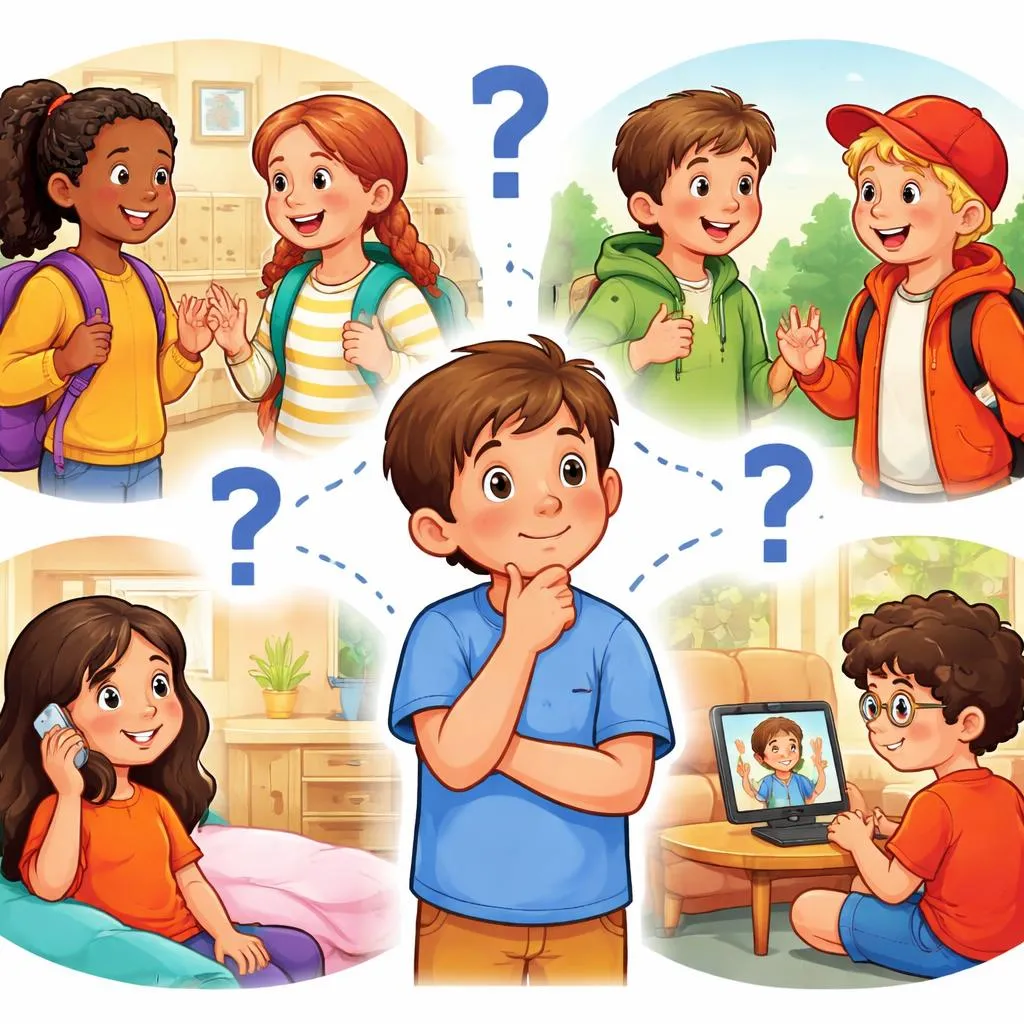
Last Monday, Mia and Leo walked to school. They saw their teacher near the gate. Mia stopped and spoke clearly. She told her teacher about the weekend. She said she was talking to give a report. Leo ran to his friend Ben. He laughed and shared a joke. He said he was chatting to have fun. Both used words to connect. Mia stood straight and formal. Leo leaned in and relaxed. Teacher Ms. Green smiled at them. She explained the big difference. Talking means sharing important news. Chatting means enjoying friendly talk. Mia understood quickly. She skipped to her classroom happily.
Mia liked the clear purpose. Her voice sounded serious and strong. Leo liked the easy flow. Ms. Green nodded slowly. She said talking is like giving a news update. Chatting is like sharing a funny story. Mia felt clever. She started planning her own communication chart.
Word Breakdown
Core Principle
We reject boring dictionary definitions. We use pictures in your mind. We add functions and memory hooks. This helps you remember forever.
Talking To Do
Image: Imagine being talking to present your project. You stand tall and speak clearly. That is talking to do. It means doing something with important information.
Function: It is for actions with serious purpose. Like talking to explain rules. Or talking to ask for help.
Sensory Description: You hear clear steady words. You feel your posture straighten. Your eyes look directly.
Memory Anchor: A child standing at a podium. See the focused eyes? That is talking to do.
Chatting To Do
Image: Think of being chatting to share a laugh. You relax and lean in. That is chatting to do. It means doing something with friendly ease.
Function: It is for actions with casual joy. Like chatting to catch up. Or chatting to make plans.
Sensory Description: You hear soft flowing words. You feel shoulders relax. Your smile comes easily.
Memory Anchor: A child sitting with friends laughing. See the tilted head? That is chatting to do.
Advanced Comparison
Talking is formal and focused. Chatting is informal and flowing. Talking delivers messages. Chatting builds friendships. Use talking for reports. Use chatting for fun.
Scene Comparison
Scene One happens at school. Mia is talking to her teacher about grades. She stands in the office. Words are clear and direct. This is talking to do—serious business.
Scene Two takes place at recess. Leo is chatting with Ben about games. They sit on the bench. Words bounce with laughter. This is chatting to do—easy friendship.
Scene Three occurs at home. Ben is talking to his dad about homework. He explains the problems. Mia is chatting with mom about her day. She shares silly moments. Notice the shift. Talking is task-oriented. Chatting is relationship-oriented.
Guide Summary
Talking is like a news broadcast. Chatting is like a picnic chat. Choose talking when you need to inform. Choose chatting when you want to connect.
Pitfalls Deep Reminder
Mistake One
Saying "I chatting to give my book report." Why wrong? Reports need formal talking. Chatting is too casual. Funny result? Teacher thinks you are not prepared. Correct phrase: I talking to give my book report. Memory trick: Reports need talking.
Mistake Two
Saying "I talking to gossip with my friends." Why wrong? Gossip needs casual chatting. Talking is too stiff. Funny result? Friends feel uncomfortable. Correct phrase: I chatting to gossip with my friends. Memory trick: Gossip needs chatting.
Mistake Three
Saying "I chatting to ask the principal a question." Why wrong? Principals need respectful talking. Chatting seems disrespectful. Funny result? Principal thinks you are rude. Correct phrase: I talking to ask the principal a question. Memory trick: Authority needs talking.
Mistake Four
Saying "I talking to plan my birthday party." Why wrong? Planning with friends is chatting. Talking is too formal. Funny result? Friends lose excitement. Correct phrase: I chatting to plan my birthday party. Memory trick: Plans need chatting.
Interactive Exercises
Mini Dialogue
A: I am talking to tell you the rules. B: I will listen carefully. A: I am chatting to ask about your weekend. B: It was so much fun.
Mini Theater
A: (Standing straight) I am talking to explain the science project. B: What materials did you use? A: (Leaning in) I am chatting to share a funny thing. B: Tell me quickly.
Spot The Mistake
Which sentence sounds odd? Explain why.
I was chatting to accept my award. Awards need talking. Use talking instead.
I was talking to joke with my best friend. Jokes need chatting. Use chatting instead.
I was chatting to interview for the school play. Interviews need talking. Use talking instead.
Create Sentences
Use both phrases.
Talking to do: I am talking to remind you about the test. Chatting to do: I am chatting to ask about your new game.
Bonus Challenge
You need to tell your coach about an injury. Talking or chatting? Answer: Talking. Serious matter.
Summary Rhyme
Talking clear, chatting light. One sets right, one feels right. News shares? Talking, tall. Friends laugh? Chatting, small.
Homework Task
Option One
Observation Journal. Get a small notebook. Draw three pictures. Write a sentence under each.
Picture One: You feel talking. Sentence: I was talking to explain my project. Picture Two: You feel chatting. Sentence: I was chatting to laugh with my friend. Picture Three: You feel talking. Sentence: I was talking to ask for help.
Show your journal to a parent. Explain the differences.
Option Two
Role Play. With a parent, act out moments. Use phrases correctly.
You: Mom, I am talking to tell you about my grades. Parent: I am proud of your hard work. You: Dad, I am chatting to plan our weekend. Parent: Let us pick a fun activity.
Practice until it feels natural.
Option Three
Sharing Time. Tomorrow at school, tell a friend. Describe one talking and one chatting. Say: Yesterday I was talking to my teacher about math. I was chatting with my friend about soccer. Ask your friend about theirs.
Life Practice
Week Challenge
Try one task. Complete within seven days. Share your success.
Task One
Observation Log. For three days, note talking and chatting moments. Draw icons.
Day One: Talking moment. Draw a podium. Day Two: Chatting moment. Draw two friends laughing. Day Three: Talking moment. Draw a child explaining.
Show your log to your teacher. Place it on the classroom wall.
Task Two
Action Demo. Use both phrases in real actions.
Step One: Show talking by standing straight and speaking clearly. Say: I am talking to do this. Step Two: Show chatting by leaning in and smiling. Say: I am chatting to do that.
Demonstrate to a sibling. Explain the difference.
Task Three
Social Mission. Use phrases with others.
Feel talking to help a friend. Say: I am talking to explain the rules. Feel chatting to help a friend. Say: I am chatting to cheer you up.
Record a short voice message. Send it to your teacher.
Task Four
Creative Story. Write a short tale. Include both phrases.
Title: The School Day.
Story: I was talking to my teacher about my project. Then I was chatting with my friends at lunch. Both made the day good.
Share your story in class.
Remember, practice makes perfect. Use these phrases often. Soon they will feel easy.