
Fun Introduction
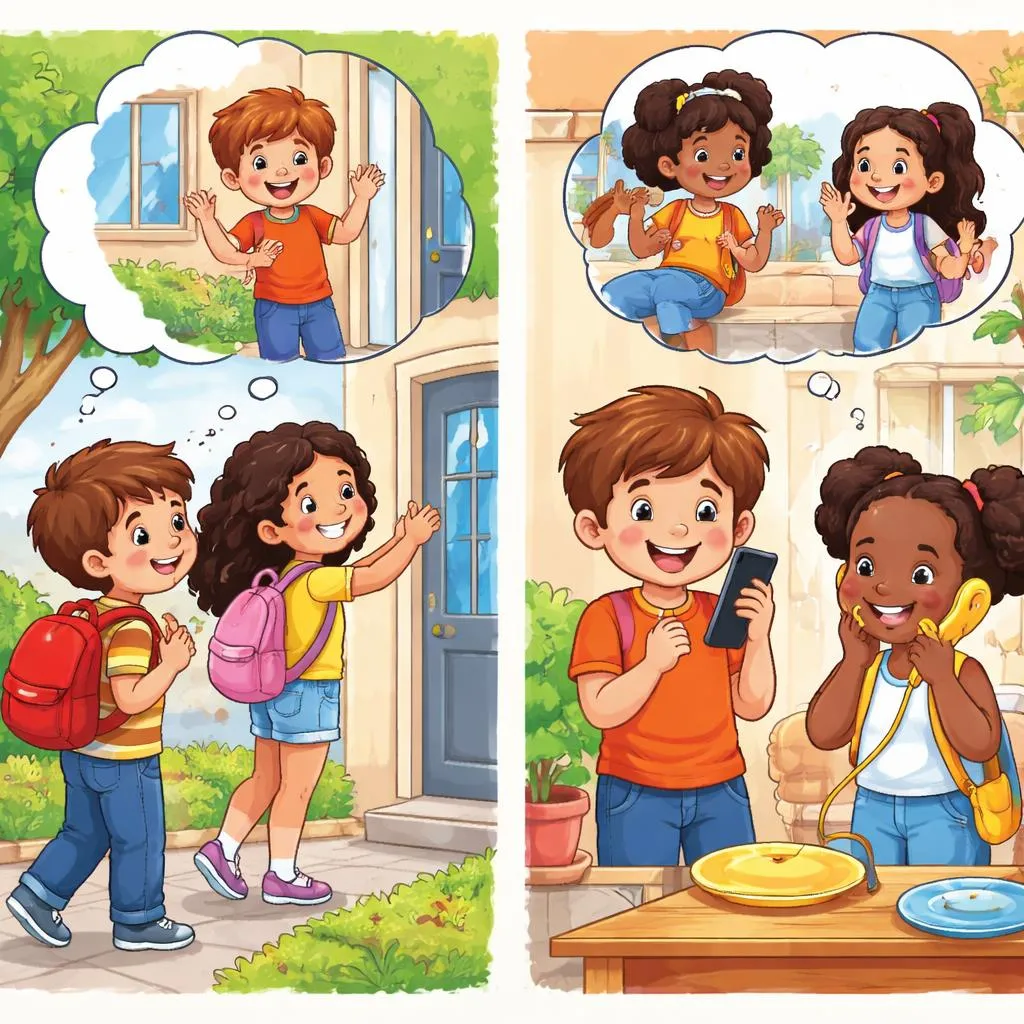
Last Sunday, Mia and Leo played in the neighborhood. Mia walked to Grandma's house. She brought fresh cookies and smiled. She said she was visiting to eat dumplings. Leo stopped by his sick classmate's home. He dropped off homework and waved. He said he was calling on to help a friend. Both involved going to see someone. Mia visited with a plan. Leo called on with a quick stop. Mom watched them. She explained the big difference. Visiting is planned and long. Calling on is short and helpful. Mia understood now. She skipped to the kitchen.
Mia felt excited about Grandma's hugs. Her nose smelled sweet dough. Leo felt kind and responsible. Mom nodded slowly. She said visiting is like a holiday trip. Calling on is like a quick errand. Mia felt clever. She started planning her own social chart. She drew a suitcase for visiting. She drew a small bag for calling on.
Later, they shared stories. Mia visited Grandma for hours. Leo called on three friends after school. Both were good. Mia liked long chats. Leo liked quick hellos. Mom smiled and said both matter. Visiting builds deep bonds. Calling on shows you care.
Word Breakdown
Core Principle
We reject boring dictionary definitions. We use pictures in your mind. We add functions and memory hooks. This helps you remember forever.
Visiting To Do
Image: Imagine being visiting to see your grandparents. You sit at their table. That is visiting to do. It means doing something with planned social time.
Function: It is for actions with dedicated purpose. Like visiting to play at a friend's house. Or visiting to see a museum.
Sensory Description: You feel warmth from hugs. You hear laughter and stories. Your hands hold gifts or treats.
Memory Anchor: A child sitting on a grandparent's lap. See the big smile? That is visiting to do.
Calling On To Do
Image: Think of being calling on a neighbor. You knock quickly and hand over a note. That is calling on to do. It means doing something with brief helpful intent.
Function: It is for actions with short stops. Like calling on to return a borrowed book. Or calling on to check on someone sick.
Sensory Description: You feel a quick heartbeat. You hear a short greeting. Your feet tap lightly on the porch.
Memory Anchor: A child handing a package to a neighbor. See the polite nod? That is calling on to do.
Advanced Comparison
Visiting is long and planned. Calling on is short and spontaneous. Visiting stays for hours. Calling on stays for minutes. Use visiting for special trips. Use calling on for quick favors. Visiting is like a feast. Calling on is like a snack.
Scene Comparison
Scene One happens on Saturday. Mia is visiting Grandma's house. She arrives with a big bag. She says I am visiting to eat her famous soup. This is visiting to do—planned social time. She helps roll dumplings. Grandma praises her skills.
Scene Two takes place after school. Leo is calling on his sick classmate. He rings the doorbell briefly. He says I am calling on to drop off homework. This is calling on to do—brief helpful stop. He waves and leaves. Classmate smiles through the window.
Scene Three occurs on a holiday. Ben is visiting his aunt in another town. He stays overnight and plays. Mia is calling on her teacher after class. She asks one quick question. Notice the shift. Visiting is immersive and lengthy. Calling on is efficient and brief. Ben enjoys breakfast with aunt. Mia returns to the playground quickly.
Guide Summary
Visiting is like a long storybook. Calling on is like a short poem. Choose visiting to spend quality time. Choose calling on to offer quick help. Both connect people nicely.
Pitfalls Deep Reminder
Mistake One
Saying I calling on to stay at Grandma's all weekend. Why wrong? Weekend stay needs visiting. Calling on is too brief. Funny result? You leave before dinner. Correct phrase: I visiting to stay at Grandma's all weekend. Memory trick: Long stays need visiting.
Mistake Two
Saying I visiting to drop off a library book. Why wrong? Book drop is quick calling on. Visiting is too much. Funny result? You sit for tea and miss the due date. Correct phrase: I calling on to drop off a library book. Memory trick: Quick stops need calling on.
Mistake Three
Saying I calling on to celebrate my birthday party. Why wrong? Party needs visiting guests. Calling on is too fleeting. Funny result? Guests wave and run. Correct phrase: I visiting to celebrate my birthday party. Memory trick: Celebrations need visiting.
Mistake Four
Saying I visiting to ask my teacher one question. Why wrong? One question needs calling on. Visiting is too formal. Funny result? Teacher cancels lunch. Correct phrase: I calling on to ask my teacher one question. Memory trick: Quick questions need calling on.
Mistake Five
Saying I calling on to explore the zoo with cousins. Why wrong? Zoo trip needs visiting. Calling on is too rushed. Funny result? You see only one animal. Correct phrase: I visiting to explore the zoo with cousins. Memory trick: Outings need visiting.
Mistake Six
Saying I visiting to return a pencil I borrowed. Why wrong? Pencil return is calling on. Visiting is unnecessary. Funny result? Friend thinks you moved in. Correct phrase: I calling on to return a pencil I borrowed. Memory trick: Small returns need calling on.
Interactive Exercises
Mini Dialogue
A: I am visiting to play video games with Tom. B: Beat the final boss for me. A: I am calling on to give Lily her lost hat. B: She will be happy to have it.
Mini Dialogue Two
A: I am visiting Grandpa to learn fishing tricks. B: Ask him about the big one that got away. A: I am calling on Mrs. Lee with cookies. B: She loves homemade treats.
Mini Theater
A: (Knocking loudly) I am visiting to stay all afternoon. B: Come in, we will bake cookies. A: (Handing a note) I am calling on to say get well soon. B: Thank you for thinking of me.
Mini Theater Two
A: (Sitting at table) I am visiting to hear your stories. B: Let me tell you about my youth. A: (Ringing bell) I am calling on to invite you to my party. B: I would love to come.
Spot The Mistake
Which sentence sounds odd? Explain why.
I was calling on to spend the night at my cousin's. Sleepover needs visiting. Use visiting instead.
I was visiting to return my friend's soccer ball. Ball return needs calling on. Use calling on instead.
I was calling on to tour the science museum. Museum tour needs visiting. Use visiting instead.
I was visiting to hand out flyers for the event. Flyers need calling on. Use calling on instead.
Create Sentences
Use both phrases.
Visiting to do: I am visiting to build a fort with my neighbor. Calling on to do: I am calling on to give my teacher an apple.
Visiting to do: I am visiting to see the new baby pandas. Calling on to do: I am calling on to return my library card.
Bonus Challenge
You go to a friend's house for a three-hour playdate. Visiting or calling on? Answer: Visiting. It is long.
Summary Rhyme
Visiting stays, calling on goes. One grows, one shows. Long time? Visiting, deep. Quick stop? Calling on, keep. Both help you build connections. Choose the right one for intentions.
Homework Task
Option One
Observation Journal. Get a small notebook. Draw three pictures. Write a sentence under each.
Picture One: You feel visiting. Sentence: I was visiting my aunt for her birthday. Picture Two: You feel calling on. Sentence: I was calling on my sick friend with soup. Picture Three: You feel visiting. Sentence: I was visiting the planetarium with class.
Show your journal to a parent. Explain the differences. Talk about how visiting felt special. Talk about how calling on felt helpful.
Option Two
Role Play. With a parent, act out moments. Use phrases correctly.
You: Mom, I am visiting to help you bake a pie. Parent: Peel the apples carefully. You: Dad, I am calling on to give you the mail. Parent: Thank you for bringing it.
Practice until it feels natural. Switch roles sometimes. Let parent visit you.
Option Three
Sharing Time. Tomorrow at school, tell a friend. Describe one visiting and one calling on. Say: Yesterday I was visiting my grandma. I was calling on a neighbor. Ask your friend about theirs. Listen carefully to their examples.
Life Practice
Week Challenge
Try one task. Complete within seven days. Share your success.
Task One
Observation Log. For three days, note visiting and calling on moments. Draw icons.
Day One: Visiting moment. Draw a child at a relative's house. Day Two: Calling on moment. Draw a child at a doorstep. Day Three: Visiting moment. Draw a child at a museum.
Show your log to your teacher. Place it on the classroom wall. Explain why each moment mattered.
Task Two
Action Demo. Use both phrases in real actions.
Step One: Show visiting by sitting for a long chat. Say: I am visiting to do this. Step Two: Show calling on by dropping off an item quickly. Say: I am calling on to do that.
Demonstrate to a sibling. Explain the difference. Ask them which felt more thoughtful.
Task Three
Social Mission. Use phrases with others.
Feel visiting to help a friend. Say: I am visiting to play with you all day. Feel calling on to help a friend. Say: I am calling on to give you your forgotten lunch.
Record a short voice message. Send it to your teacher. Describe how it felt.
Task Four
Creative Story. Write a short tale. Include both phrases.
Title: The Neighborhood Helpers.
Story: I was visiting my grandma to learn knitting. Then I was calling on neighbors to collect cans. Both made me feel connected.
Share your story in class. Read it aloud with expression.
Remember, practice makes perfect. Use these phrases often. Soon they will feel easy. You will know exactly when to visit and when to call on.