
Fun Introduction
Last Sunday, Mia played basketball at the park. She stretched her arms high. Her fingers reached for the sky. Later, Mia extended her toy bridge. She added more blocks to make it longer. Both actions made things bigger. But stretching was about reaching farther. Extending was about making longer. Mia wondered about the difference. She asked her dad. Dad smiled and explained. Stretching moves your body or limbs. Extending makes objects longer. Let’s learn together.
Word Breakdown
Core Principle
We reject boring dictionary definitions. We use pictures in your mind. We add functions and memory hooks. This helps you remember forever.
Stretch To Do
Image: Imagine stretching your arms like a cat. Your muscles pull long and tight. That is stretch to do. It means reaching out or expanding.
Function: It is for body movements or elastic things. Like stretch before exercise. Or stretch a rubber band.
Sensory Description: You feel muscles lengthen. You hear a soft pop. Your body extends outward.
Memory Anchor: A cat arching its back. See the long curve? That is stretch to do.
Extend To Do
Image: Think of extending a telescope. You pull sections to make it longer. That is extend to do. It means lengthening an object.
Function: It is for making things longer or broader. Like extend a bridge. Or extend a deadline.
Sensory Description: You hear clicking parts. You see length increase. Your hands move apart.
Memory Anchor: A telescope sliding longer. See the segments? That is extend to do.
Advanced Comparison
Stretch involves body or elastic expansion. Extend involves adding length to objects. Stretch is about reaching. Extend is about lengthening. Use stretch for muscles and bands. Use extend for bridges and roads.
Scene Comparison
Scene One happens in the gym. Leo stretches his legs before running. He touches his toes. His muscles warm up. This is stretch to do—body preparation.
Scene Two takes place in the classroom. Emma extends her paper chain. She tapes more loops. The chain grows longer. This is extend to do—object lengthening.
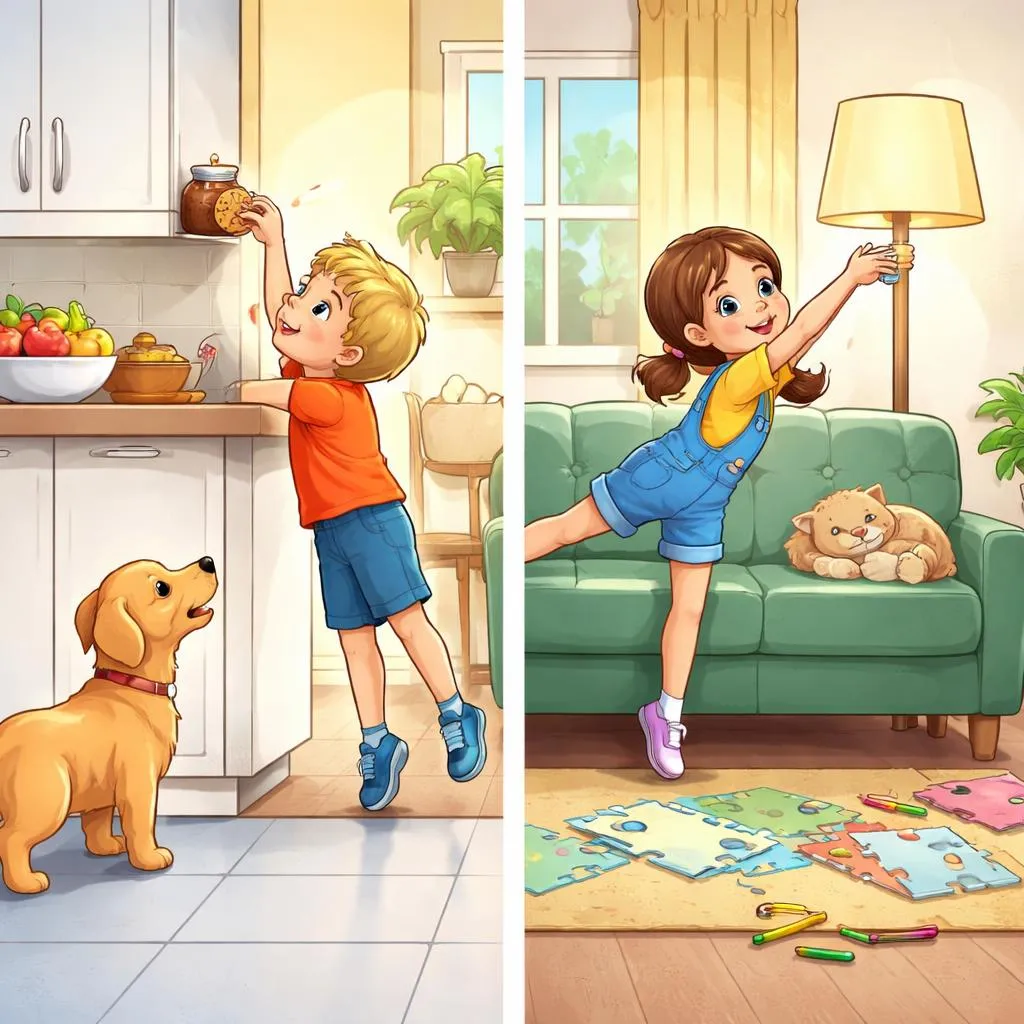
Scene Three occurs at home. Ben stretches to reach a high shelf. He stands on tiptoes. Mia extends her toy train tracks. She connects more pieces. Notice the shift. Stretching is personal. Extending is structural.
Pitfalls Deep Reminder
Mistake One is saying “I extended my arms during yoga.” Why wrong? Arms need stretching. Extending is for objects. Funny result? Arms think they are bridges. Correct phrase is I stretched my arms during yoga. Memory trick: Stretch body parts.
Mistake Two is saying “I stretched the bridge with extra blocks.” Why wrong? Bridges need extending. Stretching is for elastic things. Funny result? Bridge snaps like a rubber band. Correct phrase is I extended the bridge with blocks. Memory trick: Extend structures.
Mistake Three is saying “I extended the rubber band too far.” Why wrong? Rubber bands need stretching. Extending is not for elastic. Funny result? Band breaks instantly. Correct phrase is I stretched the rubber band. Memory trick: Stretch elastic items.
Mistake Four is saying “I stretched the deadline for homework.” Why wrong? Deadlines need extending. Stretching is for physical things. Funny result? Teacher laughs at you. Correct phrase is I extended the deadline. Memory trick: Extend time limits.
Interactive Exercises
Read each sentence. Pick stretch or extend.
I will ___ my legs before jumping. (stretch/extend)
She ___ the rope to make it longer. (stretch/extend)
We ___ our hands to reach the stars. (stretch/extend)
He ___ the fence by adding wood. (stretch/extend)
They ___ their necks to see the stage. (stretch/extend)
Act with a friend. Use the phrases.
Scene A: Body Stretching
A: I need to stretch now.
B: Reach as high as you can.
Scene B: Object Extending
A: I will extend this tower.
B: Add one block at a time.
Spot the Mistake
Which sentence sounds odd? Explain why.
Sentence: I extended my hamstrings after running.
Reason: Hamstrings need stretching. Use stretch instead.
Sentence: I stretched the train tracks with more cars.
Reason: Tracks need extending. Use extend instead.
Sentence: I extended my arms to touch the ceiling.
Reason: Arms need stretching. Use stretch instead.
Create Sentences
Use both phrases.
Stretch to do: I stretch my arms every morning.
Extend to do: I extend my paper chain for fun.
Bonus Challenge
You want to reach a high shelf. Do you stretch or extend? Answer: Stretch. You reach with your body.
Rhyme Time
Stretch it out, extend it long.
One moves your muscles strong.
Body part? Choose stretch.
Object length? Extend, do not retch.
Homework Task
Pick one activity. Complete it this week. Share with family.
Option One: Observation Journal. Get a small notebook. Draw three pictures. Write a sentence under each.
Picture One: You stretch something. Sentence: I stretched my arms after waking up.
Picture Two: You extend something. Sentence: I extended my toy road with blocks.
Picture Three: You stretch something else. Sentence: I stretched my legs before soccer.
Show your journal to a parent. Explain the differences.
Option Two: Role Play. With a parent, act out moments. Use phrases correctly.
You: Mom, I will stretch my shoulders now.
Parent: Do it slowly and gently.
You: Dad, I will extend the garden hose.
Parent: Pull it all the way out.
Practice until it feels natural.
Option Three: Sharing Time. Tomorrow at school, tell a friend. Describe one stretch and one extend. Say: Yesterday I stretched my arms. I extended my paper chain. Ask your friend about theirs.
Life Practice
Week Challenge: Try one task. Complete within seven days. Share your success.
Task One: Observation Log. For three days, note stretch and extend moments. Draw icons.
Day One: Stretch arms. Draw an arm icon.
Day Two: Extend a rope. Draw a rope icon.
Day Three: Stretch legs. Draw a leg icon.
Show your log to your teacher. Place it on the classroom wall.
Task Two: Action Demo. Use both phrases in real actions.
Step One: Stretch actively. Say: I stretch to warm up my body.
Step Two: Extend carefully. Say: I extend to make things longer.
Demonstrate to a sibling. Explain the difference.
Task Three: Social Mission. Use phrases with others.
Stretch to help a friend. Say: I stretch my hand to reach yours.
Extend to help a friend. Say: I extend the table for more space.
Record a short voice message. Send it to your teacher.
Task Four: Creative Story. Write a short tale. Include both phrases.
Title: The Long Bridge.
Story: I stretched my arms wide. Then I extended the bridge with planks. It reached the island!
Share your story in class.
Remember, practice makes perfect. Use these phrases often. Soon they will feel easy.