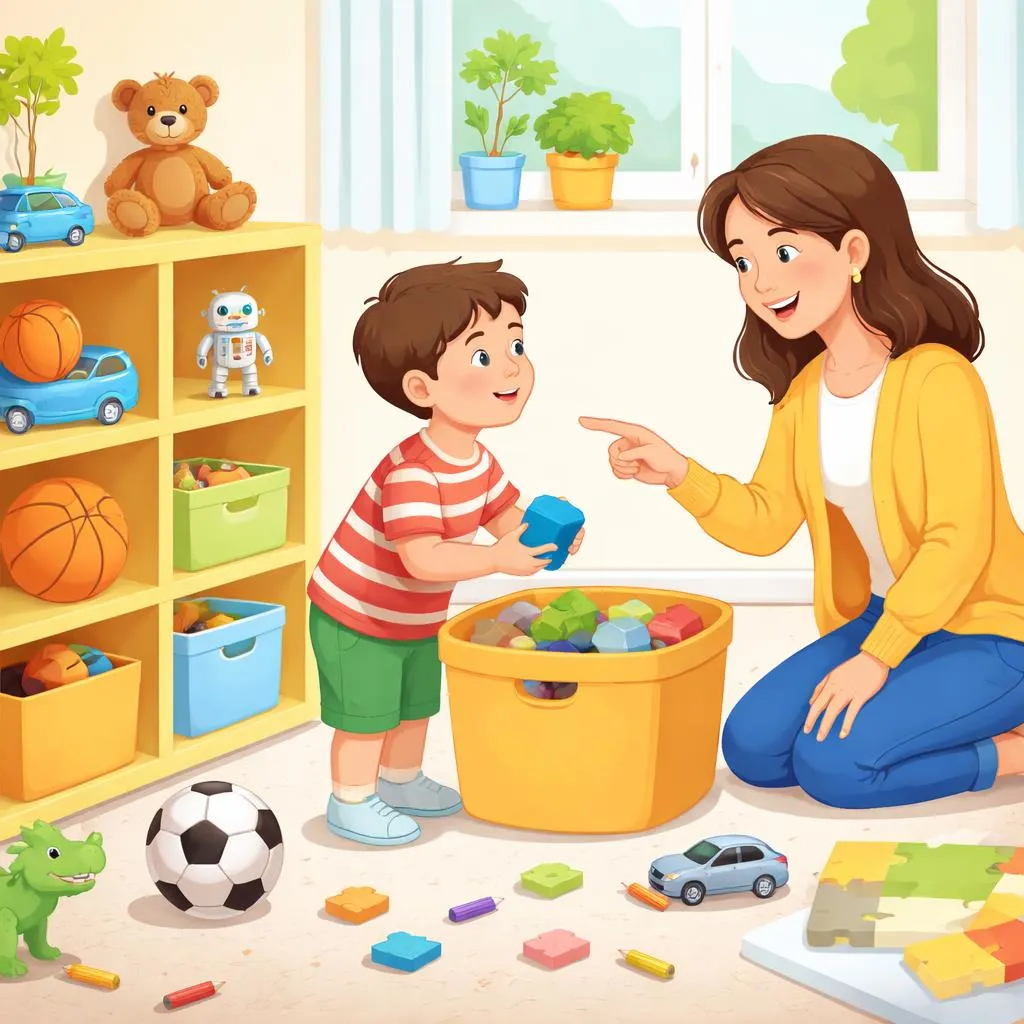

What Do These Expressions Mean? “Put it back” and “return it” both tell someone to place an object where it belongs. They instruct a child to restore an item to its proper spot after using it. Children hear these words when cleaning up toys, books, or borrowed items. Both teach responsibility.
“Put it back” means place the object in its original location. It is common and direct. A parent says it when a child leaves a game on the floor. It is the everyday phrase.
“Return it” means give the object back to its owner or its original place. It is often for borrowed things. A parent says it when a child has a library book or a friend’s toy. It feels more formal.
These expressions seem similar. Both ask for an object to go where it belongs. Both teach tidiness. But one is for daily clean-up while one is for returning borrowed things.
What's the Difference? One is for putting things away. One is for giving things back. “Put it back” is for items that belong in your own home. Toy in the bin. Book on the shelf. Cup in the cabinet. It is about order.
“Return it” is for items that belong to someone else or another place. Library book. Friend’s DVD. Store rental. It is about giving back.
Think of a child playing with a puzzle. When done, “put it back on the shelf” is right. If the puzzle was borrowed from a neighbor, “return it to Mrs. Jones” is right. One is for your things. One is for borrowed things.
One is for home. The other is for borrowed goods. “Put it back” for your own toys. “Return it” for library books and friends’ items. Use the first for cleaning. Use the second for borrowing.
Also, “return” implies a relationship. You return a favor. You return a call. “Put back” is purely physical. Choose based on context.
When Do We Use Each One? Use “put it back” for everyday tidying. Use it for toys, shoes, dishes, or remotes. Use it to teach where things live. It fits daily clean-up.
Examples at home: “Put it back in the toy box when you are done.” “Put your shoes back in the closet.” “Put the book back on the shelf.”
Use “return it” for borrowed or rented items. Use it for library books, rented movies, or things you borrowed from a friend. Use it for formal obligations. It fits borrowed goods.
Examples for borrowing: “Return it to the library before Friday.” “You borrowed your friend’s game. Return it tomorrow.” “Return the shopping cart to the front of the store.”
Children need both phrases. “Put it back” for home. “Return it” for borrowing. Both build responsible kids.
Example Sentences for Kids Put it back: “Put it back where you found it.” “Put the crayons back in the box.” “Put it back after you use it.”
Return it: “Please return the library book by Tuesday.” “I borrowed your pen. I will return it.” “Return the movie to the rental store.”
Notice “put it back” is for home order. “Return it” is for borrowed things. Children learn both. One for tidying. One for borrowing.
Parents can use both. Clean-up time: “put it back.” Library due date: “return it.” Children learn different kinds of responsibility.
Common Mistakes to Avoid Some children say “return it” for their own toys. That sounds strange. You don’t return your own toy. You put it away. Use “put back” for your own home.
Wrong: “Return your puzzle to the shelf.” Right: “Put your puzzle back on the shelf.”
Another mistake: saying “put it back” for a borrowed item. If you borrowed a book, say “return it.” “Put it back” sounds like you stole it and are sneaking it back. Use “return” for borrowed.
Wrong: “Put the library book back on the desk.” (sounds like you took it without permission). Right: “Return the library book to the librarian.”
Some learners forget to say where to put it back. “Put it back” is fine, but “put it back in the drawer” is better. Specificity helps.
Also avoid saying “return it” in a mean voice. “Return it or else” is scary. Say “please return it” with a kind voice. Responsibility with kindness is best.
Easy Memory Tips Think of “put it back” as an empty hand placing a toy. The hand goes to the shelf. For your own things.
Think of “return it” as a hand giving a book to a librarian. The hand reaches across a desk. For borrowed things.
Another trick: remember the owner. “Put back” = your own house. “Return” = other owner. Own house gets “put back.” Other owner gets “return.”
Parents can say: “Put back for a stack. Return for what you lack.” That means your own things get “put it back.” Borrowed things get “return it.”
Practice at home. Toy on floor: “put it back.” Library book: “return it to the library.” Two different home training lessons.
Quick Practice Time Let us try a small exercise. Choose the better phrase for each situation.
A child leaves a game on the living room floor. The game belongs to the family. a) “Return the game.” b) “Put the game back in the closet.”
A child borrowed a video game from a friend a week ago. It is time to give it back. a) “Put the game back on your friend’s shelf.” b) “Return the game to your friend.”
Answers: 1 – b. A family game needs to be put back in its spot. 2 – b. A borrowed friend’s game needs to be returned.
Fill in the blank: “When I finish playing with my own toy, I ______ it in the toy box.” (“Put back” is the correct phrase for your own possessions.)
One more: “When the library book is due, I must ______ it.” (“Return” is the correct word for borrowed items from a library or friend.)
Order and respect go together. “Put it back” keeps your home tidy. “Return it” respects other people’s things. Teach your child both. A child who does both grows up responsible and kind.
Wrap-up “Put it back” is for your own things at home: toys, shoes, dishes, and books go back to their home spots. “Return it” is for borrowed things: library books, friends’ toys, and rental items go back to their owners. Use “put it back” for daily clean-up. Use “return it” for borrowed items. Both phrases teach responsibility. A child who learns to put back and return grows up trusted.