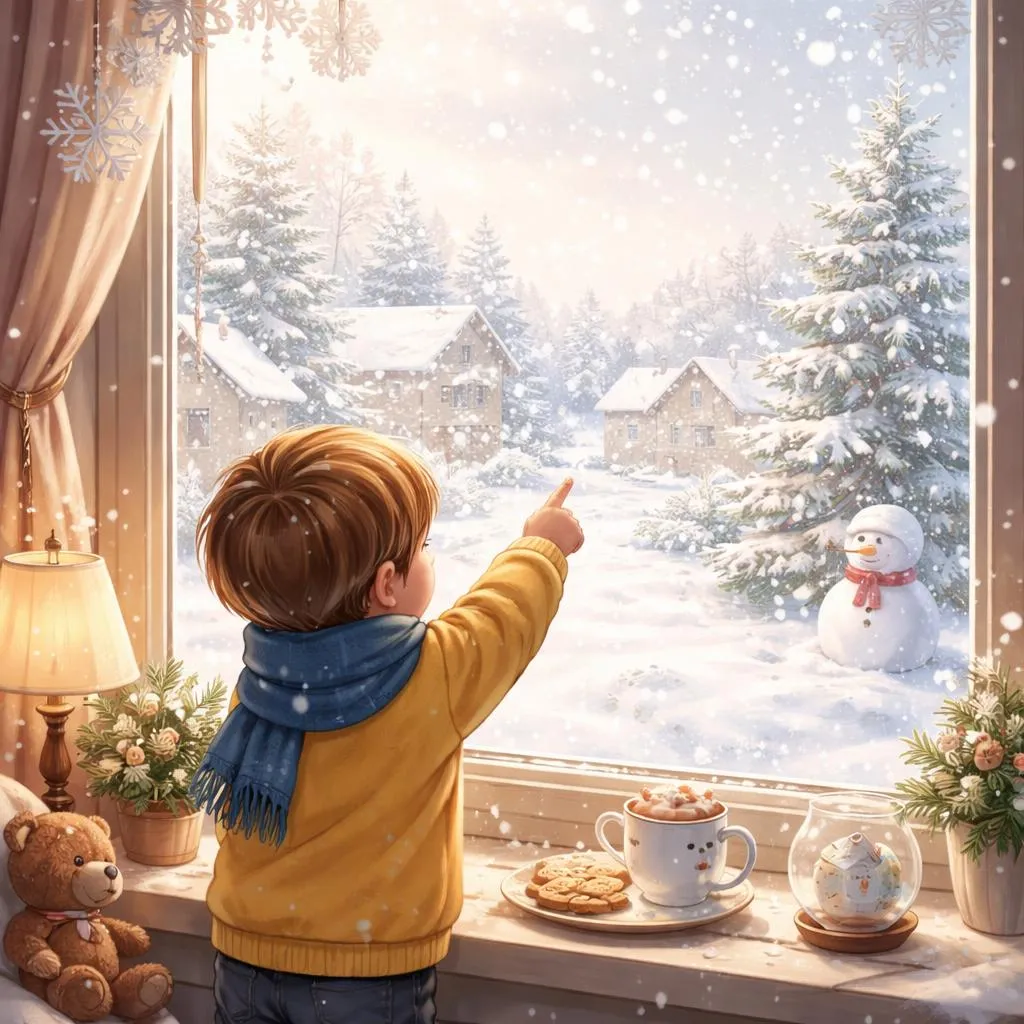

What Do These Expressions Mean? “It's snowing” and “snow is falling” both describe frozen water coming from clouds. They tell someone that snowflakes are drifting down from the sky. Children say these words when looking out windows on winter days. Both bring excitement and wonder.
“It's snowing” means snow is actively falling from the sky. It is short and common. A child says it when the first flakes appear. It describes the weather condition.
“Snow is falling” means snowflakes are moving downward through the air. It is a bit longer and more poetic. A child says it while watching flakes drift. It describes the action of the snow.
These expressions seem similar. Both say “snow is happening.” Both announce a winter wonderland. But one is the standard phrase while one is descriptive.
What's the Difference? One is the standard weather word. One is a descriptive phrase. “It's snowing” is what everyone says. Weather forecasts use “snowing.” It is concise and clear.
“Snow is falling” is more about watching the snow move. It emphasizes the gentle motion of flakes. It is more poetic and calm. You might say it while looking out a window quietly.
Think of a child seeing first snow. “It's snowing!” is excited and direct. “Look, snow is falling” is softer and more observant. Both are true. One is more energetic.
One is for all snow. The other is for watching snow fall. “It's snowing” works for light snow or heavy snow. “Snow is falling” works best when you are watching the flakes drift. Use the first to announce. Use the second to observe.
Also, “snow is falling” can be used for a few flakes. “It's snowing” suggests ongoing snow. Both are lovely. Both bring winter joy.
When Do We Use Each One? Use “it's snowing” for most snow days. Use it when you first notice snow. Use it to tell others the weather. It fits all snow situations.
Examples at home: “It's snowing! Look outside.” “It's snowing. We can build a snowman.” “It's snowing hard. Stay inside.”
Use “snow is falling” for quiet, observant moments. Use it when you are watching the flakes. Use it to describe the action poetically. It fits gentle, calm moments.
Examples for observation: “Snow is falling softly on the trees.” “Look at the window. Snow is falling.” “Snow is falling. Let's watch together.”
Children can use both. “It's snowing” for announcement. “Snow is falling” for peaceful watching. Both celebrate winter.
Example Sentences for Kids It's snowing: “It's snowing! Can we go outside?” “It's snowing. Put on your boots.” “It's snowing. I want to catch a flake on my tongue.”
Snow is falling: “Snow is falling from the dark sky.” “Look, snow is falling on the fence.” “Snow is falling. Everything is turning white.”
Notice “it's snowing” sounds like an excited shout. “Snow is falling” sounds like a soft whisper. Children learn both. One for joy. One for wonder.
Parents can use both. First flake: “it's snowing!” Watching together: “snow is falling so gently.” Children learn different ways to love winter.
Common Mistakes to Avoid Some children say “snow is falling” when no snow is active. If snow stopped, say “it snowed” or “there is snow on the ground.” “Falling” means right now. Be accurate.
Wrong: “Snow is falling” (snow on ground, no flakes in air). Right: “It snowed last night. Look at the snow.”
Another mistake: saying “it's snowing” for a few flakes. That is fine. Snow is snow. But if it is just a flurry, you can say “a few flakes are falling.” Match enthusiasm to amount.
Wrong: “It's snowing!” (one flake). Fine. But “a little snow is falling” is also good.
Some learners forget that both phrases are happy. Snow is a gift. Say the words with wonder, not complaint. Even a little snow is beautiful.
Also avoid saying “it's snowing” when it is sleet or hail. Sleet is frozen rain. Hail is ice balls. Snow is soft and white. Learn the difference.
Easy Memory Tips Think of “it's snowing” as a bell ringing. Ding ding ding! Snow is here. Excited and clear. For announcements.
Think of “snow is falling” as a feather drifting. The feather floats down slowly. Quiet and peaceful. For watching.
Another trick: remember the energy. “Snowing” is for shouting. “Is falling” is for whispering. Shout gets “it's snowing.” Whisper gets “snow is falling.”
Parents can say: “Snowing for cheer. Falling for a tear of beauty.” That means excited moments get “it's snowing.” Peaceful watching gets “snow is falling.”
Practice on a snow day. First sight: “it's snowing!” Looking out the window: “snow is falling.” Two phrases. One winter wonderland.
Quick Practice Time Let us try a small exercise. Choose the better phrase for each situation.
Your child looks outside and sees big flakes coming down fast. They want to go play. a) “Snow is falling gently.” b) “It's snowing! Let's go build a snowman.”
Your child is sitting quietly by the window, watching flakes drift one by one. a) “It's snowing hard.” b) “Look, snow is falling. Each flake is different.”
Answers: 1 – b. Excitement to play fits “it's snowing.” 2 – b. Quiet observation fits “snow is falling.”
Fill in the blank: “When I look outside and see the ground turning white, I shout ______.” (“It's snowing” fits the excited announcement.)
One more: “When I sit by the window and watch flakes dance, I say ______.” (“Snow is falling” fits the calm, poetic observation.)
Snow is magic. “It's snowing” celebrates the magic. “Snow is falling” watches the magic. Teach your child both. Every snowflake is a little wonder.
Wrap-up “It's snowing” announces that snow is actively falling from the sky. “Snow is falling” describes the gentle motion of snowflakes as they drift down. Use “it's snowing” for excited announcements and weather reports. Use “snow is falling” for quiet, peaceful observation. Both phrases capture winter's beauty. A child who watches snow learns to see wonder everywhere.