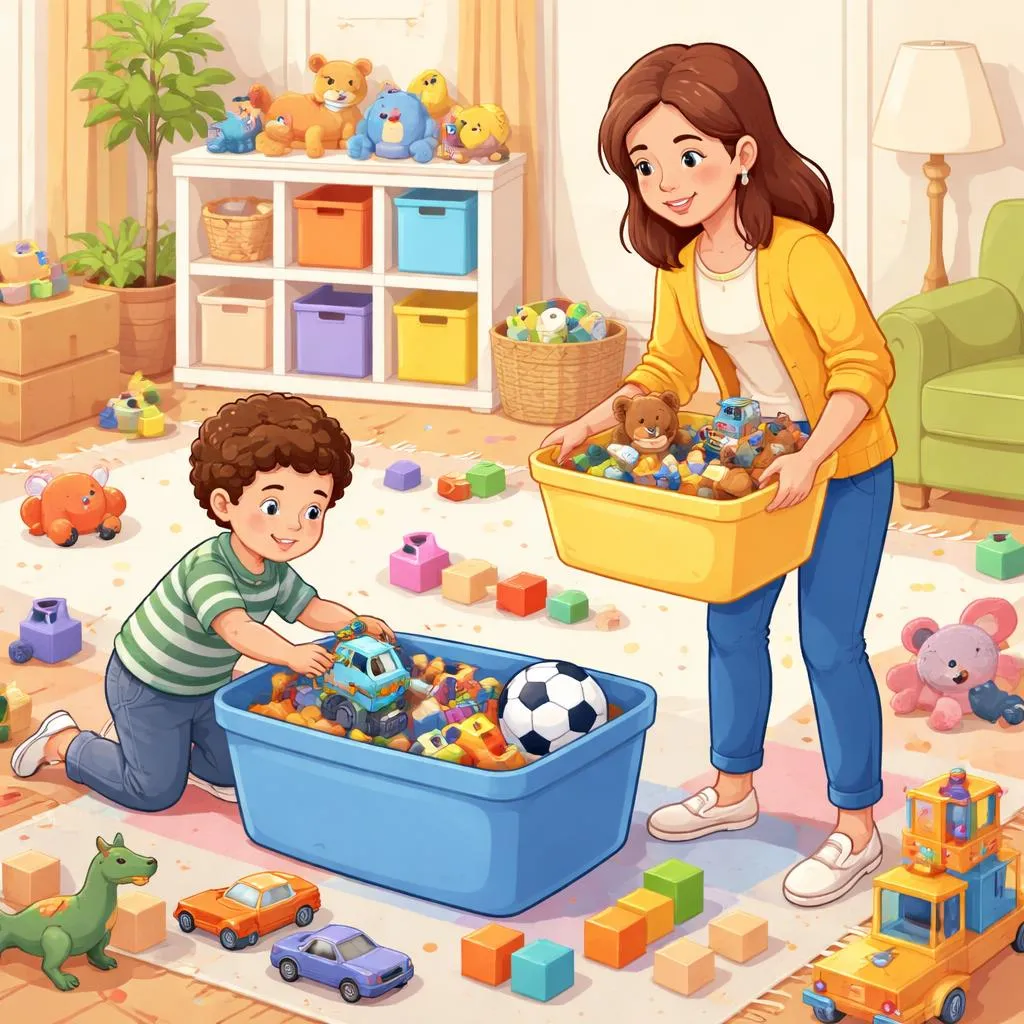

What Do These Expressions Mean? “Put it away” and “store it” both mean to place an object in its proper, designated place for keeping. They tell a child to move an item from where it is to where it belongs. Children hear these words when cleaning rooms, organizing toys, or putting back supplies. Both teach order.
“Put it away” means to place the object in its correct storage spot. It is common and direct. A parent says it when a child leaves a shoe in the middle of the floor. It is the everyday phrase.
“Store it” means to keep the object in a specific place for future use. It is more formal and often used for long-term keeping. An adult says it about camping gear or winter clothes. It sounds like a grown-up instruction.
These expressions seem similar. Both ask for tidiness. Both end clutter. But one is for daily clean-up while one is for more formal or long-term storage.
What's the Difference? One is for daily, short-term putting away. One is for longer-term, careful storage. “Put it away” is for toys, shoes, dishes, and daily items. It is quick. It is for things you use often. It is the natural phrase for children.
“Store it” is for things you do not use every day. Holiday decorations. Winter coats in summer. Sports equipment off-season. It implies more care and a longer time. It is less common in daily child talk.
Think of a child with a toy. When playtime ends, “put it away in the toy box” is right. When summer ends, “store the beach toys in the garage” is also right. One is for daily. One is for seasonal.
One is for active items. The other is for inactive items. “Put it away” for the game you just played. “Store it” for the game you will play next year. Use the first for daily. Use the second for long-term.
Also, “store” can mean a shop. “We store food in the pantry” is not the same as “we go to the store.” Context matters.
When Do We Use Each One? Use “put it away” for daily clean-up. Use it for toys, clothes, dishes, and school supplies. Use it as a quick reminder. It fits everyday tidying.
Examples at home: “Put it away when you are done playing.” “Put your shoes away in the closet.” “Put the dishes away in the cabinet.”
Use “store it” for long-term or formal storage. Use it for holiday decorations, off-season clothes, or camping gear. Use it to teach the word. It fits special occasions.
Examples for long-term: “Store the winter coats in the closet until next year.” “We store the camping equipment in the garage.” “Please store the holiday decorations in the attic.”
Children can use both. “Put it away” for daily. “Store it” for long-term. Both keep a house tidy.
Example Sentences for Kids Put it away: “Put it away after you finish your snack.” “Put the crayons away in the box.” “It’s time to put the game away.”
Store it: “We store the beach umbrella in the shed.” “Store the Christmas lights in the basement.” “I store my old drawings in a folder.”
Notice “put it away” is for daily use. “Store it” is for longer-term keeping. Children learn both. One for now. One for later.
Parents can use both. After play: “put it away.” After a season: “let’s store these.” Children learn different tidying levels.
Common Mistakes to Avoid Some children say “store it” for a daily toy. That sounds too formal. A toy is put away, not stored. Save “store” for things you won’t use soon.
Wrong: “I will store my pencil in my desk.” Right: “I will put my pencil away in my desk.”
Another mistake: saying “put it away” for long-term storage. If you are packing winter clothes in May, “store them” is more accurate. “Put away” is fine, but “store” is more precise.
Wrong: “Put the holiday lights away in the attic.” (fine, but) Better: “Store the holiday lights in the attic until next year.”
Some learners forget that “store” is also a noun. “I go to the store” means shop. “I store my toys” means keep them. Context decides the meaning.
Also avoid saying “store it” in a mean tone. “Store it properly” can sound like an order. Say “let’s store this for next summer” as a plan. Teamwork feels better.
Easy Memory Tips Think of “put it away” as a quick hand placing a toy in a box. Easy. Fast. Daily. For active items.
Think of “store it” as a labeled bin in the attic. The bin sits for months. For long-term keeping.
Another trick: remember the time. “Put away” is for now. “Store” is for later. Now gets “put away.” Later gets “store.”
Parents can say: “Put away for today. Store for a future play.”
Practice at home. Toy on floor: “put it away.” Summer gear in winter: “store it in the closet.”
Quick Practice Time Let us try a small exercise. Choose the better phrase for each situation.
A child finishes playing with blocks. You want them to put the blocks back in the bin for tomorrow. a) “Store the blocks.” b) “Put the blocks away.”
A family finishes using the camping tent for the summer. They won’t use it again until next year. a) “Put the tent away in the garage.” b) “Store the tent in the garage until next summer.”
Answers: 1 – b. Daily toys back in the bin fit “put away.” 2 – b. Long-term, seasonal keeping fits “store.”
Fill in the blank: “When I finish using my scissors at school, I ______ them in the desk.” (“Put away” is the daily, active choice.)
One more: “When we pack up the pool toys for winter, we ______ them in the basement.” (“Store” fits the long-term, seasonal, formal keeping.)
Tidiness is a habit. “Put it away” keeps the daily mess at bay. “Store it” keeps the seasonal clutter away. Teach your child both. A child who learns to put away and store grows up organized.
Wrap-up “Put it away” is for daily items like toys, shoes, dishes, and school supplies that you will use again soon. “Store it” is for longer-term keeping of seasonal or infrequent items like holiday decorations, winter coats, or camping gear. Use “put it away” for daily clean-up. Use “store it” for off-season storage. Both phrases create a neat home. A child who puts away and stores learns to respect space and time.