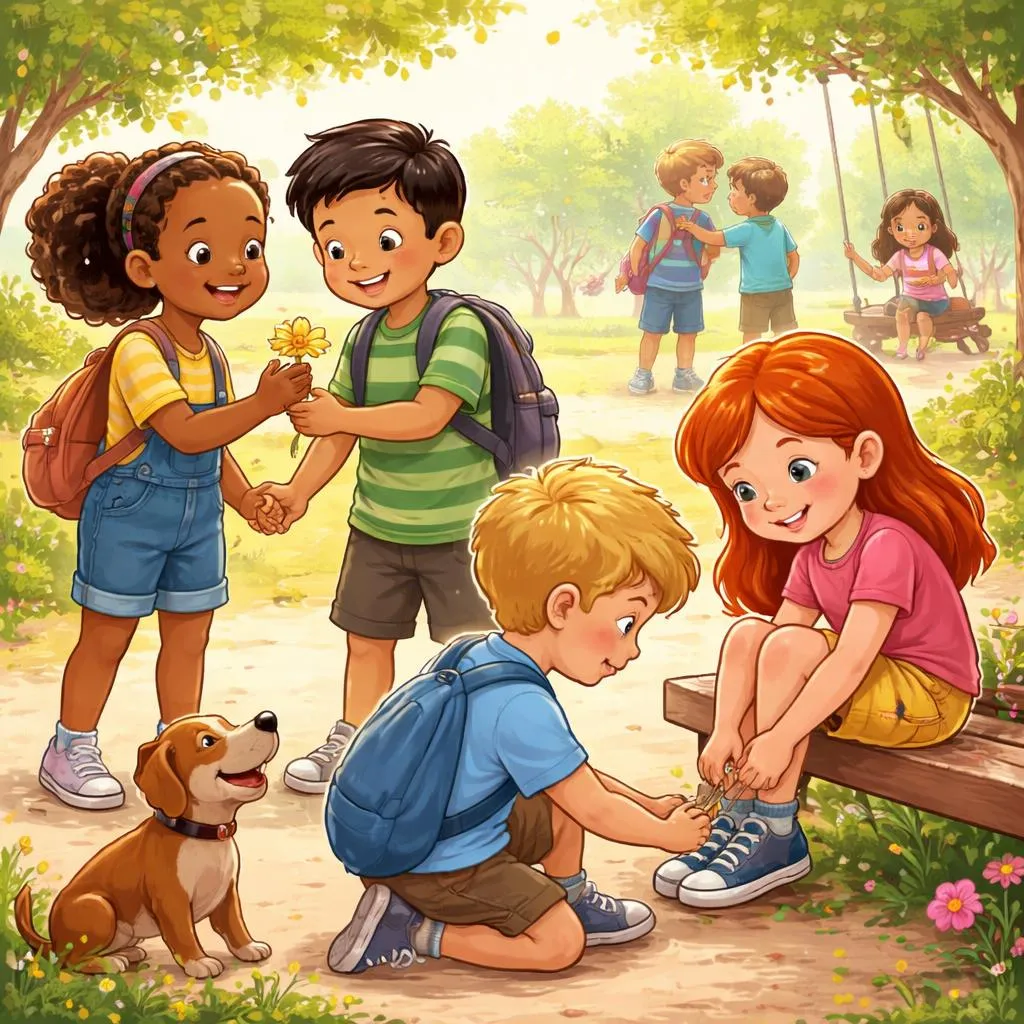

What Do These Expressions Mean? “Be nice” and “be kind” both tell a child to treat others with care and respect. They instruct a child to use gentle words and helpful actions. Children hear these words when playing with friends or meeting new people. Both build good hearts.
“Be nice” means act in a pleasant, friendly, and agreeable way. It is common and simple. A parent says it before a playdate. It covers basic good manners.
“Be kind” means act with care, empathy, and generosity toward others. It is deeper and more heartfelt. A parent says it when a child sees someone sad. It asks for compassion.
These expressions seem similar. Both tell a child to be good to others. Both prevent meanness. But one is about surface behavior while one is about deep care.
What's the Difference? One is about pleasant behavior. One is about heartfelt care. “Be nice” means do not hit, do not yell, share, and say please. It is about basic politeness. It is the first lesson in getting along.
“Be kind” means notice when someone is hurting and help. It means going out of your way to make someone feel better. It is about empathy. It is a deeper lesson.
Think of a child at a party. “Be nice to the other kids” means don't push or grab toys. “Be kind to the new kid” means invite them to play and sit with them. One is about not being mean. One is about being actively good.
One is for everyday politeness. The other is for extra caring. “Be nice” works for normal play. “Be kind” works when someone is sad or left out. Use the first for basic rules. Use the second for deeper lessons.
Also, “nice” can sometimes mean fake polite. “Kind” is always genuine. Teach children to be kind from the heart, not just nice on the surface.
When Do We Use Each One? Use “be nice” for basic social rules. Use it before playdates, at school, or with new people. Use it to prevent hitting, grabbing, or yelling. It fits everyday manners.
Examples at home: “Be nice to your sister. No grabbing.” “Remember to be nice to your friends at the party.” “Be nice. Use your gentle hands.”
Use “be kind” for deeper empathy lessons. Use it when someone is sad, left out, or hurt. Use it to encourage active caring. It fits teaching moments.
Examples for kindness: “Be kind to the new student. Invite them to play.” “Your friend is sad. Be kind and ask what's wrong.” “Be kind. That means helping without being asked.”
Children need both phrases. “Be nice” for basic rules. “Be kind” for caring hearts. Both build a good person.
Example Sentences for Kids Be nice: “Be nice. Say please and thank you.” “Be nice to your cousin. Let her have a turn.” “Be nice. No pushing in line.”
Be kind: “Be kind. Share your snack with someone who forgot theirs.” “Be kind. That boy is sitting alone. Ask him to play.” “Be kind. Help your mom carry the groceries.”
Notice “be nice” is about basic good behavior. “Be kind” is about extra caring and empathy. Children learn both. One for manners. One for heart.
Parents can use both. Playdate: “be nice.” Sad friend: “be kind.” Children learn different levels of goodness.
Common Mistakes to Avoid Some parents say “be nice” when a child is being cruel. “Nice” is too weak for bullying. For real meanness, say “be kind” or “that is unkind.” Use stronger words for stronger problems.
Wrong: “Be nice” (child is name-calling). Better: “That is not kind. How would you feel if someone said that to you?”
Another mistake: teaching “nice” but not “kind.” Children learn to be polite but not empathetic. Add the deeper lesson. Teach your child to notice others' feelings.
Wrong: Only saying “be nice” for years. Better: “Be nice with your words. Be kind in your heart.”
Some learners forget that kindness takes practice. Help your child practice. “Let's think of one kind thing we can do today.” Kindness grows with use.
Also avoid being nice or kind only when someone is watching. Teach that kindness is for every moment, not for praise. A truly kind person is kind in the dark. Lead by example.
Easy Memory Tips Think of “be nice” as a smooth path. The path is easy to walk. No bumps. No rocks. Basic good behavior.
Think of “be kind” as a helping hand. The hand reaches down to lift someone up. Extra care. Extra love. Deep empathy.
Another trick: remember the action. “Nice” is not being mean. “Kind” is being actively good. Not mean gets “nice.” Actively good gets “kind.”
Parents can say: “Nice for the rules. Kind for the jewels of hearts.” That means basic manners get “be nice.” Heartfelt care gets “be kind.”
Practice at home. Sharing a toy: “be nice.” Helping a sad friend: “be kind.” Two different goodness lessons.
Quick Practice Time Let us try a small exercise. Choose the better phrase for each situation.
A child is about to go to a birthday party. The parent wants to remind them of basic manners. a) “Be kind to everyone.” b) “Be nice. Say thank you and don't grab presents.”
A child sees a classmate crying alone at recess. The parent wants to teach empathy. a) “Be nice to the crying child.” b) “Be kind. Go see if they are okay. Ask if they need help.”
Answers: 1 – b. Basic party manners fit “be nice.” 2 – b. Helping a sad child fits the deeper “be kind.”
Fill in the blank: “When my child goes to a playdate, I remind them to ______.” (“Be nice” is the basic manners reminder for play.)
One more: “When my child sees someone being left out, I tell them to ______ and include them.” (“Be kind” fits the active, empathetic choice.)
Nice is good. Kind is better. “Be nice” starts the journey. “Be kind” completes it. Teach your child both. A child who is kind changes the world.
Wrap-up “Be nice” teaches basic manners like sharing, saying please, and not hitting. “Be kind” teaches deeper empathy like helping the sad, including the left out, and caring from the heart. Use “be nice” for everyday social rules. Use “be kind” for lessons about compassion and active caring. Both phrases build a good human being. A child who is nice is liked. A child who is kind is loved.