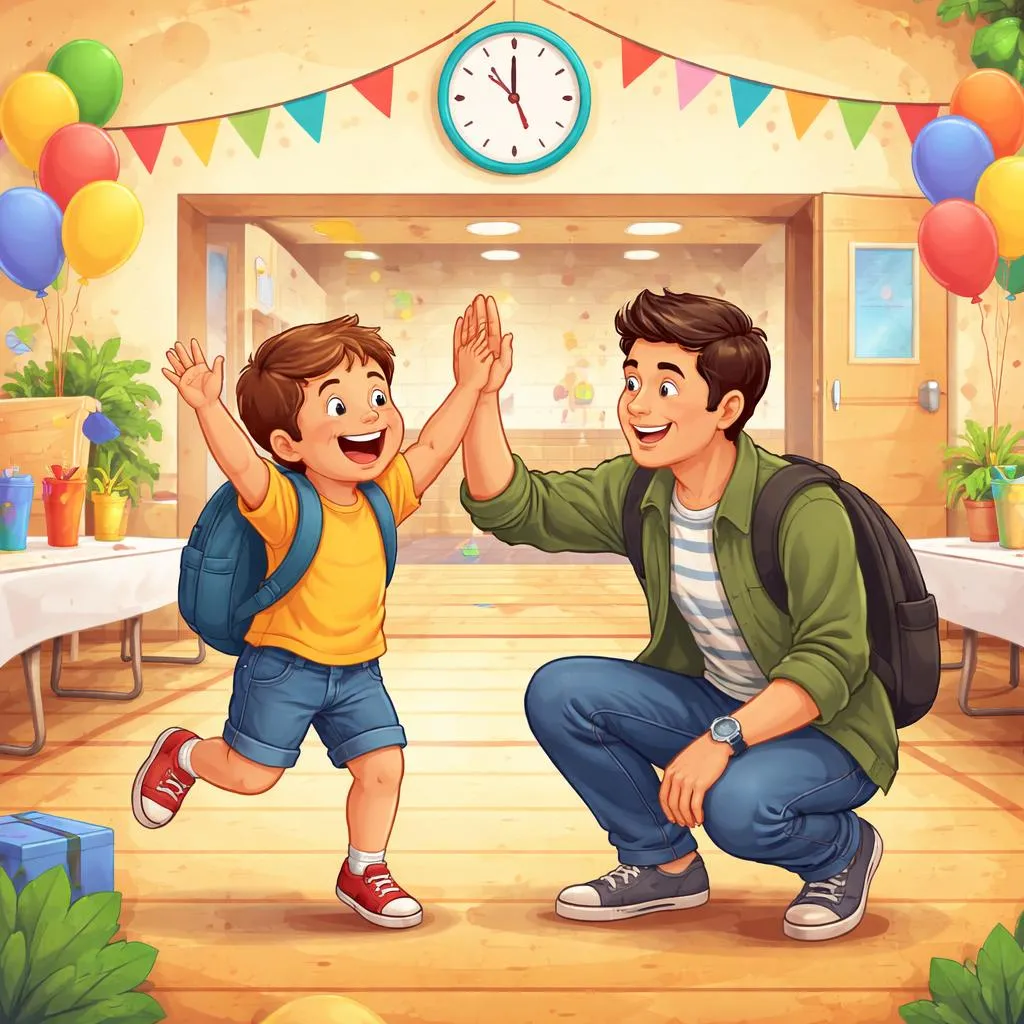

What Do These Expressions Mean? “We're early” and “ahead of time” both mean that you have arrived or finished before the scheduled moment. They tell a child that there is no rush and maybe even extra time to relax. Children hear these words when they finish chores quickly or arrive at school before the bell. Both create a feeling of calm.
“We're early” means we are here before the expected time. It is simple and direct. A parent says it when pulling into the school parking lot before the doors open. It is warm and reassuring.
“Ahead of time” means we have completed something before the deadline. It is more about tasks than arrivals. An adult says it about finishing a project early. It feels like a grown-up achievement.
These expressions seem similar. Both say “we have extra time.” Both feel good. But one is for arrivals while one is for completions.
What's the Difference? One is about arriving somewhere. One is about finishing something. “We're early” is for getting to a place before the start time. School, appointments, parties. It is about location.
“Ahead of time” is for finishing a task before it is due. Homework, chores, projects. It is about accomplishment. It is more formal.
Think of a family arriving at a movie theater. The movie starts in 15 minutes. “We're early” is right. “We finished our chores ahead of time” is for tasks, not arrivals. One is for places. One is for duties.
One is for family talk. The other is for school or work talk. “We're early” is what parents say in the car. “Ahead of time” is what teachers say about homework. Use the first for arrivals. Use the second for completions.
Also, “ahead of time” sounds more formal. A child can say it, but “we're early” is simpler. For young children, say “we're early.” For older children, teach “ahead of time.”
When Do We Use Each One? Use “we're early” for arriving at places before the start. Use it for school, parties, movies, or appointments. Use it to celebrate no rush. It fits arrivals.
Examples at home: “We're early for school. Let's read in the car.” “We're early for the party. Let's wait outside.” “We're early. Good job getting ready fast.”
Use “ahead of time” for finishing tasks before the deadline. Use it for homework, chores, or projects. Use it to praise planning and speed. It fits completions.
Examples for tasks: “You finished your homework ahead of time. Now you can play.” “We packed the car ahead of time. That's why we're early.” “She turned in her project ahead of time. Great work.”
Children can use both. “We're early” for arrivals. “Ahead of time” for task completion. Both feel good.
Example Sentences for Kids We're early: “We're early for the movie. Let's get popcorn.” “We're early for school. Let's chat.” “We're early. No need to rush.”
Ahead of time: “We finished packing ahead of time.” “He did his chores ahead of time, so he can play.” “Thank you for being ready ahead of time.”
Notice “we're early” is about where you are. “Ahead of time” is about when you finish something. Children learn both. One for places. One for tasks.
Parents can use both. Arriving: “we're early.” Completing: “you finished ahead of time.” Children learn two kinds of timeliness.
Common Mistakes to Avoid Some children say “ahead of time” for arriving somewhere. That is not wrong, but it is unusual. For arrivals, say “we're early.” Keep it simple.
Wrong: “We arrived ahead of time for the party.” (fine but formal) Better: “We're early for the party.”
Another mistake: forgetting to celebrate being early. Being early is a success! Say “good job” and enjoy the extra time. Being early reduces stress.
Wrong: (arrives early, says nothing). Better: “We're early! Now we can relax.”
Some learners think being early is as bad as being late. It is not. Early is great. Teach your child that early means ready. It is a gift of time.
Also avoid saying “ahead of time” for things you can't finish early. You cannot be “ahead of time” for a birthday. Save it for tasks with deadlines.
Easy Memory Tips Think of “we're early” as a clock that says “wait.” The hands are not at the time yet. Relaxed and calm. For arrivals.
Think of “ahead of time” as a finished to-do list. All boxes checked. Done early. Proud and accomplished. For tasks.
Another trick: remember the focus. “Early” is for places. “Ahead of time” is for tasks. Places get “early.” Tasks get “ahead of time.”
Parents can say: “Early for a place. Ahead for a suitcase of grace.” That means arrivals get “we're early.” Finished tasks get “ahead of time.”
Practice at home. Arrive at a friend's house: “we're early.” Finish homework before dinner: “ahead of time!” Two different celebrations.
Quick Practice Time Let us try a small exercise. Choose the better phrase for each situation.
A family arrives at the airport two hours before their flight. a) “We are ahead of time.” b) “We're early. Let's get a snack.”
A child finishes their math homework before dinner time. a) “We're early for math.” b) “You finished ahead of time. Great job.”
Answers: 1 – b. Arriving early at an airport fits “we're early.” 2 – b. Finishing a task early fits “ahead of time.”
Fill in the blank: “When we get to school before the bell rings, I say ______.” (“We're early” is the natural, arrival-focused choice.)
One more: “When I finish my chores before my show starts, I say ______.” (“Ahead of time” fits the task-completion celebration.)
Being early is wonderful. “We're early” celebrates no rush. “Ahead of time” celebrates smart planning. Teach your child both. A child who knows how to be early learns to lead time, not chase it.
Wrap-up “We're early” celebrates arriving at a place before the scheduled time. “Ahead of time” celebrates finishing a task or project before its deadline. Use “we're early” for school, parties, and appointments. Use “ahead of time” for homework, chores, and projects. Both phrases mean you have extra time and less stress. A child who learns to be early grows into a calm and prepared adult.