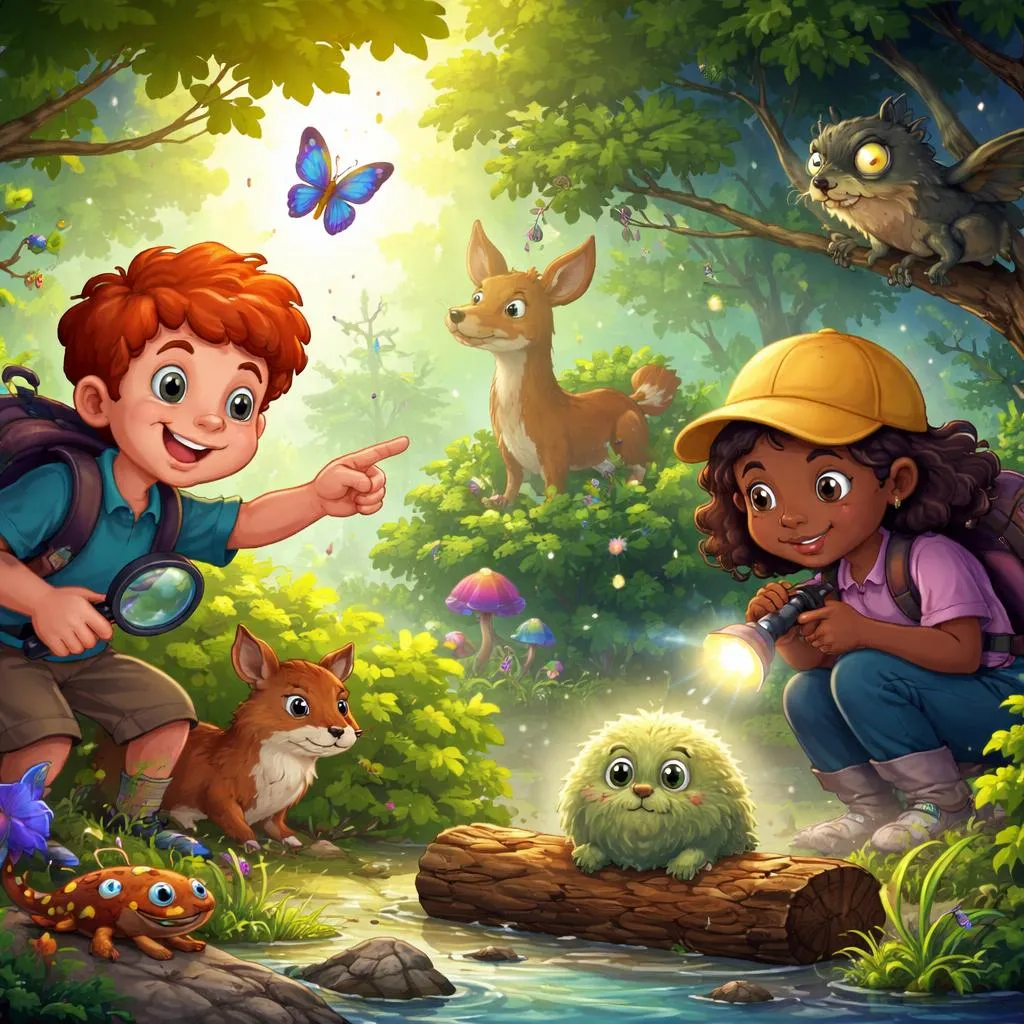

What Do These Expressions Mean? “It's an animal” and “a creature” both describe a living being that is not a plant or human. They tell someone that what you see is a living, moving organism. Children say these words about dogs, insects, birds, or fish. Both name living things.
“It's an animal” means this living thing belongs to the animal kingdom. It is clear and scientific. A child says it when seeing a squirrel. It is the everyday word.
“A creature” means a living being, often with a sense of wonder or fear. It is a little more story-like. A child says it when seeing a strange bug or a mythical beast. It feels more imaginative.
These expressions seem similar. Both describe non-human living things. Both name life. But one is scientific while one is imaginative.
What's the Difference? One is for science and everyday animals. One is for imagination or unknown beings. “It's an animal” is for cats, dogs, birds, fish, and insects. It is the correct, neutral word. It is for school and real life.
“Creature” is for animals that seem strange, mythical, or unknown. A strange deep-sea fish, a dragon, a monster. It is less scientific. It has a feeling of wonder or fear.
Think of a child seeing a dog. “It's an animal” is correct. “It's a creature” would sound odd for a dog. Now think of a child seeing a glowing bug in a cave. “What is that creature?” fits better. One is for normal. One is for strange.
One is for all animals. The other is for strange or unknown animals. “It's an animal” for a butterfly. “A creature” for a mysterious shadow in the water. Use the first for facts. Use the second for imagination.
Also, “creature” can include humans in some old books. But for children, it means non-human living thing.
When Do We Use Each One? Use “it's an animal” for most real, everyday animals. Use it for pets, zoo animals, farm animals, and wildlife. Use it in science class. It fits factual identification.
Examples at home: “Look, it's an animal. It's a rabbit.” “That's not a toy. It's an animal.” “Is it an animal or a plant?”
Use “creature” for strange, unknown, or imaginary beings. Use it for mysterious animals, mythical beasts, or scary bugs. Use it for storytelling. It fits wonder or fear.
Examples for imagination: “What kind of creature is that? It has six legs.” “The creature hid under the rock.” “A strange creature lives in that cave.”
Children can use both. “It's an animal” for real. “A creature” for imaginative or unknown. Both build vocabulary.
Example Sentences for Kids It's an animal: “It's an animal. Can you pet it?” “A dog is an animal. A cat is an animal too.” “It's an animal, not a toy.”
A creature: “What is that creature in the tree?” “The creature crawled into the dark.” “I saw a scaly creature in the pond.”
Notice “it's an animal” is factual. “A creature” is mysterious or imaginative. Children learn both. One for science. One for stories.
Parents can use both. At the zoo: “it's an animal.” Reading a fairy tale: “a magical creature.” Children learn different contexts.
Common Mistakes to Avoid Some children call every animal a “creature.” That is not wrong, but it sounds strange for a pet. A dog is an animal, not usually a “creature.” Save “creature” for unknown or strange beings.
Wrong: “My dog is a creature.” Better: “My dog is an animal.”
Another mistake: using “creature” for plants. Plants are not creatures. Creatures move. Plants grow. Teach the difference.
Wrong: “The flower is a creature.” Right: “The flower is a plant.”
Some learners think “creature” means scary. Not all creatures are scary. A butterfly is a creature too. But “animal” is better for common ones.
Also avoid being afraid of every creature. Most creatures are harmless. Teach respect, not fear.
Easy Memory Tips Think of “it's an animal” as a zoo sign. Factual. Clear. For real animals.
Think of “creature” as a storybook drawing. A dragon in a cave. For imaginative or unknown beings.
Another trick: remember the feeling. “Animal” is neutral. “Creature” is mysterious. Neutral gets “animal.” Mysterious gets “creature.”
Parents can say: “Animal for a fact. Creature for a magical act.”
Practice at home. Pet dog: “it's an animal.” Glowing bug: “what's that creature?”
Quick Practice Time Let us try a small exercise. Choose the better phrase for each situation.
A child sees a cat in the backyard. a) “What is that creature?” b) “It's an animal. It's a cat.”
A child sees a strange, glowing insect they have never seen before at night. a) “It's an animal.” b) “What is that creature? I've never seen anything like it.”
Answers: 1 – b. A familiar cat fits the factual “it's an animal.” 2 – b. A strange, unknown insect fits the mysterious “creature.”
Fill in the blank: “When I see a squirrel in the park, I say ______.” (“It's an animal” is the factual, everyday, real-world choice.)
One more: “When I read a story about a dragon in a cave, I say ______.” (“A creature” fits the imaginative, mythical, storybook language.)
The world is full of life. “It's an animal” names the real. “A creature” names the mysterious. Teach your child both. A child who knows both will never be bored on a nature walk.
Wrap-up “It's an animal” is the factual, scientific word for everyday pets, wildlife, and zoo animals. “Creature” is a more imaginative or mysterious word for strange, unknown, or mythical beings. Use “it's an animal” for dogs, cats, birds, and fish. Use “creature” for glowing bugs, deep-sea unknowns, or fairy tale beasts. Both words describe living beings. A child who learns both sees science and magic in every living thing.