
Introduction to Peru
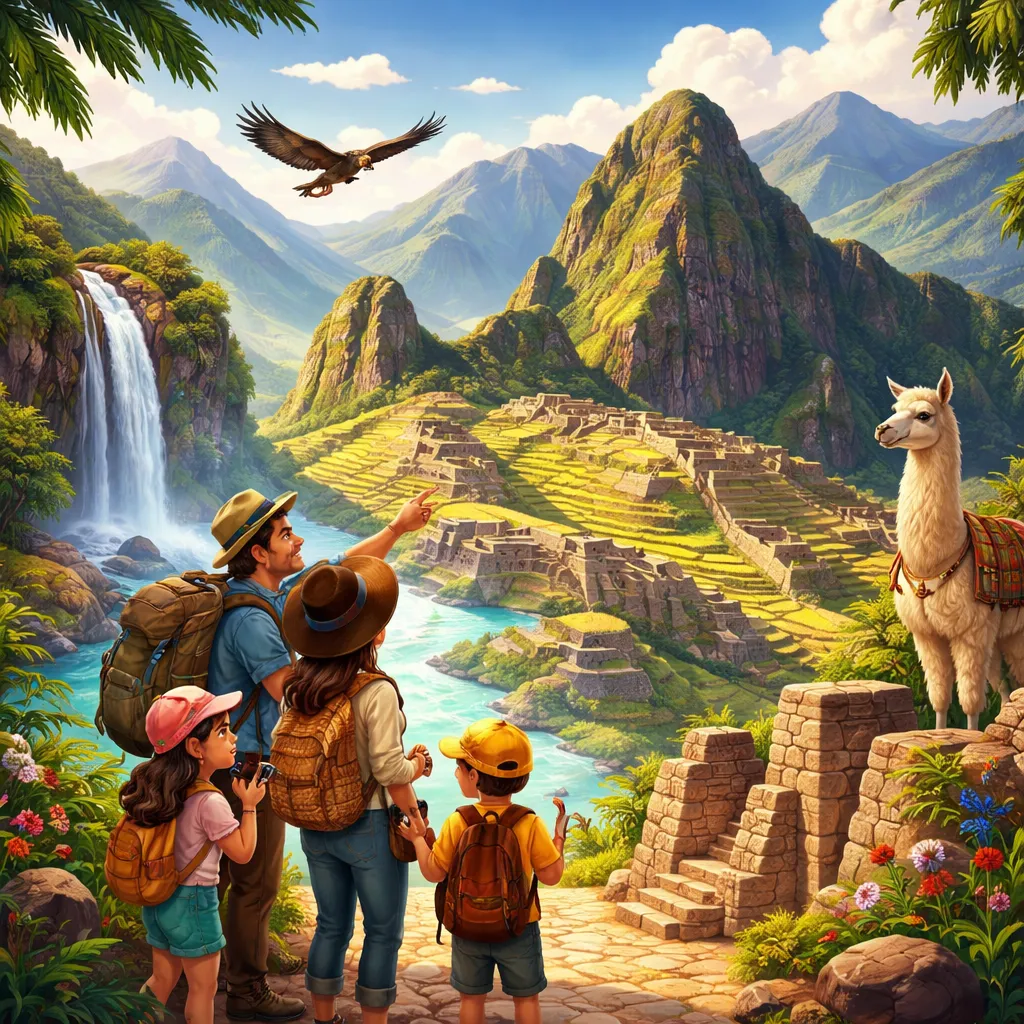
Language learning transports us to a land of ancient mysteries and breathtaking landscapes. Today we explore a country where the Andes Mountains rise high and the Amazon rainforest spreads wide. This nation holds one of the most famous archaeological sites in the world. Children will discover the lost city of Machu Picchu hidden in the clouds. They will learn about llamas and alpacas that roam the highlands. Exploring Peru builds reading skills while revealing a country of incredible history and natural diversity. Every fact uncovers a new wonder. Every word invites young readers to imagine this South American treasure.
Where Is Peru?
Peru lies on the western coast of South America. It shares borders with Ecuador and Colombia to the north, Brazil to the east, Bolivia to the southeast, and Chile to the south. The Pacific Ocean forms its western boundary. The capital city is Lima. Lima sits on the coast overlooking the Pacific. The country covers over four hundred ninety-six thousand square miles. It ranks as the third largest country in South America. The landscape divides into three main regions. The coast holds desert and fertile valleys. The Andes Mountains run through the center. The Amazon rainforest covers the east. Finding Peru on a map shows a country spanning from the Pacific Ocean across the Andes to the Amazon basin.
Interesting Facts About Peru
Peru offers countless remarkable facts for young learners. It was the heart of the Inca Empire, the largest empire in pre-Columbian America. The Incas built an extensive road system and mastered stone construction. Another interesting fact involves Machu Picchu. This ancient city sits high in the Andes at over seven thousand feet. Built in the 1400s, it remained hidden from the outside world until 1911. No wheels or iron tools helped construct its stone walls.
Peru also has one of the deepest canyons in the world. Colca Canyon plunges over ten thousand feet deep. That is more than twice the depth of the Grand Canyon. Another fun fact involves the Amazon River. The Amazon begins in Peru as a small stream high in the Andes. It grows into the world's largest river by volume.
The country also has unique animals. Llamas and alpacas have been domesticated for thousands of years. Their wool provides warm clothing. The vicuña, a wild relative, produces the finest wool in the world. Another interesting fact involves potatoes. Peru has over three thousand varieties of potatoes. The potato originated in the Andes thousands of years ago. Peru also has a unique floating island community. The Uros people live on islands made from reeds on Lake Titicaca. They have lived this way for centuries. These facts show children a country of ancient empires, natural extremes, and agricultural heritage.
Key Vocabulary About Peru
Let us build vocabulary for this South American nation. These words help children describe what they learn.
Inca: the civilization that ruled the Andes before the Spanish arrived.
Machu Picchu: an ancient Inca city in the Andes mountains.
Andes: the mountain range running through western South America.
Llama: a domesticated animal used for wool and transport.
Amazon: the largest rainforest in the world.
Terrace: a flat area cut into a hillside for farming.
Quinoa: a grain grown in the Andes for thousands of years. Introduce these words with pictures and stories. Show Machu Picchu with its stone terraces. Show llamas grazing in the highlands. Let children say each word aloud. These vocabulary words give children the language to explore Peru's landscapes and history.
Simple Sentences for Reading Practice
Short sentences help new readers build confidence. Use these sentences about Peru for practice.
Peru is a country on the western coast of South America.
The capital city is Lima.
The Andes Mountains run through the center.
Machu Picchu is an ancient Inca city in the mountains.
Llamas and alpacas live in the highlands.
The Amazon rainforest covers eastern Peru.
Potatoes come from Peru thousands of years ago. Read each sentence together. Let children point to the words. Encourage them to repeat after you. Use pictures to show each fact. These simple sentences prepare young readers for longer passages.
Short Reading Passage About Peru
Here is a short passage for children to read together.
“Peru stretches from the Pacific Ocean across the Andes to the Amazon rainforest. The capital, Lima, sits on the coast. Fog rolls in from the sea, keeping the city cool. In the Andes, mountains rise above the clouds. Stone terraces climb the hillsides. The Incas built these terraces to grow food on steep slopes. High in the mountains, Machu Picchu rests on a ridge. Stone walls fit together without mortar. No one knows exactly why the Incas built this city. Below the mountains, the Amazon rainforest spreads across eastern Peru. Monkeys swing through the trees. Macaws flash their bright feathers. The Amazon River begins here as a small stream. Llamas walk on mountain trails. Their soft wool keeps people warm in the cold highlands. Peru holds ancient mysteries and living traditions.”
Read this passage slowly together. Pause to talk about each idea. Ask children to find vocabulary words in the text. This activity builds reading fluency and deepens understanding.
Fun Questions About Peru
Questions make reading interactive and engaging. Use these to start conversations with young learners.
What is the capital city of Peru?
What mountains run through Peru?
What ancient Inca city sits in the Andes?
What animals live in the highlands?
What rainforest covers eastern Peru?
What food originated in Peru? Let children answer in complete sentences. Encourage them to use new vocabulary. Ask them to imagine visiting Machu Picchu. What would they see from the high terraces? Creative questions make the topic personal and exciting.
Tips for Learning English with This Topic
Use Peru to create rich English learning experiences. Start with a map activity. Let children find Peru on the west coast of South America. Point out the three regions: coast, mountains, and rainforest. Discuss how geography creates such diverse landscapes.
Next, introduce the vocabulary through a hands-on activity. Create a simple Machu Picchu model using clay or blocks. Build terraces on a hillside. Add small stone walls. For llamas, draw or craft animals with long necks and woolly bodies. Use the words "Inca," "terrace," and "llama" during the activity.
Read the passage aloud with awe and wonder. Let your voice reflect the mystery of Machu Picchu and the richness of the rainforest. After reading, let children draw a scene from Peru. One child might draw Machu Picchu with terraces and mountains behind. Another might draw a llama in the highlands. Let them label their drawings with vocabulary words. Add green for the rainforest and brown for the mountains.
Incorporate a history and science connection. Talk about how the Incas built with stone without mortar or iron tools. Discuss how potatoes and quinoa became important foods worldwide. This shows children that language learning reading connects to ancient engineering and agriculture.
Use music and movement to enhance the experience. Listen to Andean music with panpipes and charango. Let children move like llamas walking on mountain trails. Pretend to climb the terraces of Machu Picchu. Physical activity reinforces learning in joyful ways.
Encourage children to share their knowledge. Let them tell a family member about Machu Picchu and the Incas. They can explain why potatoes are important to Peru. Teaching others builds confidence and deepens understanding.
Connect Peru to your child's world. Ask, “What mountains or hills have we visited?” Compare them to the Andes. Ask about foods in your kitchen that came from Peru, like potatoes. These connections help children see that language learning reading is about understanding how ancient cultures shaped our world. By exploring Peru together, you give children a rich experience. They learn new words, discover a land of ancient cities, and grow their love for reading. This South American nation becomes a cherished part of their learning journey.