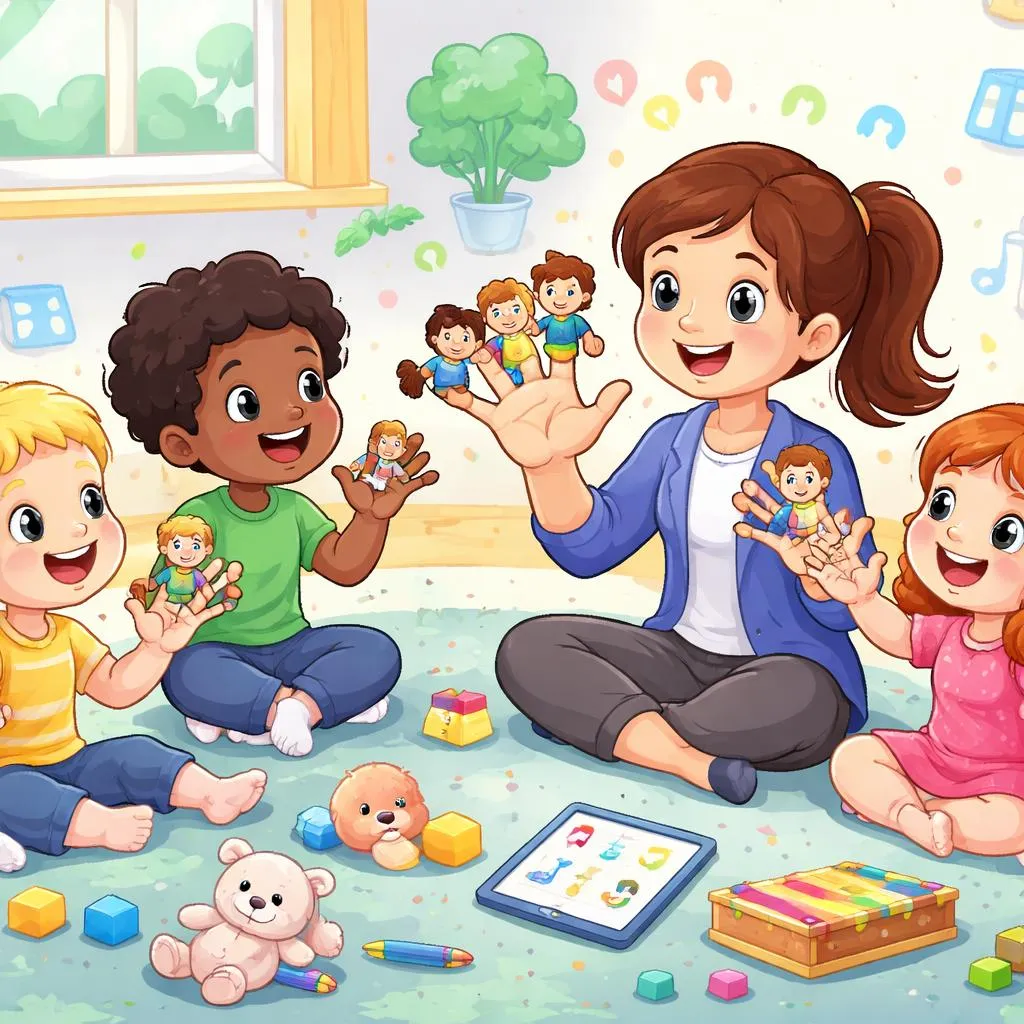

Welcome, teachers and parents, to another engaging session on using music for language learning. Today, we will focus on a classic and versatile tool: the Finger Family rhyme lyrics. This simple song is a powerhouse for teaching young learners. It combines vocabulary, family terms, and motor skills in one catchy tune. Understanding the full Finger Family rhyme lyrics allows us to create dynamic, multi-sensory English lessons. Let’s explore how this beloved rhyme can build a strong foundation in early language acquisition.
What is the rhyme? The "Finger Family" is a popular children's song and fingerplay. It assigns each finger on a hand to a different family member. The rhyme follows a repetitive call-and-response structure. This structure makes it predictable and easy for young learners to follow and join in. The song's primary goal is to teach family member names in a memorable, kinesthetic way. By linking each word to a specific finger, we create a strong physical association that aids memory. This makes the Finger Family rhyme lyrics an ideal starting point for thematic vocabulary building.
The lyrics of nursery rhymes Let's look at the standard, full version of the Finger Family rhyme lyrics. Consistency is helpful for teaching. Here are the complete lyrics we often use:
Daddy finger, daddy finger, where are you? Here I am, here I am. How do you do? Mommy finger, mommy finger, where are you? Here I am, here I am. How do you do? Brother finger, brother finger, where are you? Here I am, here I am. How do you do? Sister finger, sister finger, where are you? Here I am, here I am. How do you do? Baby finger, baby finger, where are you? Here I am, here I am. How do you do?
The beauty of the Finger Family rhyme lyrics lies in their adaptability. We can easily change the family members to other themes, such as animals, colors, or community helpers, while keeping the same musical and grammatical structure.
Vocabulary learning This rhyme perfectly introduces core family vocabulary. The key nouns are "daddy," "mommy," "brother," "sister," and "baby." We reinforce these by consistently pointing to or wiggling the corresponding finger. The song also teaches useful question words and phrases like "where," "here," and the greeting "How do you do?"
We can expand this vocabulary effortlessly. After mastering the basic Finger Family rhyme lyrics, create new verses. Introduce "Grandma finger" and "Grandpa finger." Shift to a pet theme with "Cat finger" and "Dog finger." This practice reinforces the sentence pattern while introducing new words, making the learning scaffolded and effective.
Phonics points The repetitive nature of the Finger Family rhyme lyrics is excellent for sound recognition. We can focus on initial consonant sounds. For example, the /d/ sound appears in "daddy," "do," and "where are you." Ask learners to listen for that sound as you sing slowly.
The rhyme also highlights simple vowel sounds. The long /i/ in "I" and the /uː/ in "you" and "do" are repeated frequently. The clear enunciation required for singing helps learners distinguish these sounds. Furthermore, the rhyming pair "you" and "do" provides a clear example of end rhyme, building early phonemic awareness in a musical context.
Grammar patterns The Finger Family rhyme lyrics present clear, simple grammar in a natural context. The most prominent pattern is the "Where are you?" question. This is a fundamental English interrogative structure for asking about location. The consistent response, "Here I am," provides a perfect model for a declarative statement using the verb "to be."
We also see the subject-verb agreement "Here I am" versus "Here he is." While the song uses "I," we can gently introduce the concept later. The lyrics use the simple present tense throughout, which is the standard tense for general states and habitual actions. This repeated exposure helps internalize basic sentence structure without explicit grammar drills.
Learning activities Transform the rhyme into a hide-and-seek game. Ask learners to hide their hands behind their backs. Sing, "Daddy finger, where are you?" They then bring only that finger forward and respond. This adds an element of listening comprehension and fine motor control.
A "Family Puppet" craft is highly engaging. Have learners draw small faces on paper or use felt to create simple finger puppets for each family member. As they sing the Finger Family rhyme lyrics, they can make the corresponding puppet "pop up" and bow. This deepens the connection between the word, the sound, and a visual representation.
Printable materials A "Finger Matching" worksheet is very effective. Provide a printable with two columns. One column has pictures of family members. The other column has outlines of a hand with one finger highlighted. Draw a line from the picture to the correct finger. This reinforces the vocabulary and the song's kinesthetic logic.
Create a "Fill-in-the-Blank" lyric sheet. Omit key vocabulary words from the Finger Family rhyme lyrics, such as "mommy" or "here." Provide a word bank at the top. Learners listen to the song and write the correct word in the blank. This activity practices word recognition, spelling, and listening skills in one.
Educational games "Finger Family Speed" is a fun listening game. Call out a family member from the rhyme. The first learner to hold up the correct finger wins a point. Increase difficulty by calling sequences: "Sister finger, then Daddy finger!" This sharpens reaction time and word association.
"Finger Family Bingo" adapts well. Create bingo cards with pictures of the family members. Instead of calling the name, sing the corresponding verse from the Finger Family rhyme lyrics. Learners must listen carefully to the lyrics to identify and mark the correct picture on their card. This game trains auditory processing and vocabulary recall.
Using the Finger Family rhyme lyrics is about creating joyful, participatory language moments. When learners sing, wiggle their fingers, and eventually create their own verses, they move from passive receivers to active users of English. This sense of ownership and play is crucial for building long-term enthusiasm and confidence. So, gather your learners, get those fingers ready, and let the music guide your next vocabulary adventure. The combination of rhythm, repetition, and movement is a proven path to making new words stick.