
Many learners ask a common question.
Where did English originated from.
This question helps us understand the language better.
English did not appear suddenly.
It grew slowly. It changed over time.
Like people, languages have a history.
To understand where did English originated from, we need to look far back in time.
Long before modern English, other languages were spoken.
Thousands of years ago, people in Europe spoke many different languages.
These languages belonged to large language families.
English comes from one of them.
English belongs to the Indo-European language family.
This family is very old. It includes many languages.
Languages like Spanish, French, and German are also part of this family.
They share some similarities.
The early story of English begins in Europe.
Long ago, groups of people moved across the land.
They brought their languages with them.
One important group was the Germanic tribes.
They lived in northern Europe. They spoke Germanic languages.
These Germanic languages are the ancestors of English.
This is a key point when asking where did English originated from.
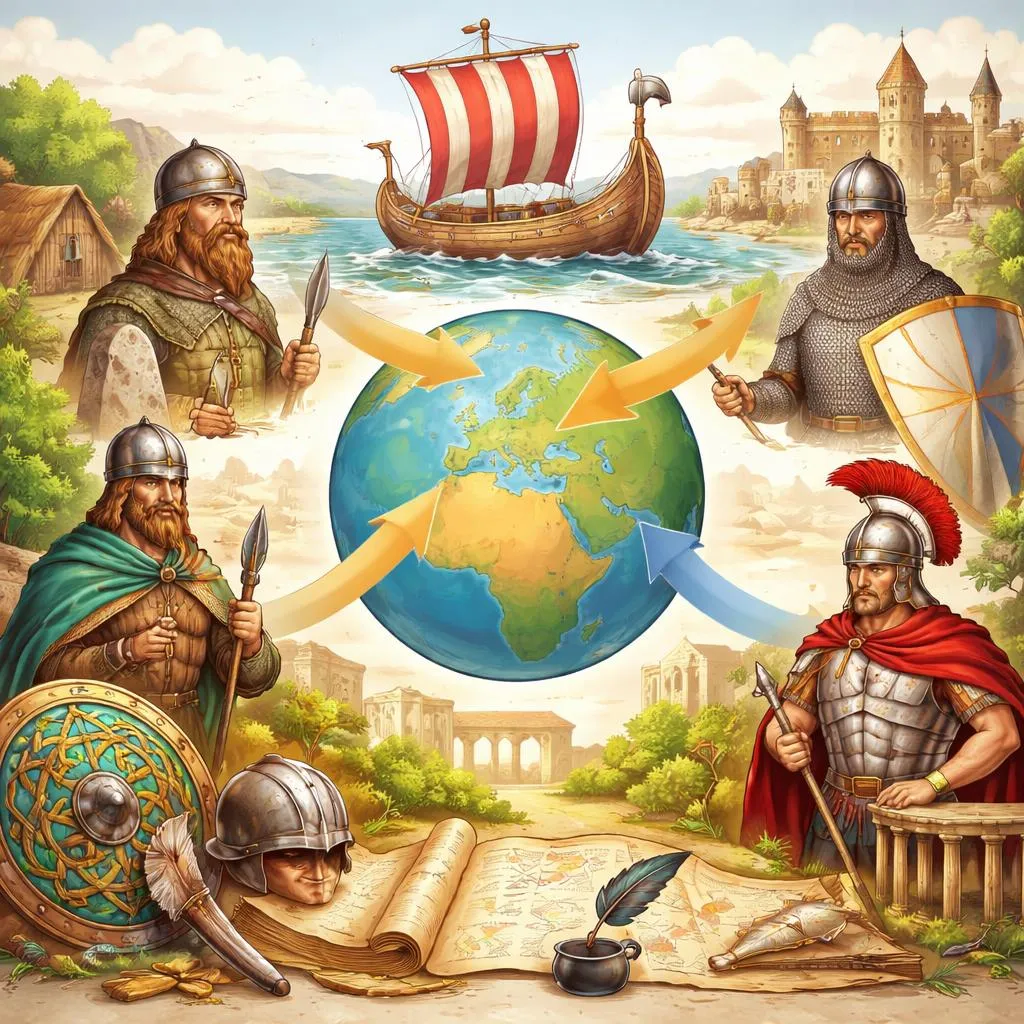
Around the fifth century, Germanic tribes traveled to Britain.
They came from areas we now call Germany and Denmark.
These tribes included the Angles, the Saxons, and the Jutes.
Their names still matter today.
The word England comes from the Angles.
Angle-land became England. This name stayed.
The languages spoken by these tribes mixed together.
This mix formed Old English.
Old English looks very different from modern English.
It used different words. It used different spelling.
Most people today cannot read it.
Even so, Old English is an important part of where did English originated from.
It is the foundation.
Old English was a Germanic language.
It shared words with German. It shared grammar patterns.
English still keeps some of these patterns.
Many basic English words come from Old English.
Words like man. Words like house.
These words feel simple and strong.
Over time, Britain was influenced by new groups.
These groups brought new languages.
English continued to change.
One important influence came from the Vikings.
The Vikings came from Scandinavia. They spoke Old Norse.
The Vikings settled in parts of Britain.
They lived with local people. Languages mixed again.
Because of this, English borrowed words from Old Norse.
Words like sky and egg come from this time.
This mixing is part of where did English originated from.
English grows by contact. It learns from neighbors.
Later, another major change happened.
This change came from France.
In 1066, the Normans invaded England.
They spoke a form of French.
For many years, French was the language of the rulers.
English was spoken by common people.
Because of this, English borrowed many French words.
These words often relate to law and food.
Words like court and beef entered English during this time.
This period shaped English deeply.
English became a mix of Germanic and French elements.
This mix is unique.
So when people ask where did English originated from, the answer is not one place.
It is many places.
English comes from Germanic roots.
It learned from Norse. It learned from French.
Each influence stayed.
Over time, English moved toward Middle English.
This form was easier to recognize.
Middle English was spoken around the time of Chaucer.
Some words look familiar. Some still look strange.
Spelling was not fixed.
People spelled words differently. Pronunciation varied.
Language was flexible.
As printing spread, English became more standardized.
Books helped fix spelling.
This led toward Modern English.
The English we know today started to take shape.
Another important part of where did English originated from is exploration.
England traveled to other parts of the world.
English went to new lands.
It met new cultures. It met new languages.
English borrowed words from many places.
From India. From Africa.
From the Americas.
Words like banana and chocolate joined the language.
English kept growing.
This borrowing continues today.
English is open. English is flexible.
This is part of its history.
English also changed through sound shifts.
Pronunciation changed over time. Spelling stayed.
This explains many odd spellings.
The Great Vowel Shift changed how vowels sounded.
This shaped modern pronunciation.
Understanding where did English originated from helps explain why English looks the way it does.
English spelling can feel confusing.
History explains it. Change explains it.
English grammar also reflects history.
Some rules come from Germanic roots. Others come from French influence.
This mix makes English rich.
It also makes it complex.
Children learning English do not need to know all this history.
But simple stories help understanding.
Knowing where did English originated from can make learning feel meaningful.
Language has a journey.
English did not grow alone.
It grew through people. It grew through contact.
Each generation changed English slightly.
Words shifted. Sounds shifted.
Language stayed alive.
English continues to change today.
New words appear. Old words change meaning.
This is natural.
Modern English has many accents.
British English. American English.
Each has history.
All these forms share the same roots.
They come from the same long story.
That story starts in Europe.
So when asking where did English originated from, we can say this.
English began with Germanic tribes.
It grew through contact with other languages. It changed through time.
It is a language shaped by history.
By movement. By culture.
English carries traces of the past.
In its words. In its sounds.
Learning English means joining this long story.
A story still being written.
English came from people talking, sharing, and changing.
And that is where English originated from.
To understand where did English originated from more clearly, it also helps to look at everyday words.
Many common words have very old roots.
Words like mother and father come from early Germanic languages.
These words stayed because families used them daily.
Daily use keeps words alive.
When people speak often, language stays strong.
English kept many simple words from its early days.
Sun. Moon.
Nature words last a long time.
These words were spoken before writing was common.
People talked. They remembered.
Language lived in sound.
When writing became more common, English words began to appear on paper.
This helped preserve the language.
Old English writing used a different alphabet.
Some letters no longer exist. Spelling looked unfamiliar.
Over time, English adopted the Roman alphabet.
This made writing easier to spread.
Books played an important role in shaping English.
They helped share words across regions.
Before books, people spoke differently in different places.
Accents varied greatly.
This is another part of where did English originated from.
English was not one voice. It was many voices.
Regional speech slowly blended.
Trade helped. Travel helped.
Communication increased.
As people moved for work, they carried words with them.
These words mixed again.
English grew through movement.
People moved. Language moved.
Schools later helped standardize English.
Children learned similar spelling. Rules became clearer.
Standard English began to form.
This did not remove accents. It unified writing.
Even today, spoken English sounds different around the world.
History explains this.
English in Britain sounds different from English in America.
Both came from the same roots.
When English traveled to North America, it met new environments.
New animals. New plants.
English needed new words.
Sometimes it borrowed them. Sometimes it created them.
Words like raccoon and canoe came from Native American languages.
These words stayed.
This borrowing is part of where did English originated from.
English grows by borrowing. It does not resist change.
The same happened in other regions.
In India. In Africa.
English adapted again.
Local words entered English.
Food names. Place names.
Culture shaped vocabulary.
This made English richer.
More words. More meaning.
Some learners wonder why English has so many synonyms.
History explains this too.
Germanic words and French words often exist side by side.
Both stayed.
Ask and question mean similar things.
One is Germanic. One is French.
This gives speakers choice.
Formal or casual. Simple or detailed.
Children often learn Germanic words first.
They are shorter. They sound simple.
French words often appear later.
They sound longer. They feel formal.
This layered vocabulary comes directly from English history.
Understanding where did English originated from helps explain learning patterns.
English grammar also shows history.
Word order stayed simple. Endings slowly disappeared.
Old English had many endings.
Words changed shape. Meaning was shown by form.
Over time, English lost many endings.
Word order became more important.
This made English easier in some ways.
Less memorization. More structure.
Children benefit from this change.
They follow patterns. They learn faster.
English verbs still show some history.
Irregular forms remain. Common verbs keep old shapes.
Go and went come from different roots.
History explains this.
High-use words change slowly.
People repeat them often. They resist change.
This is why basic verbs still look unusual.
English spelling also keeps history.
Some letters are silent. Sounds have shifted.
Spelling shows the past.
Pronunciation moved on. Writing stayed.
This can confuse learners.
But it also tells a story.
Each strange spelling points to an earlier sound.
Teachers sometimes explain this gently.
Not all at once. Only when helpful.
Children do not need full history.
Simple ideas are enough.
Knowing that English changed over time can reduce frustration.
Mistakes feel normal.
English learners often ask why rules have exceptions.
History is the answer.
Rules were added slowly.
Change happened gradually.
Language adapted.
This is true for all languages.
English is not special. It is human.
Where did English originated from is not just a question about the past.
It explains the present.
English today is still changing.
New words appear online. Meanings shift.
Young people shape English now.
Slang appears. Expressions spread.
This is the same process that happened long ago.
Languages never stop moving.
They reflect life. They reflect people.
English continues to borrow.
From technology. From culture.
Words like email and emoji show modern influence.
Future English will sound different again.
New accents. New expressions.
But the roots will remain.
Germanic base. Layered history.
When learners ask where did English originated from, they join a long chain of curiosity.
People have always asked where words come from.
Curiosity keeps language alive.
Learning history adds meaning.
English did not come from one moment.
It came from centuries of use.
People talked. They shared.
Language followed.
Understanding this helps learners feel connected.
They are part of the story.
English belongs to its speakers.
Past and present.
Every new learner adds another chapter.
And English continues to grow, just as it always has.