
What Is This Plant?
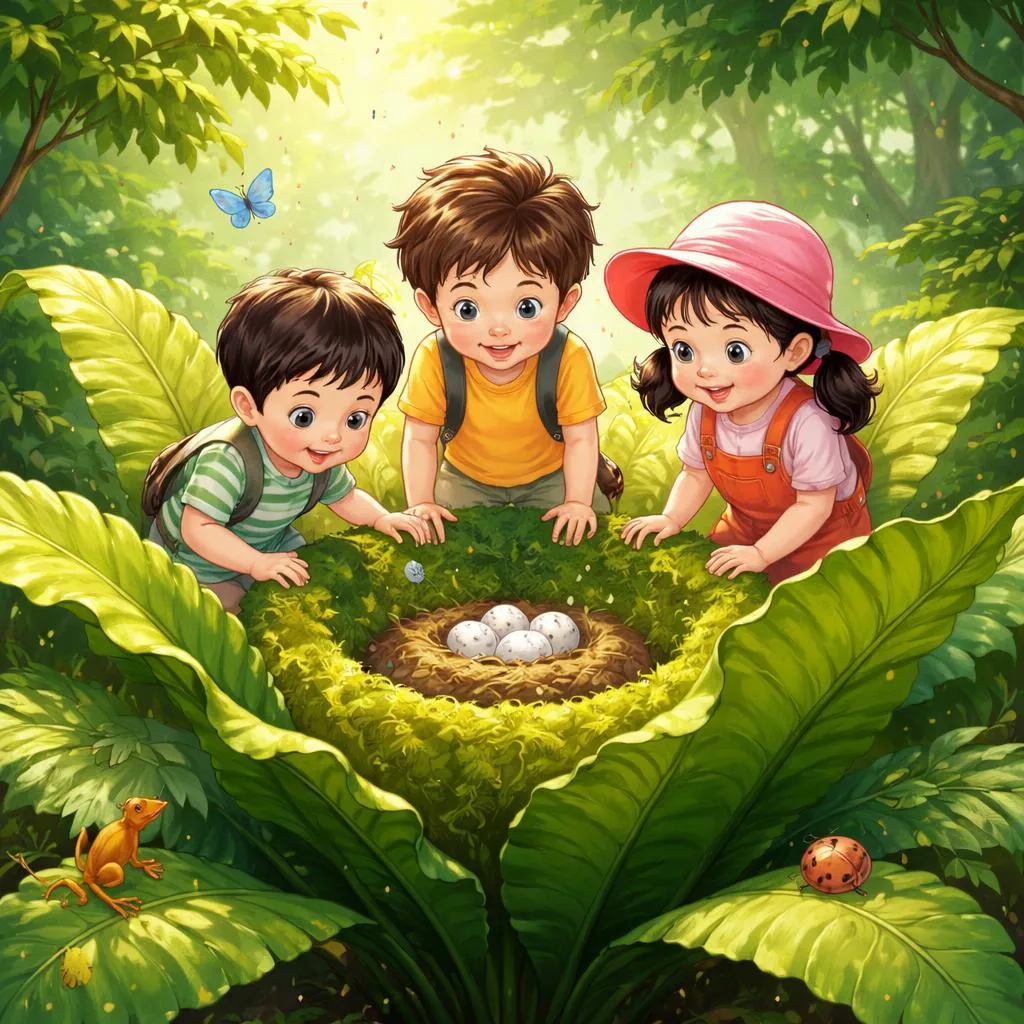
The bird's nest fern plant is a unique fern with bright green, crinkled leaves that grow in a rosette shaped like a bird's nest. It grows as a clumping plant with leaves that unfurl from the center. The leaves are long and wavy. They are bright green and glossy. They have a crinkled or ruffled texture. The leaves grow from a central cup. The cup collects water and fallen leaves. In the wild, this cup becomes a home for small animals. The plant has no flowers or seeds. It reproduces by spores. The spores are on the undersides of the leaves. For children, the bird's nest fern is like a plant with a bowl in the center. The leaves form a cup that can hold water. Parents can grow bird's nest ferns in pots. Children love the ruffled leaves and the idea of a bird's nest. This plant teaches children about epiphytes, water collection, and the beauty of rosette shapes.
English Learning About This Plant
The English name “bird’s nest fern” comes from the central cup that looks like a bird’s nest. The pronunciation is “birds nest fern.” The International Phonetic Alphabet (IPA) is /bɜːrdz nest fɜːrn/. Children can say it: birds nest fern. When we learn about bird's nest fern plant, we learn words for its parts. The leaf is the long, wavy, crinkled part. The rosette is the circular arrangement of leaves. The cup is the center where new leaves grow and water collects. The spore is the tiny, dust-like part on the underside of the leaf. The rhizome is the short, thick stem at the base. These words help children describe this unique fern.
There is a famous saying about bird’s nest ferns. They are epiphytes in the wild. Another saying goes, “The bird’s nest fern holds water for the forest.” Parents can share these words with their child. They become gentle lessons about providing shelter and collecting resources. Bird’s nest ferns are native to tropical regions of Asia, Africa, and Australia.
Plant Facts and Scientific Knowledge
The bird's nest fern plant belongs to the species Asplenium nidus. It is a member of the spleenwort family, Aspleniaceae. It is native to tropical regions of Southeast Asia, Australia, and Africa. It grows as an epiphyte on trees or as a terrestrial plant on the forest floor. It is found in rainforests.
Bird’s nest fern leaves are long and wavy. They can grow two to five feet long. The leaves are bright green and glossy. They have a crinkled or ruffled texture. They grow in a rosette from a central point. The center forms a cup. In the wild, the cup collects water and fallen leaves. Small animals may live in the cup.
The plant has no flowers or seeds. It reproduces by spores. Spores are tiny, dust-like particles on the undersides of the leaves. They are arranged in lines called sori. When the spores are ripe, they are released.
Bird’s nest ferns are slow-growing. They prefer shade and high humidity. They are sensitive to direct sun. They are excellent houseplants.
Bird’s nest ferns have symbolic meaning. They represent shelter, hospitality, and new beginnings. The central cup represents a home. They are plants of protection and growth.
How to Grow and Care for This Plant
Growing a bird's nest fern plant requires attention. Choose a spot with bright, indirect light. It needs light but not direct sun. Direct sun burns the leaves. It needs high humidity. Place it in a bathroom or near a humidifier. It needs well-drained soil that stays moist.
Plant bird’s nest fern in a pot with drainage holes. Place the plant in the pot. Fill with soil. Do not bury the central cup. The cup must stay above the soil. Water well. Children can help by putting the plant in the pot and adding soil.
Water bird’s nest fern when the top of the soil feels dry. Water into the soil, not into the cup. The cup can rot if water sits in it. Water thoroughly, then let the soil dry slightly. Mist the leaves to increase humidity.
Bird’s nest fern needs little fertilizer. Feed once a month in spring and summer with diluted fertilizer. Do not overfeed. Remove dead or damaged leaves at the base. Do not cut the tips of the leaves.
The plant is sensitive to cold. Keep it above 60 degrees Fahrenheit. Repot every few years when it outgrows its pot.
Benefits of Growing This Plant
Growing a bird's nest fern plant brings many gifts to a family. First, the ruffled leaves are beautiful. The bright green color is cheerful. Children love the crinkled texture. Second, the central cup is fascinating. Children can learn how the plant collects water.
Bird’s nest ferns clean the air. They add humidity. Children learn that plants improve our environment.
The plant teaches about epiphytes. Children learn that some plants grow on trees. They learn about adaptation.
Bird’s nest ferns also teach about shelter. The cup provides a home for small animals. Children learn that plants can provide homes.
What Can We Learn From This Plant
A bird's nest fern plant teaches children about shelter. The central cup holds water and collects leaves. It can be a home for small creatures. Children learn that they can provide shelter. They can create safe spaces for others.
Bird’s nest ferns also teach about collecting resources. The plant collects water and leaves in its cup. Children learn that they can collect and save resources. They can prepare for the future.
Another lesson is about slow growth. The plant grows slowly. Children learn that growth takes time. They can be patient.
Bird’s nest ferns also teach about texture. The leaves are crinkled and wavy. Children learn that texture adds beauty. They can appreciate different textures.
Fun Learning Activities
There are many simple activities to help children learn about bird's nest fern plant. One activity is a cup study. Look at the center of the bird’s nest fern. See the cup where new leaves grow. Gently add a few drops of water. See how the cup holds water. This builds observation.
Another activity is a spore study. Turn a mature leaf over. Look for brown lines on the underside. These are spore clusters. Use a magnifying glass. This teaches about fern reproduction.
A nature journal works well for bird's nest ferns. Draw the long, wavy, crinkled leaves. Draw the central cup. Draw the spore lines. Label the parts: leaf, rosette, cup, spore. Write the date when you got the plant.
For art, try painting bird's nest ferns. Use bright green paint. Paint the long, crinkled leaves growing in a rosette. Paint the central cup. This creates a lush, tropical picture.
Vocabulary games are fun too. Write the words bird's nest fern, leaf, rosette, cup, spore, and shelter on cards. Say each word. Ask your child to point to the part on the plant. Practice saying bird's nest fern together. Clap the syllables: birds nest fern.
Finally, try a shelter activity. Talk about how the fern cup provides shelter. Ask your child to build a small shelter for a toy animal. This connects the plant to providing homes.
Through these activities, children build a deep connection with a fern that forms a cup to collect water and shelter life. They learn new words, study spores, and discover the joy of providing shelter. The bird's nest fern plant becomes a symbol of hospitality and slow growth. Each time they see the ruffled leaves, children remember that they can provide shelter. They remember that growth takes time. This tropical fern opens a world of rosette wonder, spore discovery, and the lasting lesson that the plants that collect water also teach us to care for others.