
What Is This Plant?
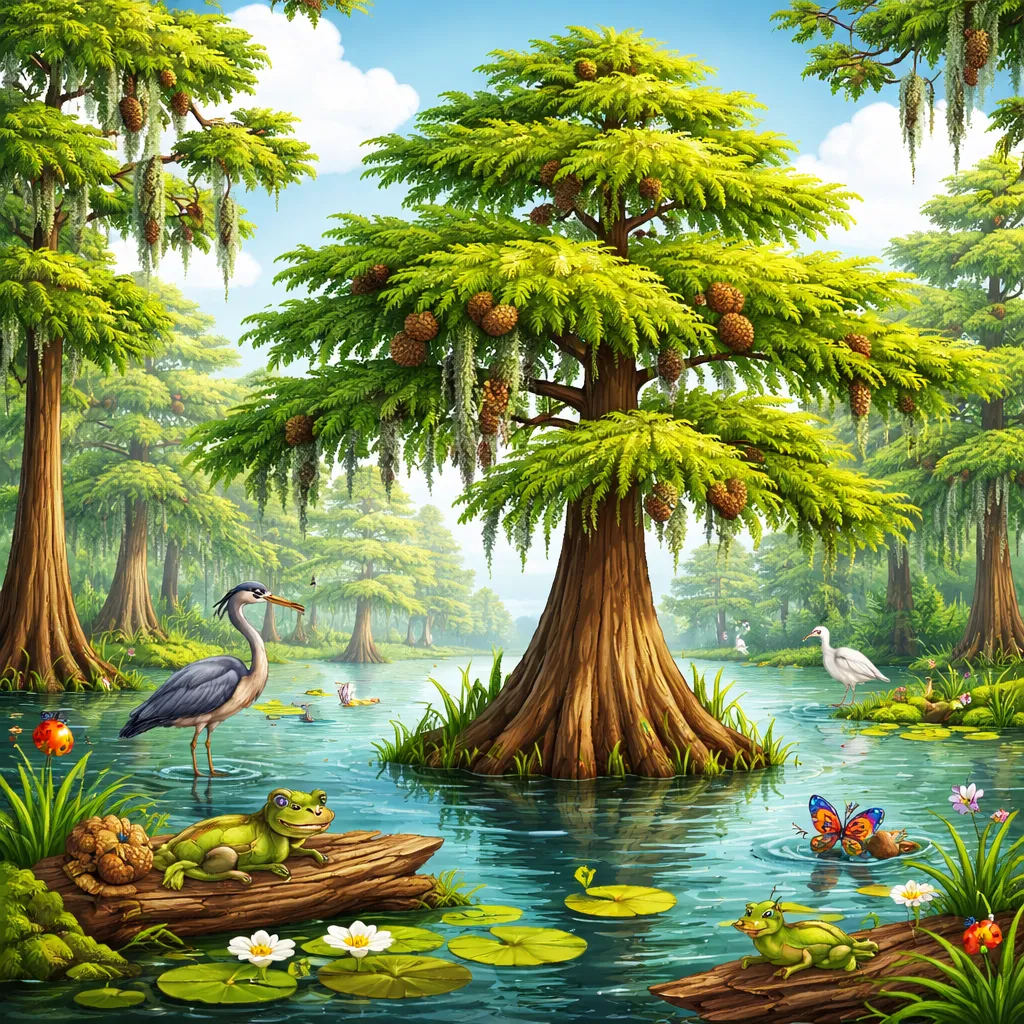
The cypress plant is a tall, evergreen tree with feathery, scale-like leaves and round, woody cones. It grows in wetlands, swamps, and along riverbanks. The tree has a straight trunk. The bark is reddish-brown and fibrous. The leaves are tiny and scale-like. They overlap like fish scales. They are bright green and soft. The tree produces small, round cones. The cones are woody and contain seeds. Some cypress trees grow in water. They develop special roots called knees that stick up out of the water. These knees help the tree breathe. For children, cypress trees are like trees that stand in water. The knees look like little people or bumps. Parents can take children to see cypress trees in wetlands or grow them in yards. Children love the feathery foliage and the funny-looking knees. This plant teaches children about wetland ecosystems, adaptation, and the beauty of trees that grow in water.
English Learning About This Plant
The English name “cypress” comes from the Latin word “cupressus.” The pronunciation is “sigh-prus.” The International Phonetic Alphabet (IPA) is /ˈsaɪprəs/. The word has two syllables. Children can say it: sigh-prus. When we learn about cypress plant, we learn words for its parts. The leaf is the tiny, scale-like part that overlaps like fish scales. The cone is the small, round, woody structure that holds the seeds. The knee is the special root that grows up out of the water. The bark is the reddish-brown, fibrous outer layer. The branchlet is the small, flat branch that holds the leaves. These words help children describe this wetland tree.
There is a famous saying about cypress. They are symbols of mourning and immortality. Another saying goes, “The cypress stands tall in the water, guarding the wetlands.” Parents can share these words with their child. They become gentle lessons about adaptation and protecting the environment. Cypress trees are native to many parts of the world, including North America, Europe, and Asia.
Plant Facts and Scientific Knowledge
The cypress plant belongs to the genus Cupressus. There are about 20 species. The bald cypress (Taxodium distichum) is a common species in North America. Cypress trees are members of the cypress family, Cupressaceae. They are conifers. They are evergreen or deciduous depending on the species. Bald cypress loses its needles in winter.
Cypress leaves are tiny and scale-like. They grow in overlapping layers on small branchlets. The leaves are bright green and soft. They give the tree a feathery appearance. The branchlets are flat and arranged in sprays.
Cypress trees produce small, round cones. The cones are woody. They contain seeds. The cones can stay on the tree for several years. The seeds are eaten by birds and squirrels.
Bald cypress trees grow in swamps and wetlands. They develop special roots called knees. The knees grow up from the roots. They stick out of the water. They help the tree get oxygen. They can grow several feet tall.
Cypress trees have symbolic meaning. They represent longevity, resilience, and mourning. They are often planted in cemeteries. They are also symbols of the Southern United States.
How to Grow and Care for This Plant
Growing a cypress plant requires space. Choose a sunny spot. Cypress trees need full sun. They need moist, well-drained soil. Bald cypress can grow in standing water. Plant in spring or fall.
Dig a hole twice as wide as the root ball. Place the tree in the hole. Fill with soil. Water well. Children can help by holding the tree straight while you fill the hole.
Water young cypress trees regularly. They need consistent moisture. Once established, they are drought-tolerant. Bald cypress can grow in water. Mulch around the base keeps the soil moist.
Cypress trees need little fertilizer. A light feeding in spring is enough. Do not overfeed. Prune only to remove dead branches. Cypress trees do not need much pruning.
Cypress trees grow slowly. They can live for hundreds of years. Be patient. They will reward you with a beautiful, tall tree.
Benefits of Growing This Plant
Growing a cypress plant brings many gifts to a family. First, cypress trees are beautiful. The feathery foliage is soft and green. Second, cypress trees provide habitat. Birds and animals live in them.
Cypress trees help the environment. They prevent erosion. They filter water. They provide oxygen. Children learn that trees are important for the earth.
The knees are fascinating. Children love the funny-looking roots. They learn about adaptation.
Cypress trees also teach about longevity. They can live for hundreds of years. Children learn that some things last a very long time.
What Can We Learn From This Plant
A cypress plant teaches children about adaptation. The tree grows in water. It develops knees to breathe. Children learn that they can adapt to their environment. They can find ways to thrive.
Cypress also teaches about resilience. The tree stands tall in wet conditions. It survives floods. Children learn that they can be resilient. They can survive hard times.
Another lesson is about providing shelter. Cypress trees provide homes for animals. Children learn that they can provide shelter for others. They can be a safe place.
Cypress also teaches about longevity. The tree lives for centuries. Children learn that some things last. They can plant something that will grow for generations.
Fun Learning Activities
There are many simple activities to help children learn about cypress plant. One activity is a leaf study. Look at cypress leaves. They are tiny and scale-like. They overlap like fish scales. Use a magnifying glass. This builds observation.
Another activity is a knee study. If you can visit a bald cypress, look for knees. They stick up out of the water. Count how many you can see. This teaches about adaptation.
A nature journal works well for cypress. Draw the feathery foliage of scale-like leaves. Draw the round, woody cones. Draw the knees. Label the parts: leaf, cone, knee, bark. Write the date when you saw the tree.
For art, try painting cypress. Use green paint for the feathery foliage. Use brown for the trunk and knees. Paint the tree standing in water. This creates a wetland picture.
Vocabulary games are fun too. Write the words cypress, leaf, cone, knee, bark, and wetland on cards. Say each word. Ask your child to point to the part on the tree. Practice saying cypress together. Clap the syllables: sigh-prus.
Finally, try a wetland activity. Talk about wetlands and why they are important. Draw a picture of a wetland with cypress trees. This connects the tree to environmental awareness.
Through these activities, children build a deep connection with a tree that grows in water and stands tall through floods. They learn new words, study knees, and discover the joy of adaptation. The cypress plant becomes a symbol of resilience and longevity. Each time they see a cypress tree, children remember that they can adapt. They remember that they can stand tall in any environment. This wetland tree opens a world of swamp discovery, adaptation wonder, and the lasting lesson that the trees that grow in water teach us to breathe deep and stand strong.