
What Is This Plant?
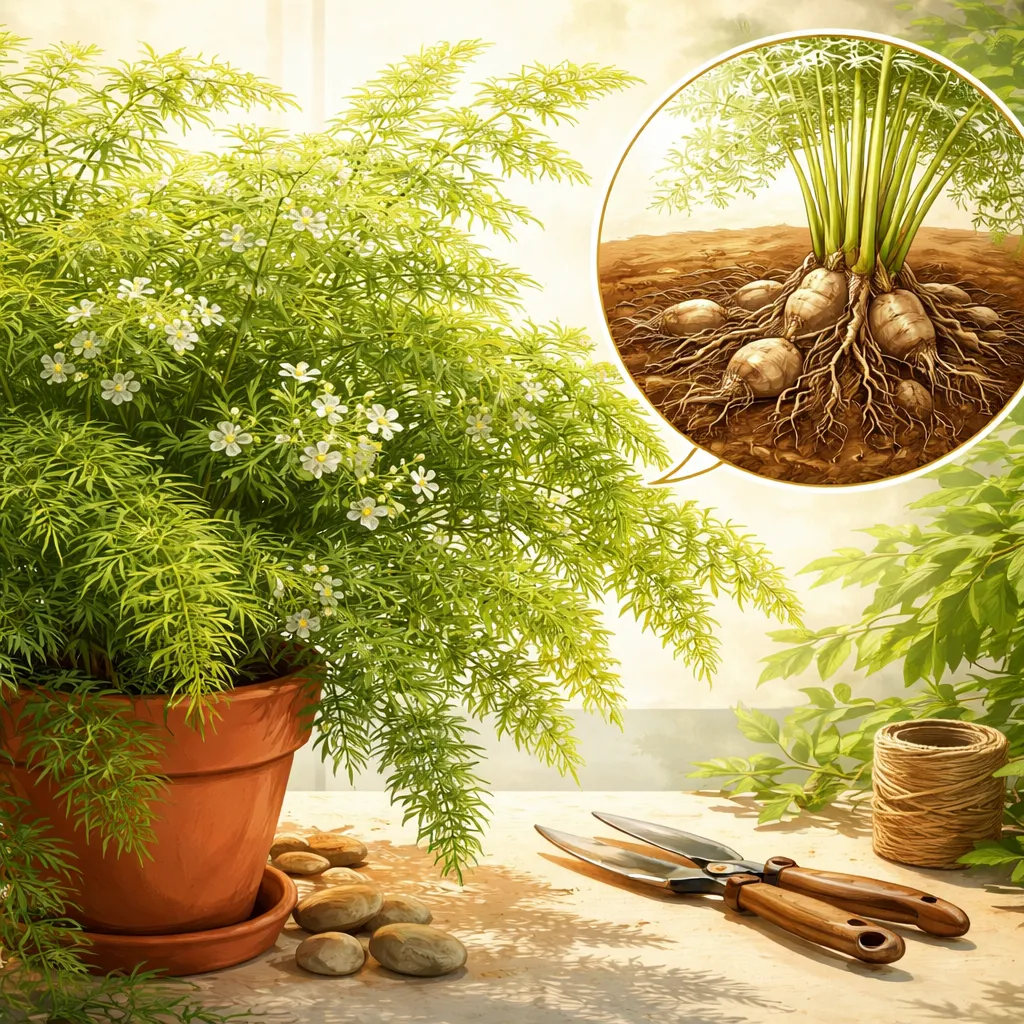
The asparagus fern plant is not a true fern, but it has delicate, feathery fronds that look like fern leaves. It grows as a small, bushy plant with long, arching stems. The stems are thin and wiry. They are covered with tiny, needle-like leaves called cladodes. The leaves are bright green and soft. They look like little needles. The plant produces small white flowers in summer. The flowers are followed by bright red berries. The berries are poisonous. The plant has a tuberous root system that stores water. Asparagus fern can be grown in hanging baskets or pots. It cascades down like a green waterfall. For children, the asparagus fern is like a plant with soft, feathery leaves. The leaves tickle when you touch them. Parents can grow asparagus fern in pots. Children love the soft texture and the tiny berries. This plant teaches children about texture, caution with berries, and the beauty of delicate foliage.
English Learning About This Plant
The English name “asparagus fern” comes from its relationship to asparagus. The pronunciation is “a-spar-a-gus fern.” The International Phonetic Alphabet (IPA) is /əˈspærəɡəs fɜːrn/. Children can say it: a-spar-a-gus fern. When we learn about asparagus fern plant, we learn words for its parts. The frond is the feathery, arching stem with needle-like leaves. The cladode is the tiny, needle-like part that looks like a leaf. The tuber is the thick, underground root that stores water. The flower is the small, white blossom. The berry is the small, red fruit that is poisonous. These words help children describe this delicate plant.
There is a famous saying about asparagus fern. It is not a true fern. Another saying goes, “Asparagus fern brings a soft touch to the garden.” Parents can share these words with their child. They become gentle lessons about texture and the importance of knowing which plants are safe. Asparagus fern is native to South Africa.
Plant Facts and Scientific Knowledge
The asparagus fern plant belongs to the species Asparagus densiflorus. It is a member of the asparagus family, Asparagaceae. It is native to South Africa. It is not a true fern. It is related to the vegetable asparagus. It is grown for its foliage, not its edible shoots.
Asparagus fern has thin, wiry stems. The stems are covered with tiny, needle-like cladodes. Cladodes are modified stems that look like leaves. They are bright green and soft. They grow in clusters along the stem.
The plant produces small white flowers in summer. The flowers are bell-shaped. They are followed by bright red berries. The berries are poisonous if eaten. They should be kept away from children and pets.
The plant has a tuberous root system. The tubers store water. This makes the plant drought-tolerant. It can survive periods of neglect.
Asparagus fern can be grown in hanging baskets or pots. It cascades down. It can also be grown as a ground cover in warm climates.
Asparagus fern has symbolic meaning. It represents delicacy, softness, and resilience. The feathery fronds add texture to gardens and homes.
How to Grow and Care for This Plant
Growing an asparagus fern plant is easy for families. Choose a spot with bright, indirect light. It can tolerate some shade. It needs well-drained soil. Use regular potting soil.
Plant asparagus fern in a pot with drainage holes. Place the plant in the pot. Fill with soil. Water well. Children can help by putting the plant in the pot and adding soil.
Water asparagus fern when the top inch of soil feels dry. It likes consistent moisture but does not like soggy soil. Water thoroughly, then let the soil dry slightly. In winter, water less. The tubers store water.
Asparagus fern needs little fertilizer. Feed once a month in spring and summer with balanced fertilizer. Do not overfeed. Prune to control size. Remove yellow or dead fronds.
The plant can be divided in spring. Remove it from the pot. Cut the root ball into sections. Replant. Children can help by watering the new plants.
Benefits of Growing This Plant
Growing an asparagus fern plant brings many gifts to a family. First, the feathery fronds are beautiful. They are soft and delicate. Children love to touch them. Second, the plant cascades down. It looks like a green waterfall.
Asparagus fern cleans the air. It removes toxins. Children learn that plants help us breathe better.
The plant is easy to care for. It tolerates neglect. This builds confidence in young gardeners.
Asparagus fern also teaches about caution. The berries are poisonous. Children learn that not all berries are safe. They learn to ask before touching.
What Can We Learn From This Plant
An asparagus fern plant teaches children about texture. The leaves are soft and feathery. Children learn that texture is important. They can appreciate how things feel.
Asparagus fern also teaches about caution. The red berries are poisonous. Children learn that not all beautiful things are safe. They learn to ask before touching unknown plants.
Another lesson is about resilience. The plant has tubers that store water. It survives dry times. Children learn that they can store up strength for hard times.
Asparagus fern also teaches about cascading beauty. The fronds hang down. Children learn that beauty can come in many forms. It can cascade and flow.
Fun Learning Activities
There are many simple activities to help children learn about asparagus fern plant. One activity is a texture activity. Touch the asparagus fern fronds. They are soft and feathery. Compare to other leaves. This builds sensory awareness.
Another activity is a berry caution activity. Show children the red berries. Explain they are poisonous. Teach the rule: never touch or taste a berry without asking an adult. This teaches safety.
A nature journal works well for asparagus fern. Draw the feathery fronds with needle-like leaves. Draw the small white flowers. Draw the red berries. Label the parts: frond, cladode, flower, berry. Write the date when you got the plant.
For art, try painting asparagus fern. Use bright green paint. Paint the arching fronds with tiny needle-like leaves. Add small white flowers and red berries. This creates a delicate picture.
Vocabulary games are fun too. Write the words asparagus fern, frond, cladode, tuber, berry, and caution on cards. Say each word. Ask your child to point to the part on the plant. Practice saying asparagus fern together. Clap the syllables: a-spar-a-gus fern.
Finally, try a caution activity. Talk about safe and unsafe berries. Make a rule: never eat berries without asking. Draw a picture of the asparagus fern berries to remember. This connects the plant to safety.
Through these activities, children build a deep connection with a delicate plant that teaches texture and caution. They learn new words, touch soft fronds, and discover the importance of safety. The asparagus fern plant becomes a symbol of delicate beauty and careful respect. Each time they see the feathery fronds, children remember that texture is beautiful. They remember to be cautious with berries. This soft, cascading plant opens a world of sensory discovery, safety awareness, and the lasting lesson that beauty and caution can grow side by side.