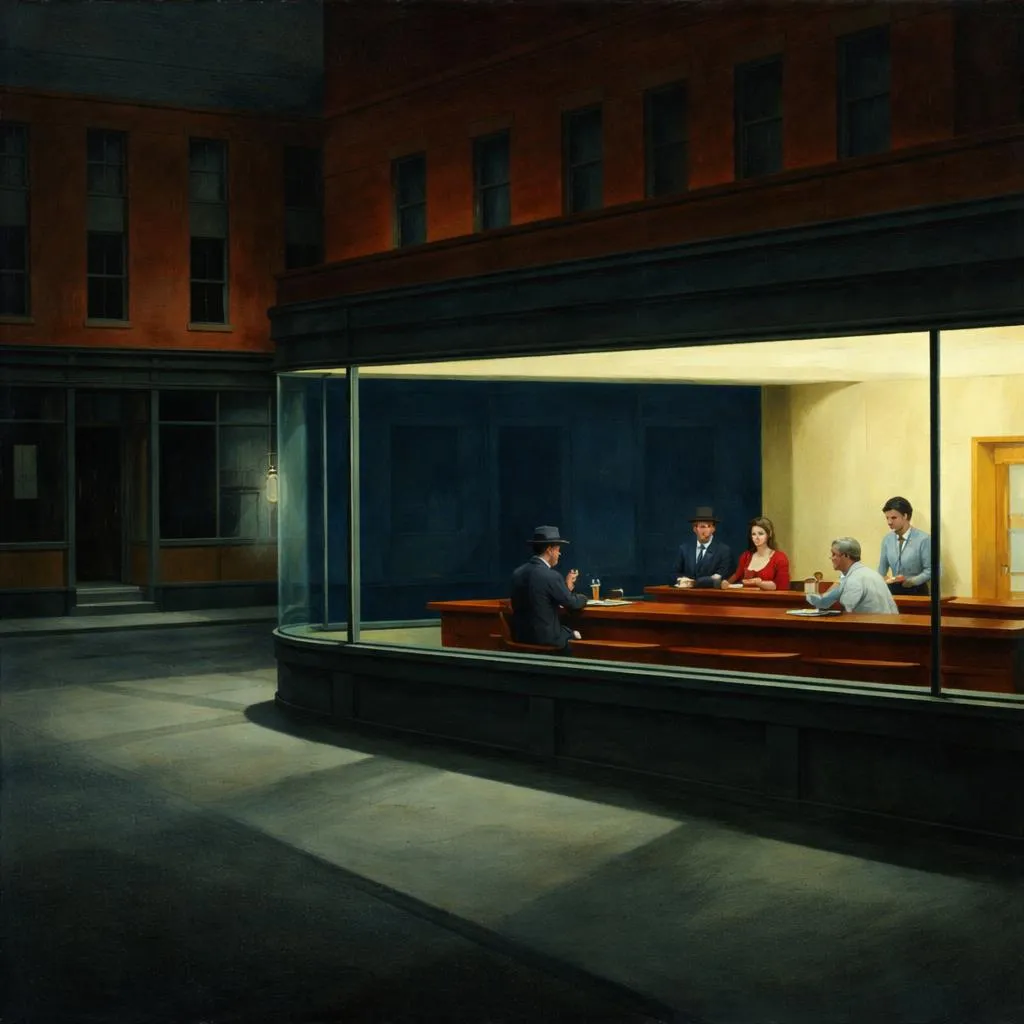

Have you ever walked past a house at night and seen a light on in one window? You wondered who lived there. You imagined their story. Edward Hopper painted that feeling. He painted people sitting alone in diners. He painted empty gas stations. He painted women staring out of windows. This Celebrity Story: Edward Hopper will introduce you to an artist who captured the feeling of being alone in a crowded world. His paintings are quiet. They are sad. They are also beautiful. He did not paint famous people or big events. He painted ordinary moments. A man drinking coffee at 2 AM. A woman in a hotel room. A lighthouse by the sea. His paintings make you stop. They make you think.
Let us meet the painter of American loneliness. Edward Hopper saw the beauty in empty places.
Who Is This Celebrity?
Edward Hopper was an American painter. He lived from 1882 to 1967. He painted realistic scenes of everyday American life. But his paintings are not cheerful. They feel quiet and lonely. He is best known for his painting "Nighthawks." That painting shows four people in a late-night diner. The street is empty. The light is bright inside. The people do not talk to each other.
Why is he famous? He captured a feeling that many people have but cannot name. That feeling of being alone even when you are surrounded by others. His paintings are about isolation, silence, and waiting. They are also about light. He painted light beautifully. The glow of a diner window. The slant of sun on a wall. The shadow of a gas station. He became one of the most famous American artists of the 20th century. His paintings hang in every major museum.
Early Life and Childhood
Edward Hopper was born in Nyack, New York. Nyack is a small town on the Hudson River. His father owned a dry goods store. His mother was artistic. She encouraged him to draw.
He was a tall, quiet boy. He was shy. He did not have many friends. He liked to draw. He drew boats on the river. He drew houses. He drew people from his imagination.
He started drawing seriously when he was five years old. He never stopped. He filled notebooks with sketches. His parents saw his talent. They supported him.
He went to high school in Nyack. He graduated in 1899. He wanted to become an artist. His parents wanted him to have a practical career. They compromised. He studied commercial art. That is art for advertising. He learned to draw for newspapers and magazines.
But he hated it. He wanted to paint. He wanted to paint real life.
Education and Learning Journey
Edward Hopper studied at the New York School of Art. His teacher was Robert Henri. Henri taught his students to paint ordinary life. He told them to paint what they saw in the streets. Not history. Not mythology. Real people. Real places.
Hopper listened. He painted street scenes. He painted people in cafes. He painted theaters. He learned to paint quickly. He learned to capture light.
He also traveled to Europe. He went to Paris three times. In Paris, he discovered the work of Impressionist painters. They painted light and color. He was influenced by them. But he did not copy them. His style was different. His colors were darker. His mood was quieter.
He returned to America. He struggled. He could not sell his paintings. He worked as an illustrator. He drew pictures for magazines. He hated it. He felt like he was wasting his talent. But he needed money.
On weekends, he painted. He painted what he saw. Empty streets. Lonely buildings. People sitting alone.
It took him 20 years to sell his first painting. He was 42 years old.
How Did They Become Successful?
Edward Hopper became successful in 1925. He painted a watercolor called "The Mansard Roof." It showed a house with a sloping roof. The light was beautiful. A museum bought the painting. Other buyers noticed him.
Then in 1927, he sold another painting for $3,500. That was a lot of money then. He quit his illustration job. He never worked for anyone else again. He was 45 years old.
He painted "Nighthawks" in 1942. It became his most famous work. The painting shows a diner at night. Four people sit inside. A server stands behind the counter. The light is bright and harsh. The street is dark and empty. The people do not look at each other. Everyone is alone.
"Nighthawks" is now one of the most recognized paintings in the world. It has been parodied in movies, TV shows, and cartoons. People connect to it. They know that feeling.
He kept painting for the rest of his life. He painted gas stations, lighthouses, hotel rooms, and movie theaters. He painted the same themes over and over. Loneliness. Light. Waiting.
His wife, Josephine, was also an artist. She posed for many of his paintings. She kept detailed notebooks of his work. She recorded every painting he made.
Big Ideas and Achievements
Edward Hopper's biggest idea was that ordinary life is worth painting. He did not paint heroes or battles. He painted a woman tying her shoe. He painted a man reading a newspaper. He painted a house with a broken window. He found beauty in the everyday.
His greatest achievement is "Nighthawks." That painting captures the mood of modern life. We are surrounded by people. But we feel alone. Hopper painted that feeling perfectly.
Another huge achievement is his use of light. He painted light like a character. The light in his paintings has its own mood. The cold light of a diner. The warm light of a morning sun. The flat light of an overcast day. No one painted light better than Hopper.
He also influenced other artists. Filmmakers love Hopper. They copy his compositions. The director Alfred Hitchcock was influenced by him. The director Wim Wenders made a movie called "Paris, Texas" that looks like a Hopper painting.
He also influenced photographers. They try to capture the same quiet mood. His influence is everywhere.
Challenges and Difficult Times
Edward Hopper faced many challenges. First, he was shy. He had trouble talking to people. He had trouble promoting himself. He stayed in the background.
Second, he struggled for many years. He could not sell his work. He was poor. He lived in a small apartment. He worked at jobs he hated.
Third, his marriage was difficult. He married Josephine Nivison in 1924. She was also an artist. They loved each other. But they fought constantly. He was quiet. She was talkative. He wanted to work alone. She wanted to be involved. They argued about everything. But they stayed married until he died.
Fourth, he was a perfectionist. He destroyed paintings he did not like. He painted slowly. He would spend months on one painting. He was never satisfied.
Fifth, his health declined in his later years. He had trouble walking. He had trouble seeing. He stopped painting in 1965. He died two years later. He was 84 years old.
Fun Facts About the Celebrity
Edward Hopper was very tall. He was over six feet four inches. He towered over most people.
Another fun fact: He loved the movies. He went to the cinema almost every day. Movie theaters appear in many of his paintings.
He also loved sailing. He built his own boat. He sailed on the coast of Maine.
He did not like to talk about his paintings. When people asked what a painting meant, he said, "It means what it is."
One more fact: The house in "The Mansard Roof" still exists. It is in Nyack, New York. Fans visit it.
Why Is This Celebrity Important Today?
Edward Hopper is important because his paintings speak to us. We still feel lonely. We still sit in diners at 2 AM. We still stare out windows. His paintings are 80 years old. They feel like today.
He is also important because he showed that American life is beautiful. He did not paint Europe. He painted gas stations and motels. He made ordinary American places look like art.
His influence on visual culture is huge. Every time you see a movie or a photograph that feels lonely and quiet, you are seeing Hopper's influence.
Parents can use his story to teach children about patience. Hopper was 45 before he became successful. He never gave up.
What Can Kids Learn from This Story?
Kids can learn important lessons from Edward Hopper. First, be patient. Hopper waited 20 years to sell his first painting. He did not give up. If you love something, keep doing it. Success might take time.
Second, find beauty in ordinary things. Hopper painted gas stations and diners. You can find beauty in your own neighborhood. The street where you live. The park where you play. Those are art.
Third, it is okay to be quiet. Hopper was shy. He did not like attention. You do not have to be loud to be an artist. Quiet people see things that loud people miss.
Finally, paint what you feel. Hopper felt loneliness. He painted it. His paintings help other people feel less alone. Your feelings matter. Share them.
Quick Quiz or Practice Time
Let us see what you learned from this Celebrity Story: Edward Hopper. Answer these questions with a parent or by yourself.
What is Edward Hopper's most famous painting called?
What feeling do Hopper's paintings often show?
How old was Hopper when he sold his first painting?
Where did Hopper study art?
Who was Hopper's wife, who also painted?
Here is a fun activity. Look up "Nighthawks" by Edward Hopper online with your parent. Look at the people in the diner. They do not talk to each other. Think about what each person might be thinking. Write a short story about one of them.
Another activity. Go to a window in your home at night. Look out. Look at the light. Look at the shadows. Draw what you see. Use pencil and paper. You are painting like Edward Hopper.
Edward Hopper lived a quiet life. He was shy and tall. He painted lonely diners and empty streets. He painted women in hotel rooms. He painted light pouring through windows. He struggled for 20 years. He never gave up. He became one of America's greatest artists. His painting "Nighthawks" is famous around the world. People look at it and feel understood. His story teaches us that ordinary life is art. A gas station. A diner. A woman at a window. All beautiful. All worth painting. That is the real lesson of this celebrity story.