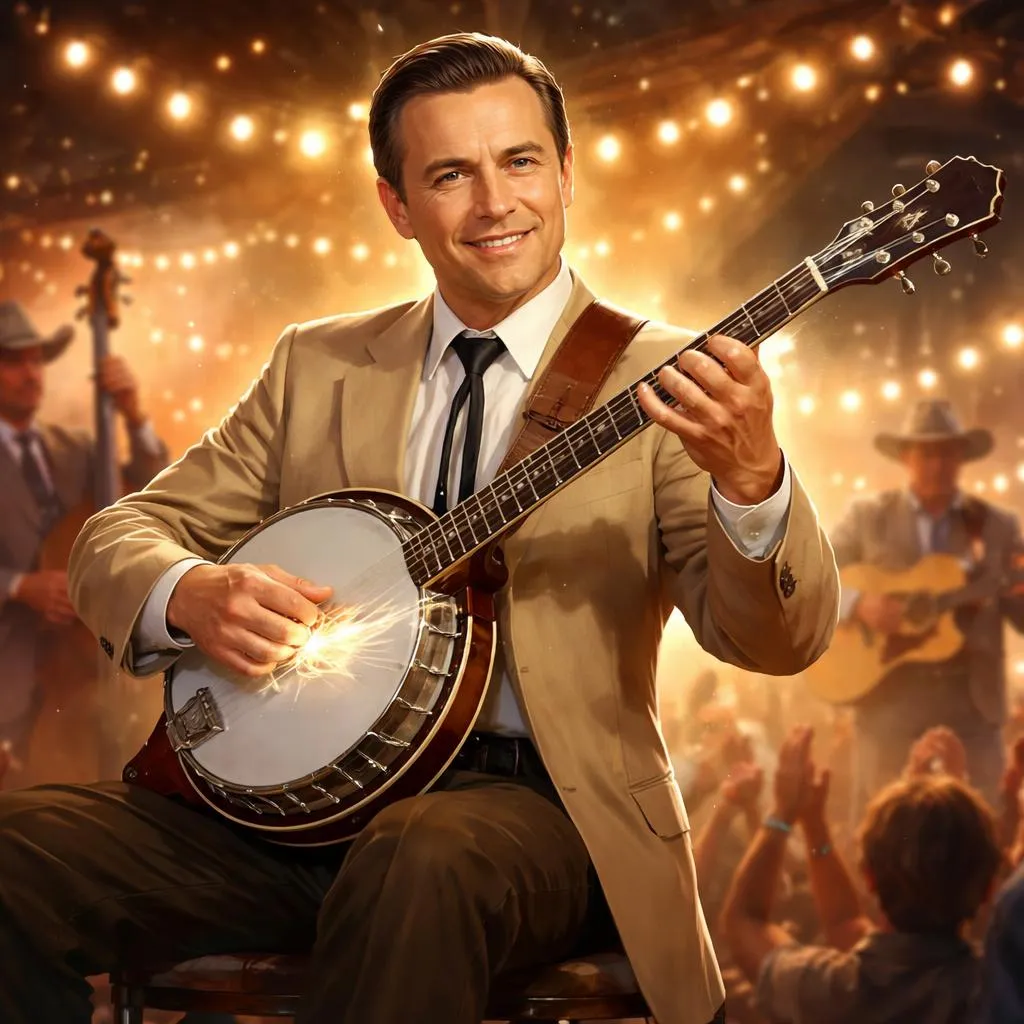

Have you ever heard a banjo played so fast that it sounded like rain on a tin roof? That sound is called "Scruggs style." Earl Scruggs invented it. He changed the banjo from a simple rhythm instrument into a lead instrument. This Celebrity Story: Earl Scruggs will introduce you to a shy boy from North Carolina. He grew up in the cotton fields. He taught himself to play banjo using three fingers instead of two. That small change created a whole new world of music. He played with Bill Monroe and the Blue Grass Boys. Then he started his own band with Lester Flatt. His banjo playing influenced rock, country, and folk music. Every banjo player today uses his techniques.
Let us meet the man who made the banjo sing. Earl Scruggs was quiet off stage. But his banjo spoke a million words.
Who Is This Celebrity?
Earl Scruggs was an American banjo player. He lived from 1924 to 2012. He invented a new way to play the five-string banjo. That style became known as "Scruggs style." He played with Bill Monroe and the Blue Grass Boys. Then he formed a duo with guitarist Lester Flatt. They became famous as Flatt and Scruggs.
Why is he famous? He turned the banjo into a lead instrument. Before Earl, most banjo players used two fingers. They played simple rhythm. He used three fingers. He wore metal picks on his thumb and two fingers. He played incredibly fast and clean. His version of "Foggy Mountain Breakdown" is one of the most famous banjo songs ever. The song was used in the movie "Bonnie and Clyde." It became a hit all over again. Every banjo player who came after him learned his techniques. He is the father of modern banjo playing.
Early Life and Childhood
Earl Scruggs was born in Shelby, North Carolina. He grew up in a farming community called Flint Hill. His family grew cotton. They were poor but hardworking. Music was their entertainment.
His father played banjo. He taught Earl a few chords. But his father died when Earl was only four years old. Earl barely remembered him. But he remembered the sound of the banjo.
His mother bought him a banjo when he was 10 years old. He taught himself to play. He listened to records. He watched older players. He developed his own style.
He noticed that most players used two fingers. He tried using three. He found he could play faster. He could play more notes. He could play melody and rhythm at the same time. He practiced for hours every day. He practiced in the fields. He practiced on the porch. He practiced until his fingers bled.
By the time he was a teenager, he was already better than most adult players. But he was shy. He did not like to show off. He kept practicing alone.
Education and Learning Journey
Earl Scruggs went to school in Shelby. He was a quiet student. He did not cause trouble. He did not stand out. He just wanted to go home and play banjo.
He left school after the ninth grade. He needed to work. He got a job in a textile mill. The work was loud and dangerous. He hated it. But the mill had a band. He joined the band. He played banjo at lunchtime.
He also played at local dances on weekends. He earned extra money. He kept developing his three-finger style. He called it his "rolls." He had names for each pattern. The "forward roll" went thumb, index, middle. The "backward roll" went thumb, middle, index. He combined these rolls to create solos.
People heard him play. They told him he was special. They told him to move to Nashville. He was scared. Nashville was far away. But he saved his money. In 1945, he took the leap. He moved to Nashville. He auditioned for Bill Monroe. Bill hired him on the spot.
How Did They Become Successful?
Earl Scruggs became successful almost immediately after joining Bill Monroe. Bill Monroe's band, the Blue Grass Boys, was already famous. But Earl's banjo playing made them legendary.
The first time Earl played on stage, the audience went crazy. They had never heard a banjo played like that. The notes flew like bullets. The rhythm was driving and intense. People could not stop tapping their feet.
Earl recorded with Bill Monroe from 1945 to 1948. Those recordings became the blueprint for bluegrass music. Songs like "Blue Grass Breakdown" and "Molly and Tenbrooks" featured Earl's banjo. Musicians all over America tried to copy his style. Most failed. He was that good.
In 1948, Earl left Bill Monroe. He teamed up with guitarist Lester Flatt. They formed the Foggy Mountain Boys. Their band became one of the most successful bluegrass groups ever. They had a hit with "Foggy Mountain Breakdown." They had another hit with "The Ballad of Jed Clampett." That was the theme song for the TV show "The Beverly Hillbillies." Millions of people heard Earl's banjo every week.
He became famous beyond bluegrass. Rock fans loved his speed. Folk fans loved his melody. Country fans loved his twang. He was a star.
Big Ideas and Achievements
Earl Scruggs's biggest idea was that the banjo could be a lead instrument. Before him, the banjo was mostly for rhythm. He made it sing melodies. He made it play solos. He made it the star of the band.
His greatest achievement is the song "Foggy Mountain Breakdown." That song is pure banjo genius. It starts with a driving riff. Then it builds and builds. Every banjo player learns this song. It is like the national anthem for banjo.
Another huge achievement is his influence on popular culture. "The Ballad of Jed Clampett" brought bluegrass into living rooms across America. People who had never heard a banjo suddenly loved it. That theme song is one of the most famous TV themes ever.
He also achieved a late-career renaissance. In the 1960s and 1970s, he experimented with electric banjo and rock rhythms. He played with Bob Dylan. He played with the Byrds. He showed that bluegrass could evolve. He was not stuck in the past.
Challenges and Difficult Times
Earl Scruggs faced many challenges. First, his father died when he was four. He grew up without a dad. That was hard.
Second, he was extremely shy. He hated being the center of attention. But his banjo made him the center of attention. He had to learn to perform despite his shyness.
Third, he worked in a textile mill. That job was terrible. The noise damaged his hearing. The dust hurt his lungs. He was glad to leave.
Fourth, he left Bill Monroe. Bill was angry. Bill felt betrayed. The split was painful. But Earl needed to grow. He needed his own band. He took the risk.
Fifth, bluegrass music fell out of fashion in the 1960s. Rock music took over. Earl struggled to find work. He kept playing anyway. He trusted that good music would find an audience. He was right.
Fun Facts About the Celebrity
Earl Scruggs played with metal picks on his thumb, index, and middle fingers. He used picks made of steel. They gave his banjo a bright, cutting tone.
Another fun fact: He could not read music. He played everything by ear. He learned songs by listening to records. Then he figured them out on banjo.
He loved to fish. He went fishing whenever he had time off. He said fishing relaxed his hands.
He was a terrible singer. He knew it. He let others sing. He just played banjo.
One more fact: His son, Randy Scruggs, became a famous guitarist and producer. The musical legacy continued.
Why Is This Celebrity Important Today?
Earl Scruggs is important because he changed how the banjo is played. Before him, the banjo was a folk instrument. After him, it was a virtuoso instrument. He raised the bar for everyone.
He is also important because he brought bluegrass to the masses. "The Ballad of Jed Clampett" made bluegrass mainstream. His music was heard by millions of people who would never go to a bluegrass festival.
His techniques are still taught. Every banjo method book includes Scruggs style. Every banjo student learns his rolls. He is the foundation.
Parents can use his story to teach children about practice. Earl practiced for hours every day. He did not become great by accident. He worked for it.
What Can Kids Learn from This Story?
Kids can learn powerful lessons from Earl Scruggs. First, practice matters. Earl invented a new way to play because he practiced constantly. He practiced in the cotton fields. He practiced on the porch. He practiced until his fingers bled. If you want to be great at something, practice every day.
Second, be shy but brave. Earl was very shy. But he got on stage anyway. He let his banjo speak for him. You do not have to be loud to be brave. You just have to show up.
Third, invent your own way. Earl did not copy others. He invented his own style. He used three fingers when others used two. Do not just copy. Create.
Finally, share your gift. Earl could have kept his style to himself. He taught others. He recorded albums. He went on TV. He shared his music with the world. Find your gift. Then share it.
Quick Quiz or Practice Time
Let us see what you learned from this Celebrity Story: Earl Scruggs. Answer these questions with a parent or by yourself.
What is Earl Scruggs's most famous banjo song?
How many fingers did Earl use to play banjo?
What TV show used Earl's banjo as its theme song?
Who did Earl play with in the Blue Grass Boys?
What kind of picks did Earl wear on his fingers?
Here is a fun activity. Listen to "Foggy Mountain Breakdown" by Earl Scruggs. Try to tap your foot to the beat. The banjo plays very fast. Can you keep up? Then try to hum the melody. It is tricky but fun.
Another activity. Find a banjo video on the internet. Watch the player's fingers. They move incredibly fast. Now imagine practicing for years to move that fast. That is dedication. That is Earl Scruggs.
Earl Scruggs lived a quiet life with a loud banjo. He grew up picking cotton in North Carolina. He invented a new way to play. He used three fingers and metal picks. He played with Bill Monroe. He played on TV. He made "Foggy Mountain Breakdown" famous. He never learned to read music. He just listened and played. He was shy but brave. He was a genius who practiced every day. Every banjo player since owes him a debt. His story teaches us that one person can change an instrument forever. One person can invent a new language of music. That is the real lesson of this celebrity story.