
What Is This Situation?
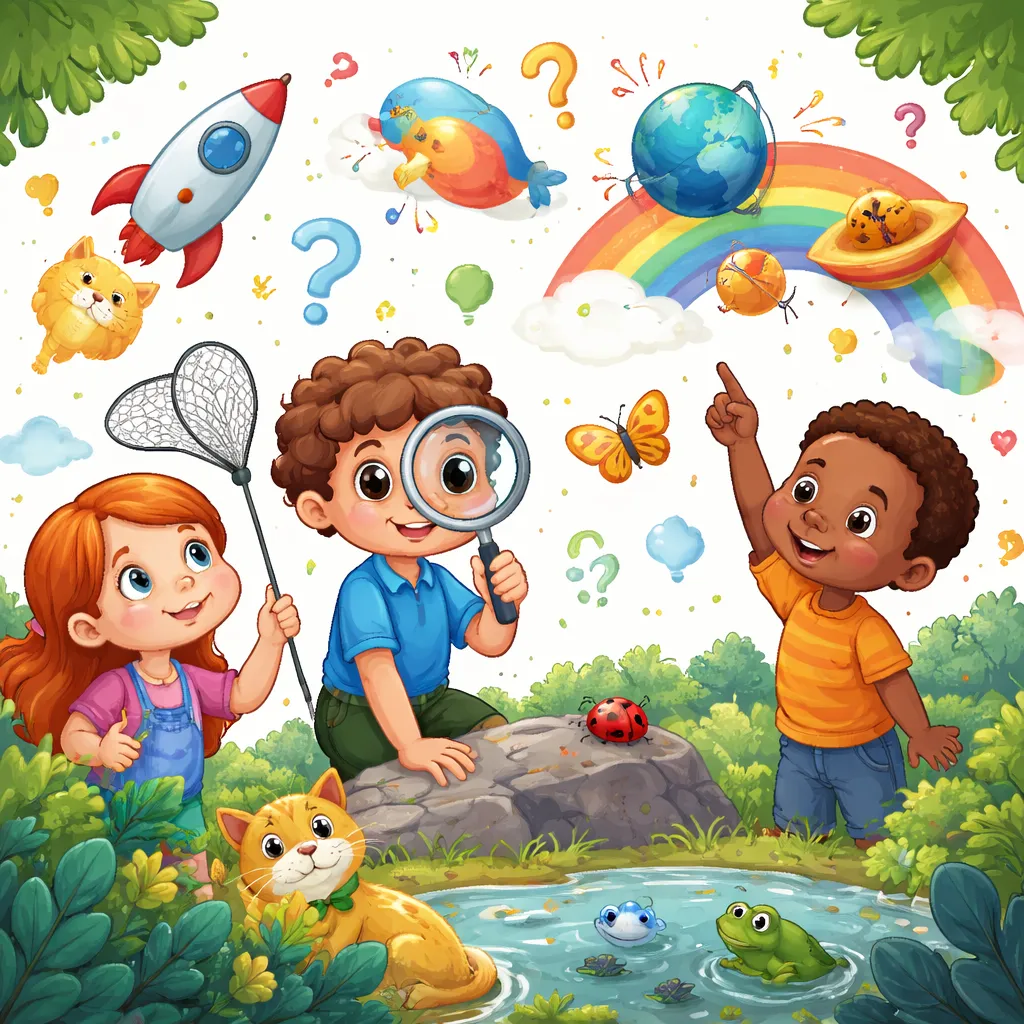
"Why is the sky blue?" "Why do birds fly?" "Why do I have to sleep?" Every parent knows the age of "why." Children are natural questioners. They want to understand. They want to know how things work. Why questions are how they learn.
How to ask why questions in English gives children the words to fuel this curiosity. They learn the structure: "Why..." They learn to ask about the world. They learn to seek explanations. The words turn wonder into learning.
This situation happens all day, every day. At meals, on walks, at bedtime, anywhere a child sees something new. Curiosity has no schedule. Why questions come whenever the child wonders.
These phrases are simple and open-ended. They start with "why." They ask about causes. They ask about reasons. With these words, your child becomes a little scientist, exploring the world through questions.
Key English Phrases for This Situation
Use phrases for asking about nature. "Why is the sky blue?" asks about color. "Why do leaves fall?" asks about seasons. "Why does it rain?" asks about weather.
Use phrases for asking about animals. "Why do birds fly?" asks about ability. "Why do cats purr?" asks about behavior. "Why do fish live in water?" asks about habitat.
Use phrases for asking about people. "Why do we sleep?" asks about bodies. "Why do we eat food?" asks about needs. "Why do people work?" asks about society.
Use phrases for asking about rules. "Why do I have to brush my teeth?" asks about health. "Why can't I have candy for breakfast?" asks about limits. "Why do we say please?" asks about manners.
Use phrases for asking about feelings. "Why are you sad?" asks about emotions. "Why is she laughing?" asks about joy. "Why do we get scared?" asks about fear.
Simple Conversations for Kids
Dialogue 1: Why Questions About Nature
Child: "Why is the sky blue?"
Parent: "That is a great question. The sky looks blue because of how sunlight hits the air. It is called scattering."
Child: "What is scattering?"
Parent: "It is when light spreads out in different directions. Blue light scatters the most, so we see blue sky."
Child: "Oh. Why does blue scatter more?"
Parent: "That is a very good question. It has to do with the size of light waves. We can look at a book about it later."
This conversation shows the power of why. One question leads to another. The parent answers simply. The child asks deeper. The parent encourages more learning. Curiosity is fed.
Dialogue 2: Why Questions About Rules
Child: "Why do I have to go to bed?"
Parent: "Because your body needs rest to grow and be healthy."
Child: "Why does my body need rest?"
Parent: "When you sleep, your body fixes things that got tired during the day. Your brain organizes everything you learned."
Child: "So sleep makes me stronger?"
Parent: "Yes. That is exactly right. Sleep makes you stronger and smarter."
This conversation uses why questions to understand a rule. The child asks. The parent answers. The child asks deeper. The parent explains. The rule makes sense. The child accepts it better.
Dialogue 3: Why Questions About Feelings
Parent looks tired.
Child: "Why do you look tired?"
Parent: "I had a long day at work."
Child: "Why was it long?"
Parent: "I had many things to do. But now I am home with you, and that makes me happy."
Child: "Why does being home with me make you happy?"
Parent: "Because you are my favorite person in the whole world."
This conversation shows empathy. The child notices a feeling. The child asks why. The parent answers. The child asks deeper. The conversation builds connection.
Vocabulary You Should Know
Why is the word that asks for a reason. You can say "Why?" This is the most important word for curiosity.
Because is the word that gives a reason. You can say "Because..." This word helps answer why questions.
Reason is the explanation for why something happens. You can say "What is the reason?" This word names what you are asking for.
Question is what you ask when you want to know something. You can say "I have a question." This word names what you are doing.
Curious means wanting to know about things. You can say "I am curious about that." This word describes the feeling.
Learn means to get new knowledge. You can say "I want to learn." This word names the goal of why questions.
How to Use These Phrases Naturally
Use an interested and patient tone. Why questions can be endless. Your patience says "Your curiosity matters." Even when you are tired, try to engage. A simple answer is enough.
Say the phrases when your child asks. Do not dismiss "why." It is the most important question. If you do not know the answer, say "That is a great question. Let us find out together."
Answer simply. Young children do not need complex science. "Birds fly because they have wings" is enough. The simple answer satisfies curiosity. Deeper answers come later.
Ask why questions too. "Why do you think the dog is barking?" Asking your child why builds their thinking. It models curiosity.
Welcome all why questions. Even the ones that repeat. "Why is the sky blue?" may be asked many times. Answer each time. Repetition is how children learn.
Common Mistakes to Avoid
One mistake is saying "Because I said so." This shuts down curiosity. If you do not have a reason, say "Let me think about that." Or "I do not know. Let us find out."
Another mistake is answering too much. A long explanation loses a young child. Keep it short. One or two sentences is enough. Let them ask again if they want more.
Some parents get frustrated by endless why questions. It is normal to feel tired. But try to see it as a gift. Your child is curious. They trust you to answer. That is beautiful.
Avoid saying "That is a silly question." No question is silly. Every question comes from genuine curiosity. Honor it.
Tips for Parents and Practice Ideas
Turn why questions into a game. "Why do you think the sun sets?" Let your child guess. Then give the real answer. The guessing builds thinking.
Use books to answer why questions. Get books about nature, animals, how things work. When your child asks why, say "Let us find the answer in a book."
Say "I don't know, let us find out." This teaches that not knowing is okay. Learning is a process. Finding answers together is fun.
Praise the question. "That is a really good question. You are so curious." Praising the question encourages more questions.
Keep a wonder journal. Write down your child's why questions. Look up answers together. The journal becomes a record of their growing curiosity.
Fun Practice Activities
Play the why game. You say a statement. "The grass is green." Your child asks "Why?" You answer. Then your child makes a statement. You ask why. The game builds the skill.
Make a why jar. Write why questions on slips of paper. "Why do birds sing?" "Why is the ocean salty?" Pull one out each day. Find the answer together.
Read books about why. There are books full of why questions and answers. Read them together. Your child learns that questions have answers.
Sing a why song. "Why, why, why, I ask why. Why is the sky so blue? Why, why, why, I ask why. Why, why, why, I want to know." Music makes asking fun.
Create a question corner. A small space with books and a magnifying glass. Your child goes there to wonder and ask. The space says "Curiosity is welcome here."
How to ask why questions in English is one of the most important skills a child can learn. Why questions open the world. They turn observation into understanding. They turn wonder into knowledge. When your child asks "Why?" they are not just learning English. They are learning to think. They are learning to question. They are learning to understand. And with your patient answers and your own curiosity, you are teaching them that questions are welcome. That curiosity is a gift. That the world is full of things to learn. That is the power of why. It never runs out. And neither should your answers.