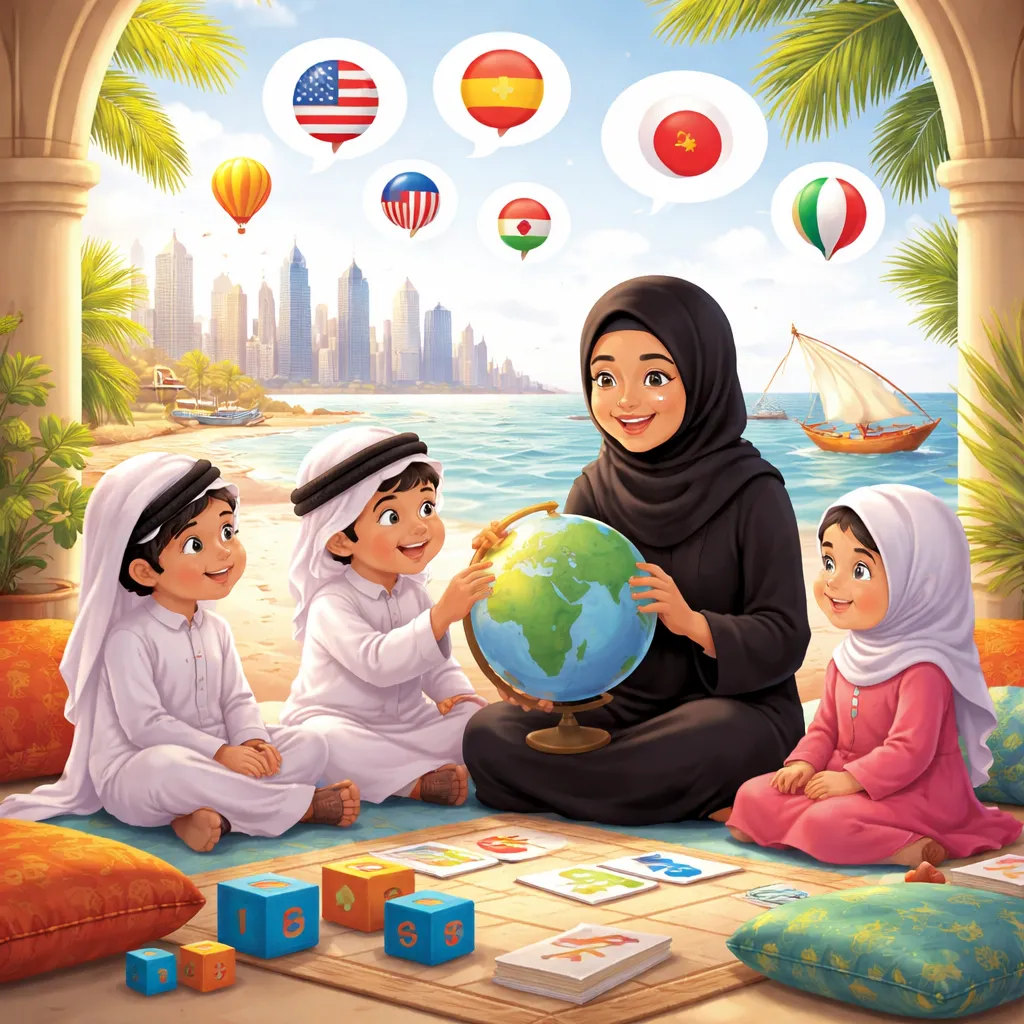

Introduction to Qatar
Language learning transports us to a small peninsula reaching into the Arabian Gulf. Today we explore a nation that has transformed dramatically in recent decades. This country balances ancient traditions with futuristic architecture. Children will discover the art of falconry, a practice passed down through generations. They will learn about traditional wooden boats that once carried divers for pearls. Exploring Qatar builds reading skills while revealing a land of desert heritage and modern ambition. Every fact uncovers a new contrast. Every word invites young readers to imagine this Arabian nation.
Where Is Qatar?
Qatar lies on the northeastern coast of the Arabian Peninsula. It shares a land border with Saudi Arabia to the south. The Persian Gulf surrounds it on all other sides. The capital city is Doha. Doha sits on the eastern coast overlooking the gulf. The country covers about four thousand four hundred square miles. It ranks as one of the smallest nations in the Middle East. The landscape consists mostly of flat desert and coastal salt flats. The peninsula stretches about one hundred miles north into the gulf. Finding Qatar on a map shows a small finger of land extending from Saudi Arabia into the Persian Gulf.
Interesting Facts About Qatar
Qatar offers many remarkable facts for young learners. It ranks as one of the richest countries in the world per person. Natural gas and oil brought this wealth. Another interesting fact involves falconry. Falcons have been prized in Qatari culture for centuries. People train these birds to hunt. Qatar has a dedicated falcon hospital where falcons receive medical care.
Qatar also has a unique tradition of pearl diving. Before oil and gas, divers harvested pearls from the gulf. They dove without oxygen tanks, holding their breath for minutes at a time. Another fun fact involves the dhow. These traditional wooden boats still sail Qatar's waters. Some modern dhows have engines, but they keep the traditional shape.
The country also has a remarkable museum. The Museum of Islamic Art in Doha sits on its own island. It holds treasures from three continents spanning over one thousand years. Another interesting fact involves the FIFA World Cup. Qatar hosted the World Cup in 2022. It was the first Arab country to host this global event. The stadiums feature innovative cooling technology. Qatar also has a unique public art program. Sculptures by world-famous artists stand in the desert and along the waterfront. These facts show children a country of ancient traditions and modern achievements.
Key Vocabulary About Qatar
Let us build vocabulary for this Gulf nation. These words help children describe what they learn.
Falconry: the art of training falcons to hunt.
Dhow: a traditional wooden sailing vessel.
Pearl Diver: a person who dives for pearls.
Peninsula: a piece of land surrounded by water on three sides.
Desert: a dry area with little rain and few plants.
Oasis: a place in the desert with water and plants.
Gulf: a large area of sea partially enclosed by land.
Introduce these words with pictures and stories. Show a falcon wearing a hood on a handler's arm. Show a dhow with its triangular sail. Let children say each word aloud. These vocabulary words give children the language to explore Qatar's heritage and environment.
Simple Sentences for Reading Practice
Short sentences help new readers build confidence. Use these sentences about Qatar for practice.
Qatar is a small country on the Arabian Peninsula.
The capital city is Doha.
The Persian Gulf surrounds Qatar.
Falconry is an ancient tradition.
Dhows are traditional wooden boats.
Pearl divers once harvested pearls from the sea.
Qatar hosted the FIFA World Cup in 2022.
Read each sentence together. Let children point to the words. Encourage them to repeat after you. Use pictures to show each fact. These simple sentences prepare young readers for longer passages.
Short Reading Passage About Qatar
Here is a short passage for children to read together.
“Qatar reaches into the Persian Gulf like a small peninsula. The capital, Doha, rises along the eastern shore. Skyscrapers with curving shapes reflect in the water. The Museum of Islamic Art stands on its own island, a white structure rising from the sea. Inside, ancient manuscripts and intricate metalwork tell stories from across the Islamic world. In the desert outside the city, falconers train their birds. Falcons perch on leather-covered arms. They wear hoods to keep them calm. When the hood comes off, they soar into the sky. Along the coast, dhows rest in the water. These wooden boats once carried pearl divers. Divers held their breath and dropped into the deep, searching for pearls on the seafloor. Today, modern Qatar combines old and new. Traditional souks sell spices and textiles beside gleaming malls. The country welcomes the world with stadiums and art.”
Read this passage slowly together. Pause to talk about each idea. Ask children to find vocabulary words in the text. This activity builds reading fluency and deepens understanding.
Fun Questions About Qatar
Questions make reading interactive and engaging. Use these to start conversations with young learners.
What is the capital city of Qatar?
What body of water surrounds Qatar?
What traditional art involves training birds?
What are the traditional wooden boats called?
What did pearl divers harvest from the sea?
What major sporting event did Qatar host in 2022?
Let children answer in complete sentences. Encourage them to use new vocabulary. Ask them to imagine watching a falcon fly. What would it feel like to have a bird return to your arm? Creative questions make the topic personal and exciting.
Tips for Learning English with This Topic
Use Qatar to create rich English learning experiences. Start with a map activity. Let children find Qatar on the Arabian Peninsula. Point out its peninsula shape surrounded by the Persian Gulf. Discuss how the sea shaped its history of fishing and pearl diving.
Next, introduce the vocabulary through a hands-on activity. Create a simple falcon mask or puppet. Let children practice "training" their falcon. For dhows, fold paper boats with triangular sails. Let children float them in water. Use the words "falconry," "dhow," and "pearl diver" during the activity.
Read the passage aloud with appreciation for tradition and wonder at modern architecture. Let your voice reflect the contrast between old and new. After reading, let children draw a scene from Qatar. One child might draw a falcon on a handler's arm. Another might draw a dhow sailing on the gulf. Let them label their drawings with vocabulary words. Add blue for the gulf and gold for the desert.
Incorporate a history and geography connection. Talk about how pearl diving was a major industry before oil. Discuss how the discovery of natural gas transformed the country. This shows children that language learning reading connects to understanding economic change.
Use music and movement to enhance the experience. Listen to traditional Gulf music with drums and the rebab. Let children move like falcons soaring. Pretend to dive for pearls in the sea. Physical activity reinforces learning in joyful ways.
Encourage children to share their knowledge. Let them tell a family member about falconry in Qatar. They can explain what a dhow is and how pearl divers worked. Teaching others builds confidence and deepens understanding.
Connect Qatar to your child's world. Ask, “What traditions does our family have?” Compare them to falconry. Ask about boats we have seen. Compare them to dhows. These connections help children see that language learning reading is about understanding how traditions connect to place and history. By exploring Qatar together, you give children a rich experience. They learn new words, discover a land of falcons and dhows, and grow their love for reading. This Gulf nation becomes a meaningful part of their learning journey.