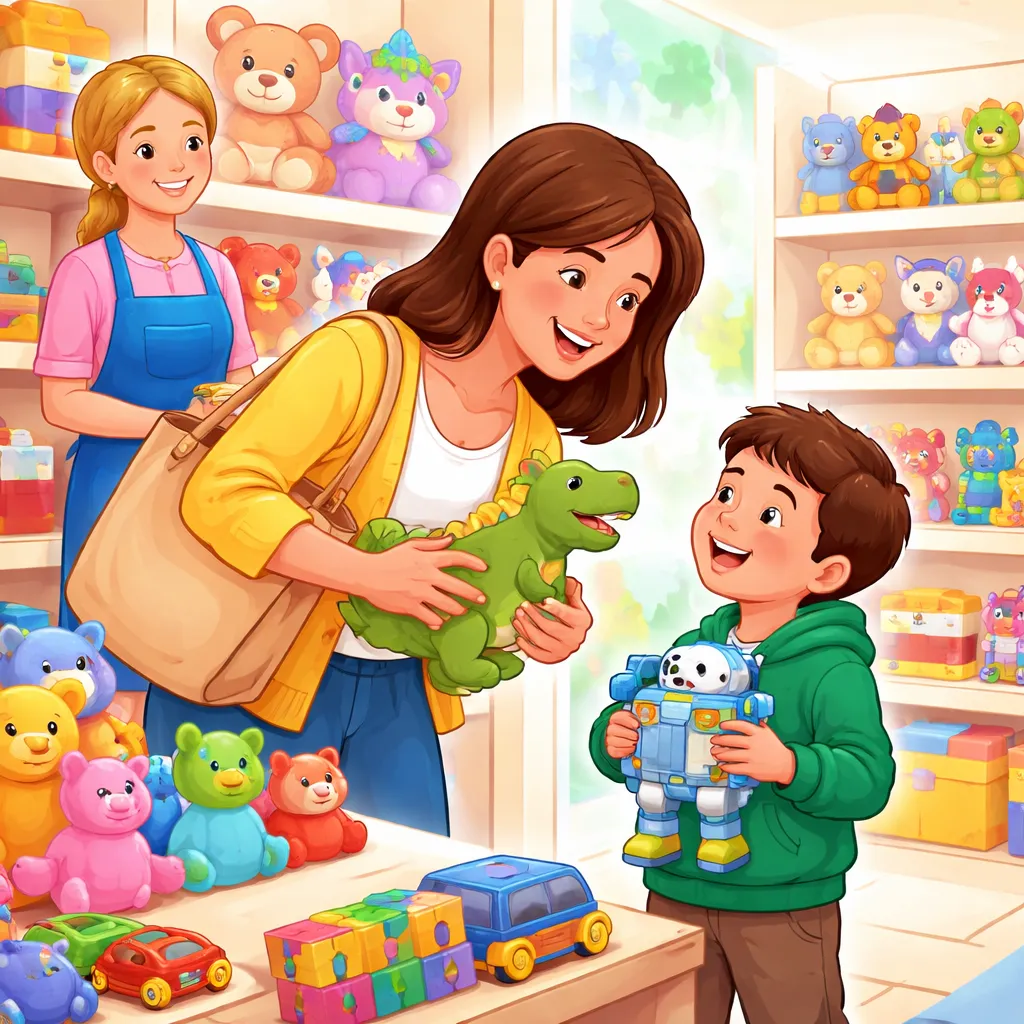

What Is This Situation? Walking into a toy store is exciting. Shelves are filled with colorful boxes. There are stuffed animals, race cars, and building blocks. Your child's eyes light up. They want something. But buying a toy involves talking to a cashier.
English dialogue for buying a toy in a store gives children the words to complete this transaction. They learn to ask for what they want. They learn to handle money. They learn to say thank you. The experience becomes theirs.
This situation happens at toy stores, at department stores, and at checkout counters anywhere toys are sold. It happens when a child has saved allowance money. It happens when a grandparent gives a gift. It happens when a toy is a special treat.
These phrases are simple and polite. They include greetings, requests, and payment words. With these words, your child can walk up to a cashier and buy a toy with confidence.
Key English Phrases for This Situation Use phrases for starting. "Hello" is a friendly greeting. "I would like to buy this toy, please" states the purpose. "How much is this?" asks the price.
Use phrases for handling payment. "Here is the money" hands over payment. "Do you take a card?" asks about payment methods. "I have five dollars" states the amount.
Use phrases for the transaction. "Here you go" offers the money. "Thank you" expresses gratitude. "Can I have a bag, please?" asks for packaging.
Use phrases for completing. "Thank you. Have a nice day" closes politely. "Here is my toy" shows pride in the purchase. "I saved my money for this" shares the story.
Use phrases for asking questions. "Where are the toy cars?" asks for location. "Do you have this in blue?" asks about options. "Is this on sale?" asks about price.
Simple Conversations for Kids Dialogue 1: Buying with Allowance Child brings toy to counter. Cashier: "Hello. Is this for you?" Child: "Yes. I saved my money. How much is it?" Cashier: "It is eight dollars." Child: "Here is ten dollars." Cashier: "Here is your change. Two dollars." Child: "Thank you." Cashier: "Have a nice day." Child: "You too."
This conversation shows a child handling a purchase. The child asks the price. The child pays. The child receives change. The child says thank you. The transaction is complete.
Dialogue 2: Asking for Help Child: "Excuse me, where are the stuffed bears?" Cashier: "They are in aisle three, on the bottom shelf." Child: "Thank you." Child goes to aisle three. Child returns with a bear. Child: "I found it. I would like to buy this bear, please." Cashier: "That is a good choice. Twelve dollars, please." Child hands over money. Cashier: "Here is your bear and your receipt." Child: "Thank you so much."
This conversation shows asking for help. The child uses "excuse me." The child thanks the cashier. The child finds the toy. The child makes the purchase. The interaction is polite and complete.
Dialogue 3: Counting Money Child: "How much is this car?" Cashier: "It is five dollars." Child: "I have five dollars. One, two, three, four, five." Child counts out money. Cashier: "That is exactly right. Here is your car." Child: "Thank you. I am giving it to my friend." Cashier: "That is a nice gift."
This conversation shows counting money. The child counts out the bills. The child pays the exact amount. The child shares the purpose of the purchase. The cashier responds warmly.
Vocabulary You Should Know Toy is something you play with. You can say "I want to buy this toy." This is the main word for the purchase.
Money is what you use to pay. You can say "Here is my money." This word names the payment tool.
Dollar is the unit of money. You can say "It costs five dollars." This word tells the price.
Price is how much something costs. You can say "What is the price?" This word asks about the cost.
Change is money given back when you pay too much. You can say "Here is your change." This word completes the transaction.
Receipt is the paper that shows you paid. You can say "Here is your receipt." This word names the proof of purchase.
How to Use These Phrases Naturally Use a friendly and polite tone. Shopping should feel positive. Your child learns from your example. Greet the cashier warmly. Say thank you. Model the behavior you want.
Say the phrases when it is your child's turn. Let them go first at the counter. If they are shy, you can be beside them. Let them handle the transaction as much as they can.
Practice before you go. Role-play at home. You are the cashier. Your child is the customer. Practice the whole conversation. Familiar words reduce nervousness.
Let your child hold the money. Handing over the money is a big moment. It makes the purchase real. It builds responsibility. Let them do it themselves.
Praise the effort. "You bought your own toy. You said please and thank you. That was wonderful." Specific praise reinforces the skills.
Common Mistakes to Avoid One mistake is taking over the transaction. Let your child try. Even if they are slow, wait. The learning is in the doing.
Another mistake is not preparing your child for the price. If the toy costs more than they have, disappointment happens. Check the price first. Prepare them for what they can afford.
Some parents forget to teach about change. Explain that if you give more than the price, you get money back. Practice counting change at home.
Avoid rushing. If there is a long line, choose a quieter time for your child's first purchase. A calm setting makes success more likely.
Tips for Parents and Practice Ideas Start with small purchases. A small toy with a small price is a good first experience. Success builds confidence for bigger purchases later.
Let your child save allowance for a toy. Saving teaches patience. When they finally buy the toy, the pride is greater. The language practice is more meaningful.
Visit the store before buying. Look at toys. Talk about prices. Your child gets familiar with the store before the transaction.
Use pretend money at home. Play store. Your child counts pretend dollars. They hand over the money. They get change. Play builds skills.
Talk about the experience after. "You bought the toy all by yourself. How did it feel?" Reflection reinforces learning.
Fun Practice Activities Set up a pretend toy store. Use toys from home. Make price tags. Use pretend money. Your child is the customer. You are the cashier. Practice the dialogue.
Create a shopping list. Your child draws the toy they want. They write the price. They practice counting the money. The list prepares them for the real store.
Make a toy store in a box. Use a shoebox as a cash register. Use play money. Your child practices the transaction again and again. Play builds mastery.
Sing a shopping song. "I go to the store with my money. I pick out a toy. I say how much is this? I pay with my money. I say thank you and go." Music makes the words stick.
Role-play with a friend. Two children practice buying and selling. One is the cashier. One is the customer. They practice together. Learning with a friend is fun.
English dialogue for buying a toy in a store gives your child a voice in a real-world transaction. They learn to ask. They learn to pay. They learn to say thank you. And at the end, they walk out with a toy they chose and paid for themselves. That is a powerful moment. It says "I can do this. I can speak English. I can buy something I want." That confidence will serve them in every store, in every transaction, for the rest of their lives. And it all starts with a few simple words at the toy store counter.