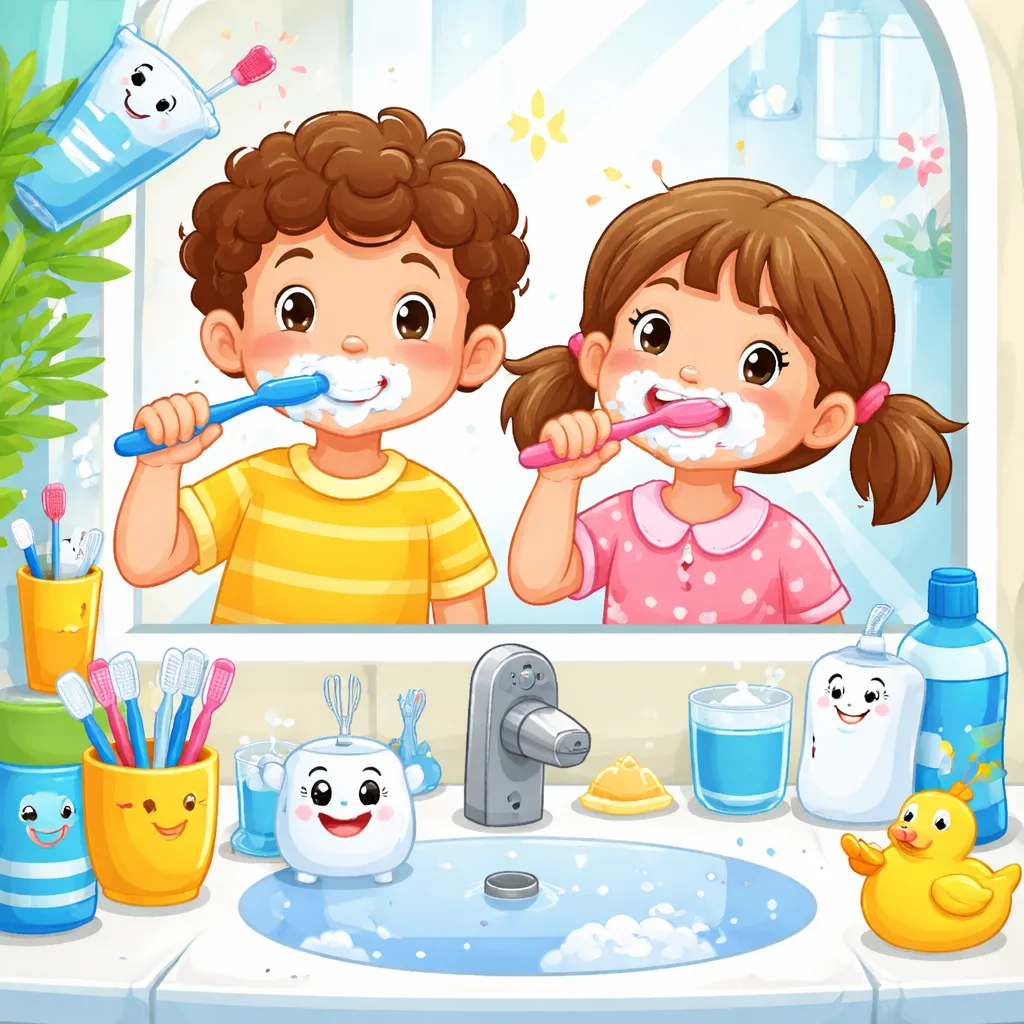

What Is This Situation? Twice a day, every day, the toothbrush comes out. Morning and night, children stand at the sink. Toothpaste goes on the brush. Teeth get cleaned. This routine is important for healthy teeth. It is also a moment of daily connection.
English sentences for brushing teeth routine give children the words for this familiar task. They learn what comes next. They learn to ask for what they need. They learn to celebrate a job well done. The routine becomes a time for language practice.
This situation happens in bathrooms, morning and night. It happens after breakfast and before bed. It happens every single day. That consistency makes it perfect for learning. The same words, the same actions, day after day.
These phrases are simple and clear. They give directions. They offer encouragement. They mark the beginning and end of the routine. With these words, your child learns to brush their teeth and to talk about it.
Key English Phrases for This Situation Use phrases for starting. "Time to brush your teeth" announces the routine. "Let us go to the bathroom" moves to the location. "Get your toothbrush" gives the first direction.
Use phrases for getting ready. "Put toothpaste on the brush" tells what to do. "A little bit" reminds them how much. "Like a pea" gives a visual size.
Use phrases for brushing. "Brush your teeth" is the main direction. "Brush the front" guides the action. "Brush the back" covers all surfaces. "Spit out the toothpaste" tells them what to do when done.
Use phrases for timing. "Keep brushing" encourages them to continue. "Almost done" gives a warning. "Time to rinse" marks the next step.
Use phrases for finishing. "Rinse your mouth" gives the direction. "Rinse your brush" cleans the tool. "Good job brushing" praises the effort.
Simple Conversations for Kids Dialogue 1: Morning Routine Parent: "Time to brush your teeth." Child: "Okay." Parent: "Let us go to the bathroom." Child goes to sink. Parent: "Get your toothbrush. Now put toothpaste on." Child puts toothpaste on brush. Parent: "Good. Now brush your teeth. Brush the front. Brush the back." Child brushes. Parent: "Almost done. Spit out the toothpaste. Rinse." Child rinses. Parent: "Good job. Your teeth are clean."
This conversation walks through each step. The parent gives one direction at a time. The child follows. The parent praises at the end. The routine is clear and successful.
Dialogue 2: Child Takes the Lead Child: "I want to brush my teeth." Parent: "Okay. What do you need?" Child: "Toothbrush and toothpaste." Parent: "Here they are." Child puts on toothpaste. Parent: "Remember, a little bit." Child brushes. Parent: "Are you brushing the back teeth?" Child brushes back. Child: "Done. I spit and rinse." Parent: "Good job. You remembered all the steps."
This conversation lets the child lead. The parent prompts when needed. The child does most of the talking. The parent praises independence. The child feels capable.
Dialogue 3: Reluctant Brusher Parent: "Time to brush your teeth." Child: "No. I do not want to." Parent: "I know brushing is not your favorite. But we have to keep our teeth healthy. I will help you." Child: "Okay." Parent helps brush. Parent: "All done. Thank you for letting me help. Your teeth feel clean now."
This conversation acknowledges resistance. The parent validates the feeling but holds the boundary. The parent offers help. The child accepts. The task gets done. The parent thanks the child.
Vocabulary You Should Know Toothbrush is the tool you use to clean your teeth. You can say "Get your toothbrush." This is the main tool of the routine.
Toothpaste is the paste that makes teeth clean. You can say "Put toothpaste on the brush." This word names the other essential item.
Brush means to clean with a brush. You can say "Brush your teeth." This is the main action word.
Rinse means to clean with water. You can say "Rinse your mouth." This word names the final step.
Spit means to push water or toothpaste out of your mouth. You can say "Spit in the sink." This word tells what to do after brushing.
Sink is where you brush your teeth. You can say "Spit in the sink." This word names the location.
How to Use These Phrases Naturally Use a calm and cheerful tone. Brushing teeth is a routine. Your voice should be steady. Not too excited, not too serious. A calm tone helps the routine feel normal.
Say the phrases at the right moment. Give the direction right before the action. "Time to brush your teeth" before you go to the bathroom. "Get your toothbrush" when you are at the sink. Timing makes the words clear.
Use the same sentences each time. Consistency builds learning. Your child hears the same words every morning and night. They learn to expect them. They learn to say them.
Let your child say the sentences. After a while, they will start to say "Time to brush my teeth" on their own. Encourage them. Let them lead. Their words show they have learned.
Make eye contact. Look at your child when you speak. This shows that the routine is important. It helps your child focus on your words.
Common Mistakes to Avoid One mistake is rushing. If you rush the routine, your child may resist. Build in time. Let the routine unfold. Rushed brushing is not effective or pleasant.
Another mistake is doing it all for your child. Young children need help, but let them do what they can. They can hold the brush. They can put on toothpaste. They can rinse. Independence builds confidence.
Some parents use negative language. "You forgot to brush the back" sounds like criticism. Try "Let us get the back teeth now." Positive language works better.
Avoid skipping steps. The full routine matters. Each step has a word. Using all the words teaches the full process. Skipping steps teaches that steps are optional.
Tips for Parents and Practice Ideas Make it a two-minute activity. Use a timer or a short song. Two minutes is the recommended brushing time. A timer adds structure and fun.
Let your child pick their toothbrush and toothpaste. A favorite character or color makes brushing more appealing. The choice gives them ownership.
Brush your teeth together. Your child watches you. You can say the sentences together. "Time to brush our teeth." "Now we rinse." Modeling makes learning natural.
Use a brushing chart. Each time your child brushes, they add a sticker. The chart tracks success. It makes the routine visible.
Praise the routine, not just the result. "You did all the steps today. You remembered to rinse." Specific praise teaches what success looks like.
Fun Practice Activities Sing a brushing song. "Brush, brush, brush your teeth. Brush them every day. Up and down and round and round. Brush the germs away." Music makes the routine fun.
Make a brushing puppet. Use a sock puppet. The puppet brushes its teeth. Your child helps. The puppet says the sentences. Your child repeats.
Use a doll. Your child brushes the doll's teeth. They say the sentences to the doll. "Time to brush your teeth. Open wide." Playful practice builds skills.
Draw the steps. Your child draws a picture of each step: toothbrush, toothpaste, brushing, rinsing. The pictures tell the story of the routine.
Time the brushing with a song. Play a two-minute song. Your child brushes until the song ends. The song makes timing fun. It also gives words to the activity.
English sentences for brushing teeth routine turn a daily necessity into a language opportunity. Your child learns the words for the tools. They learn the steps in order. They learn to follow directions and to take turns in conversation. And twice a day, every day, they practice these words. That repetition builds fluency. Soon the sentences are not something you say to them. They are something they say to you. "Time to brush my teeth, Mama." And they go to the sink, ready to care for their teeth and their language, one brushstroke at a time.