
What Is This Situation?
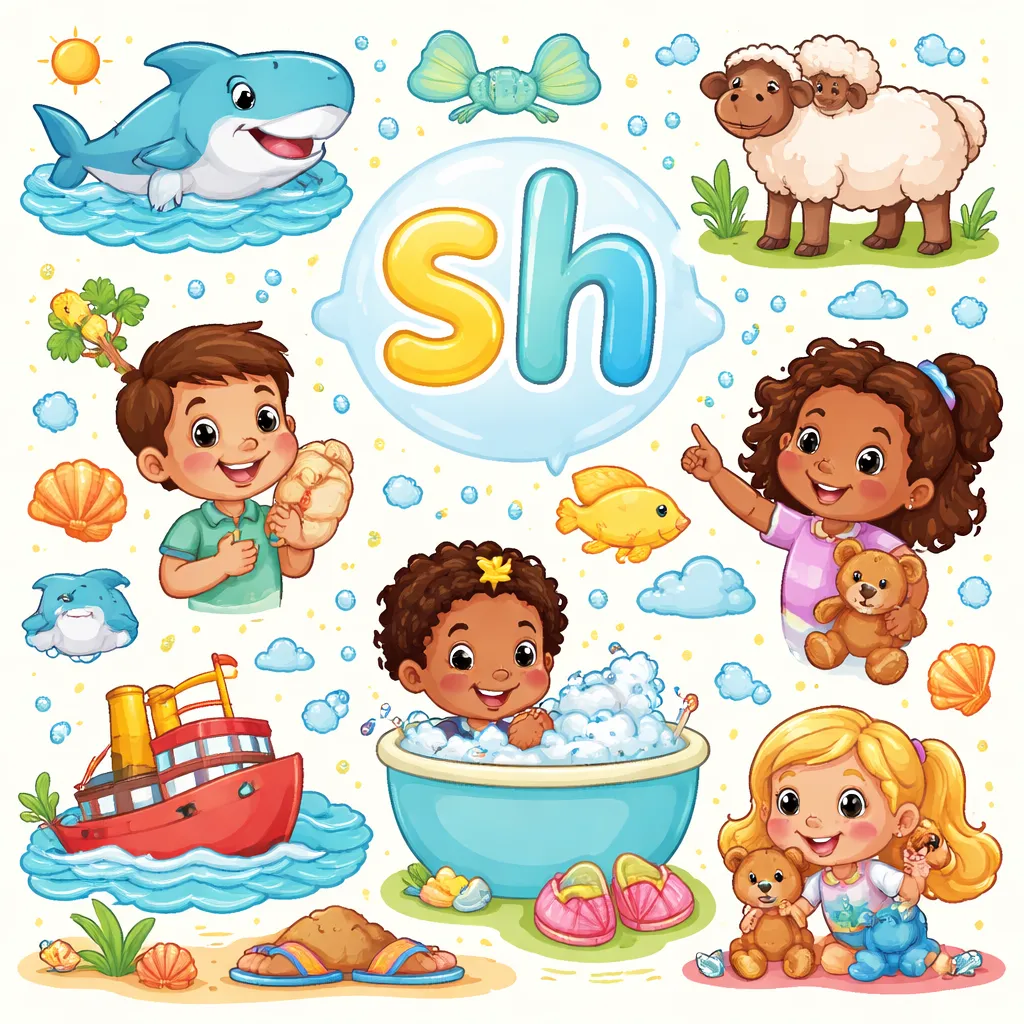
Sometimes two letters come together to make one new sound. They are called digraphs. SH is a digraph. S and H are separate letters. But when they stand together, they make the "sh" sound. Like the sound of quiet. Like the sound of "shh" at the library.
Digraph SH sound examples for kids give children practice with this special sound. Words like ship, fish, and brush all have the SH sound. Some words start with SH. Some words end with SH. Learning this sound helps children read and spell many words.
This situation happens during reading time, during word games, during everyday talk. The SH sound is everywhere. It is in "shoes," "shirt," and "sheep." It is in "wash," "fish," and "dish."
These words are best learned through playful practice. Games, songs, and word lists make the sound stick. With the SH digraph, your child learns that two letters can work together to make one sound.
Key English Phrases for This Situation
Use phrases for introducing the sound. "S and H together make the 'sh' sound. Like in ship." "Listen: sh. Put your finger to your lips. Shh."
Use phrases for finding the sound. "Where do you hear the 'sh' sound in fish? At the beginning? At the end? Fish ends with sh."
Use phrases for sounding out. "Let us sound out this word. Sh-i-p. What word is it?" "Sh-i-p. Ship. Good."
Use phrases for comparing. "Ship starts with sh. Fish ends with sh. The sh sound can be at the beginning or the end."
Use phrases for reading. "You read a word with the sh sound. Good job." "Let us practice our sh words. Ship, fish, brush."
Simple Conversations for Kids
Dialogue 1: Learning the Sound
Parent: "Look at these two letters. S and H together make a special sound. It is the 'sh' sound. Can you say sh?"
Child: "Sh."
Parent: "Good. Sh like in ship. What word starts with sh?"
Child: "Shoe."
Parent: "Yes, shoe starts with sh. Sh-oe."
This conversation introduces the digraph. The parent models. The child repeats. The child thinks of another word. The learning is active.
Dialogue 2: Finding SH in Words
Parent: "Let us listen for the sh sound. I will say a word. Tell me where you hear sh. At the beginning or the end? Ship."
Child: "Beginning."
Parent: "Yes, ship starts with sh. Fish."
Child: "End."
Parent: "Yes, fish ends with sh. Good listening."
This conversation builds sound awareness. The child listens for the sound. The child identifies its position. The game makes learning fun.
Dialogue 3: Reading SH Words
Parent: "Let us read these sh words. Ship, fish, brush, shoe, sheep, dish."
Child: "Ship. Fish. Brush. Shoe. Sheep. Dish."
Parent: "You read all the sh words. Good job. You know the sh sound."
This conversation practices reading. The child reads a list. The parent praises. The practice builds fluency.
Vocabulary You Should Know
Ship is a big boat. It starts with sh. You can say "The ship sails on the water." This word is common in stories.
Fish is an animal that lives in water. It ends with sh. You can say "I like to eat fish." This word is a favorite.
Brush is what you use for hair or teeth. It ends with sh. You can say "Brush your teeth." This word is part of daily routine.
Shoe is what you wear on your feet. It starts with sh. You can say "Put on your shoes." This word is used every day.
Sheep is an animal with wool. It starts with sh. You can say "The sheep says baa." This word is common in farm stories.
Dish is what you eat from. It ends with sh. You can say "Wash the dishes." This word is part of daily life.
How to Use These Phrases Naturally
Use a soft and quiet tone. The sh sound is a quiet sound. Say it gently. "Shhh." Let your child feel the quietness of the sound.
Say the phrases during everyday moments. "Let us put on your shoes. Shoes starts with sh." Daily routines are natural times for word practice.
Practice one position at a time. First, words that start with sh. Then words that end with sh. Then words with sh in the middle. Master one before adding another.
Let your child hear the sound in your speech. When you say "shoes," emphasize the sh. "Ssshhhoes." Your child learns by hearing.
Praise the effort. "You said the sh sound in fish. Good job." Specific praise reinforces the learning.
Common Mistakes to Avoid
One mistake is separating the letters. "S-h-ip" instead of "sh-ip." The sh is one sound. Teach it as one unit. "Sh-ip."
Another mistake is confusing SH with other sounds. S makes a different sound. H makes a different sound. Together, they make a new sound. Practice the difference.
Some children say "s" for "sh." "Sip" for "ship." Gently correct. "That word is ship. It starts with sh. Listen: sh-ip. Can you say ship?"
Avoid using only worksheets. Children need to hear the sound, say the sound, and see the sound in real words. Use books, games, and conversation.
Tips for Parents and Practice Ideas
Use the "shh" finger. Put your finger to your lips. "Shh." This is the quiet sound. Your child will remember the gesture.
Make a sh book. Each page has a sh word. "Ship. Fish. Brush." Your child draws pictures. The book is a reference.
Play sh bingo. Make cards with sh words. Call out a word. Your child finds it. Bingo makes practice fun.
Sing sh songs. "Sh, sh, ship. Sh, sh, fish. Sh, sh, brush. Sh, sh, shoe." Music makes the sound stick.
Go on a sh hunt. Walk around the house. Find things with the sh sound. "Shoe has sh. Brush has sh." The hunt builds awareness.
Fun Practice Activities
Play sh memory. Make pairs of sh word cards. Turn them over. Find the matching pair. The game builds word recognition.
Make sh play dough. Roll play dough into sh. Your child forms the letters. Hands-on learning engages the body.
Create a sh fishing game. Put paper fish with sh words on them. Your child "fishes" for a fish. They read the word. Fishing makes reading fun.
Use a mirror. Watch your mouth when you say sh. Let your child watch. Then let them watch themselves. Seeing the mouth helps pronunciation.
Play I Spy with sh. "I spy something that starts with sh." Your child looks. "Shoe!" The game builds sound awareness.
Digraph SH sound examples for kids open the door to many common words. Ship, fish, brush, shoe, sheep, dish. These words are everywhere. They are in books, in conversation, in daily life. When your child masters the SH sound, they can read these words. They can spell these words. They can say these words clearly. Two letters, S and H, working together to make one sound. That sound is quiet. But it is powerful. It unlocks a whole world of words. And with playful practice and patient guidance, your child will make that sound their own.