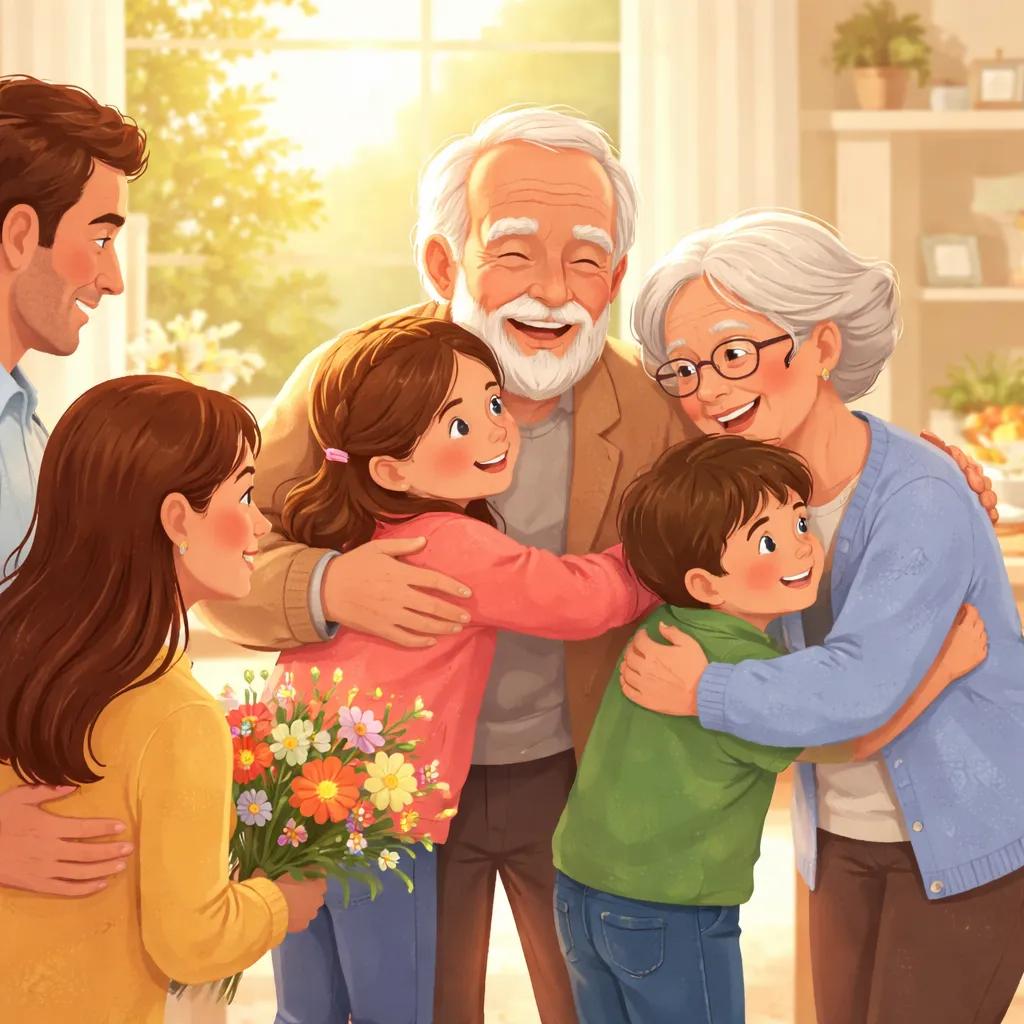

What Is This Situation? Grandparents are special people in a child's life. They give extra hugs. They tell stories from long ago. They have time to play and listen. Seeing grandparents is a moment of joy and connection.
How to greet grandparents in English gives children the words to start these visits with warmth. A greeting sets the tone. It shows love. It shows respect. It opens the door to conversation and connection.
This situation happens when grandparents arrive for a visit, when you video call them, or when you see them after time apart. It happens at holidays, on weekends, and during everyday moments. Each greeting is a small celebration of family.
These phrases are simple and affectionate. They say "I see you. I am glad you are here." They teach children how to show love with words. With these greetings, every meeting starts with warmth.
Key English Phrases for This Situation Use phrases for the first greeting. "Hello, Grandma" is simple and clear. "Hi, Grandpa" is friendly. "I am so happy to see you" shares joy.
Use phrases for showing affection. "I love you, Grandma" is direct and heartfelt. "Give me a hug" invites physical closeness. "I missed you" tells them they were thought of.
Use phrases for welcoming. "Come in" invites them inside. "Sit with me" asks for time together. "I saved this seat for you" shows they were expected.
Use phrases for asking questions. "How are you?" shows care. "How was your trip?" asks about their journey. "Did you have a good day?" opens conversation.
Use phrases for saying goodbye. "Thank you for coming" shows appreciation. "I will miss you" shares feeling. "Come back soon" invites the next visit.
Simple Conversations for Kids Dialogue 1: Grandparents Arrive Door opens. Grandma and Grandpa walk in. Child: "Grandma! Grandpa!" Grandma: "Hello, sweetheart!" Child: "I am so happy to see you. Can I have a hug?" Grandma opens arms. Child hugs. Grandpa: "We missed you too."
This conversation starts with excitement. The child uses a greeting. The child expresses happiness. The child asks for a hug. The visit begins with warmth.
Dialogue 2: Video Call Child sits with tablet. Grandma appears on screen. Child: "Hello, Grandma!" Grandma: "Hello, my love. How are you?" Child: "I am good. I miss you." Grandma: "I miss you too. Tell me what you did today." Child: "I drew a picture. For you." Grandma: "I cannot wait to see it."
This conversation shows a video call greeting. The child says hello. The child shares a feeling. The child tells about their day. The connection happens across distance.
Dialogue 3: Saying Goodbye Grandparents are getting ready to leave. Child: "Do you have to go?" Grandma: "Yes, but we will come back soon." Child: "Thank you for coming. I had fun." Grandpa: "We had fun too." Child: "Come back soon, okay?" Grandma: "We will. Goodbye for now." Child: "Bye. I love you."
This conversation shows a goodbye greeting. The child expresses sadness but also gratitude. The child asks them to return. The child says I love you. The goodbye is sweet, not sad.
Vocabulary You Should Know Grandma is another word for grandmother. You can say "Hello, Grandma." This is a warm and common name for a grandmother.
Grandpa is another word for grandfather. You can say "Hi, Grandpa." This is the matching name for a grandfather.
Hug is putting your arms around someone. You can say "Can I have a hug?" This word invites physical affection.
Miss means to feel sad when someone is not there. You can say "I missed you." This word tells grandparents they are loved.
Visit is time spent together. You can say "Thank you for the visit." This word names the time you shared.
Soon means in a short time. You can say "Come back soon." This word invites the next visit.
How to Use These Phrases Naturally Use a warm and excited tone. Grandparents are special. Your voice should show it. When you say "Grandma is here!" with joy, your child learns that this greeting is a celebration.
Say the phrases when you first see grandparents. Do not wait. The moment of arrival is the moment for greeting. A quick "Hello" right away starts things well.
Use the same names consistently. If you call her "Grandma," use that word. If you use "Nana" or another name, use that. Consistency helps your child know what to say.
Let your child see you greet grandparents. "Hello, Mom. So good to see you." Your child watches. Your greetings model what they can say.
Encourage but do not force. If your child is shy, do not push. Say "You can say hello when you are ready." Give them time. The greeting will come.
Common Mistakes to Avoid One mistake is forcing a greeting when a child is shy. "Say hello right now" creates pressure. Let your child warm up. A genuine greeting later is better than a forced one now.
Another mistake is using formal language that feels strange. "Good afternoon, Grandmother" may feel stiff. "Hello, Grandma" is warmer. Use language that fits your family.
Some parents forget to teach goodbye greetings. Goodbyes matter too. Teach "Thank you for coming" and "I will miss you." Goodbyes close the visit with warmth.
Avoid comparing. "Your cousin always says hello nicely" does not help. Every child greets in their own way. Praise your child's efforts, not someone else's.
Tips for Parents and Practice Ideas Practice before a visit. "Grandma is coming tomorrow. Let us practice what to say." Role-play the greeting. Your child feels prepared.
Use photos. Keep a photo of grandparents where your child can see it. Point to it. "That is Grandma. We will see her soon." The photo makes them familiar.
Talk about grandparents between visits. "Remember when Grandma came? She gave you a hug." Keeping them in conversation makes greetings easier.
Let your child make a greeting card. A drawing with "I love you, Grandma" is a greeting they can give. The words are on paper. They can say them too.
Sing a greeting song. "Hello, Grandma. Hello, Grandpa. We are so glad you came." Music makes the words easy and fun.
Fun Practice Activities Role-play grandparents visiting. You pretend to be Grandma. Your child opens the door. Your child says "Hello, Grandma. Come in." Practice makes the real moment easier.
Make a greeting book. Take photos of your child greeting grandparents. Write the words. "I say hello. I give a hug. I say I love you." Read it together.
Play the greeting game. You say "Grandma is here!" Your child says "Hello, Grandma!" Then you say "Grandpa is here!" Your child says "Hello, Grandpa!" This builds quick responses.
Create a greeting chart. Write "Hello, Grandma" and "Hello, Grandpa." Your child points to the words before a visit. The words become familiar.
Practice with dolls. Your child's doll is Grandma. Your child greets the doll. "Hello, Grandma. I missed you." The doll hugs back. Playful practice builds confidence.
How to greet grandparents in English is about more than words. It is about showing love. It is about making grandparents feel welcome. It is about teaching children that greetings matter. When your child says "Hello, Grandma" with a smile, they are not just speaking English. They are opening their heart. They are starting a visit with warmth. And they are building a relationship that will last a lifetime. Those simple words become memories. Years from now, grandparents will remember the child who ran to the door with a happy "Grandma!" That greeting is a gift. And you are teaching your child how to give it.