
What Is This Situation?
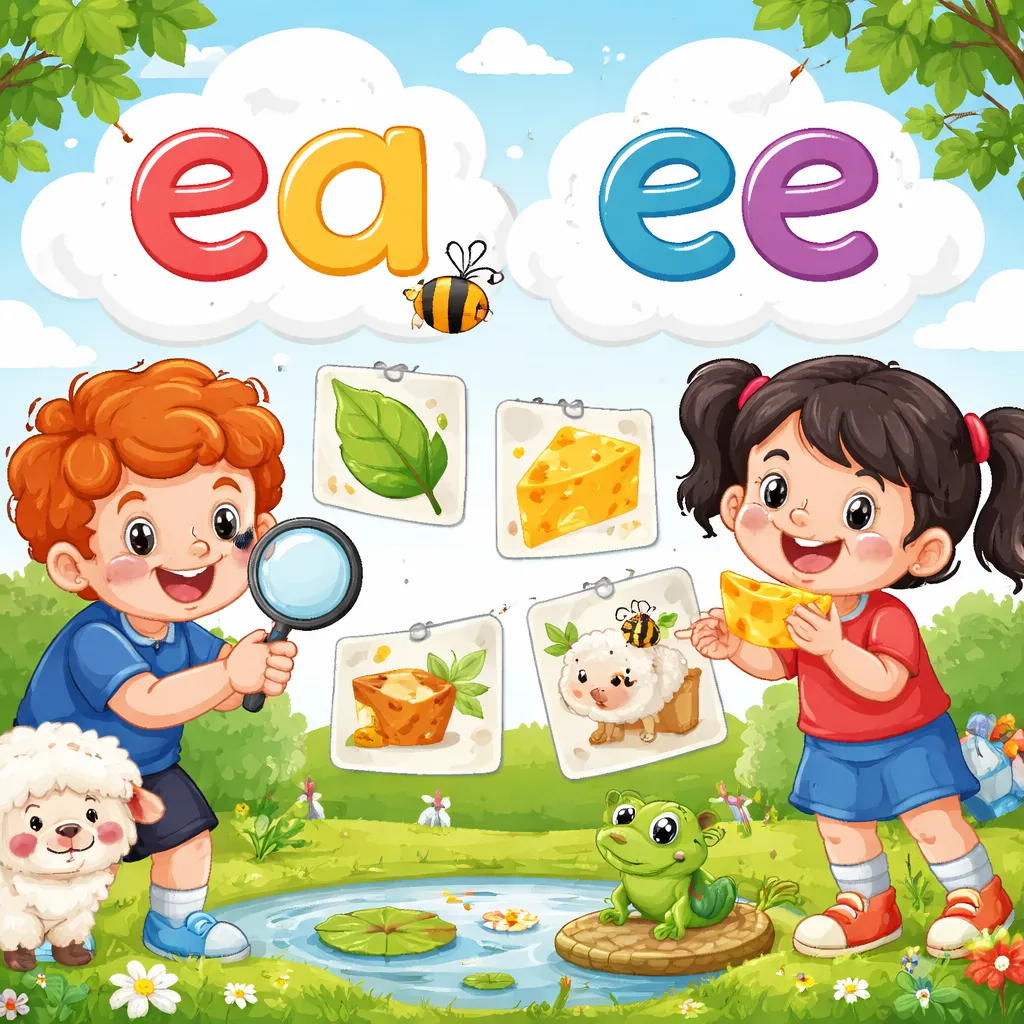
EA and EE make the same sound. Both say the long E sound, like in eat and see. They are common vowel teams. Knowing when to use each one helps with reading and spelling.
An EA and EE sound words list gives children practice with this important pattern. Both spellings make the same sound, but they appear in different words. Learning them together helps children recognize the pattern.
This situation happens when children are learning to read and spell words with the long E sound. They see "eat" and "see" and learn that both have the long E sound. The list helps them see the pattern.
These words are best learned through playful practice. Word lists, games, and stories make the pattern stick. With EA and EE, your child learns that the same sound can be spelled in two common ways.
Key English Phrases for This Situation
Use phrases for introducing the sounds. "EA and EE make the same sound. Both say the long E sound. Listen: eat has EA. See has EE. Both say E."
Use phrases for reading. "Let us read these EA words. Eat, sea, tea, leaf." "Now these EE words. See, bee, tree, feet."
Use phrases for comparing. "Eat has EA. See has EE. Different spellings, same sound." "Leaf has EA. Tree has EE. Both say the long E sound."
Use phrases for spelling. "To spell eat, you write E-A-T. EA makes the long E sound." "To spell see, you write S-E-E. EE makes the long E sound."
Use phrases for celebrating. "You read an EA word. Good job." "You read an EE word. You know the pattern."
Simple Conversations for Kids
Dialogue 1: Learning the Sounds
Parent: "EA and EE make the same sound. Both say the long E sound. Listen: eat. EA. See. EE. Both say E."
Child: "They sound the same."
Parent: "Yes. They are two ways to spell the long E sound."
This conversation introduces the two spellings. The parent explains. The child listens. The pattern becomes clear.
Dialogue 2: Reading EA and EE Words
Parent: "Let us read some EA words. Eat. Sea. Tea. Leaf."
Child: "Eat. Sea. Tea. Leaf."
Parent: "Good. Now let us read EE words. See. Bee. Tree. Feet."
Child: "See. Bee. Tree. Feet."
Parent: "Good. You read EA and EE words. Both make the long E sound."
This conversation practices reading. The child reads the words. The parent points out the pattern. The sounds become familiar.
Dialogue 3: Spelling Practice
Parent: "Let us spell some words with the long E sound. Eat. E-A-T. EA makes the long E sound."
Child: "E-A-T."
Parent: "Good. Now see. S-E-E. EE makes the long E sound."
Child: "S-E-E."
Parent: "Yes. You know both spellings."
This conversation practices spelling. The child spells. The parent confirms. The skill builds.
Vocabulary You Should Know
Eat means to take food into your mouth. It has EA. You can say "Let us eat." EA makes the long E sound.
Sea is a large body of water. It has EA. You can say "The sea is blue." EA makes the long E sound.
Tea is a drink. It has EA. You can say "I like tea." EA makes the long E sound.
Leaf is a part of a plant. It has EA. You can say "The leaf is green." EA makes the long E sound.
See means to look with your eyes. It has EE. You can say "I see you." EE makes the long E sound.
Bee is an insect that makes honey. It has EE. You can say "The bee buzzes." EE makes the long E sound.
Tree is a tall plant with a trunk. It has EE. You can say "The tree is tall." EE makes the long E sound.
Feet are the parts at the end of your legs. It has EE. You can say "My feet are clean." EE makes the long E sound.
How to Use These Phrases Naturally
Use a clear and patient tone. The pattern is simple, but it takes practice. Your patience says "You can learn this."
Say the phrases with word lists. Write the words. Read them together. The list makes the pattern clear.
Practice with words your child knows. They know eat and see. Familiar words make the pattern make sense.
Remind your child of the pattern often. "Eat has EA. See has EE. Both say the long E sound." Repetition builds memory.
Celebrate when they remember. "You remembered the EA in eat. Good job." Celebration reinforces learning.
Common Mistakes to Avoid
One mistake is confusing EA and EE. They sound the same. Remind your child that both spell the long E sound. They are just different ways to write it.
Another mistake is forgetting the spelling. They write "eet" instead of "eat." Remind them "Eat is spelled E-A-T. EA makes the long E sound."
Some children confuse EA with other sounds. EA can also make the short E sound like in bread. Teach the long E pattern first. Then teach the exceptions.
Avoid teaching too many patterns at once. Master EA and EE first. Then add other long E spellings like E-E.
Tips for Parents and Practice Ideas
Make an EA and EE chart. Write the rule: "EA and EE make the long E sound." Add example words: eat, sea, tea, leaf; see, bee, tree, feet.
Use magnetic letters. Spell eat. Point to the EA. Spell see. Point to the EE. Hands-on learning works.
Create word cards. Write EA and EE words. Your child reads them. The cards build recognition.
Play EA and EE bingo. Make bingo cards with EA and EE words. Call out a word. Your child finds it. Bingo makes practice fun.
Sing the EA and EE song. "EA and EE both say E. Eat and sea, see and tree. Same sound, two spellings. Now you know the game." Music makes the pattern stick.
Fun Practice Activities
Make an EA and EE book. Each page is a word. "Eat has EA. See has EE." Your child draws pictures. The book is a reference.
Play EA and EE memory. Make pairs of word cards. Turn them over. Find the matching pair. The game builds word recognition.
Use an EA and EE detective game. Give your child a list of words. They circle EA words in one color, EE words in another. The game builds discrimination.
Create an EA and EE word hunt. Hide word cards around the room. Your child finds them and reads them. The hunt makes reading active.
Draw EA and EE pictures. Your child draws a leaf, a bee, a tree, a cup of tea. They label each drawing. The pictures make the words real.
An EA and EE sound words list helps children master this common long E pattern. EA and EE both say the long E sound. Eat, sea, tea, leaf have EA. See, bee, tree, feet have EE. That is the pattern. With playful practice and patient guidance, your child will learn both spellings. They will see "eat" and know it has EA. They will spell "see" with EE. They will read and spell with confidence. That is the power of patterns. One sound, two spellings, many words. And your child will know them.