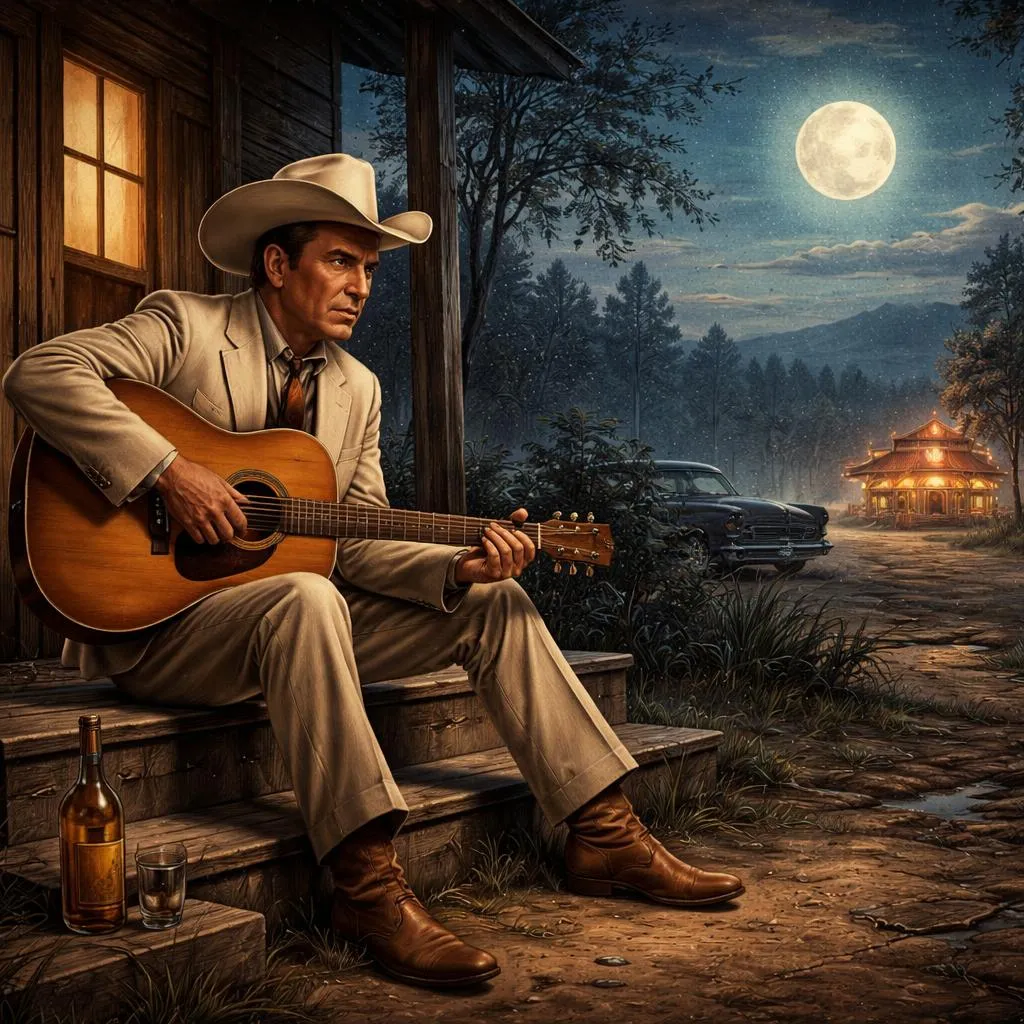

Have you ever heard a song so sad that it made your chest ache? Hank Williams wrote songs like that. He only lived to be 29 years old. But in that short time, he changed country music forever. This Celebrity Story: Hank Williams will introduce you to a man who sang about loneliness, heartbreak, and feeling lost. He grew up poor in Alabama. He taught himself to play guitar on the street. He became one of the most famous singers in America. His songs are still played today. He is called the Hillbilly Shakespeare. That means he wrote simple songs that felt like poetry.
Let us meet the man who made the whole world cry. Hank Williams had a voice that sounded broken and beautiful at the same time.
Who Is This Celebrity?
Hank Williams was an American singer and songwriter. He lived from 1923 to 1953. He only had six years of fame. But he became one of the most important figures in country music history. He wrote over 100 songs. Many of them became classics.
Why is he famous? He wrote and recorded songs like "Your Cheatin' Heart," "I'm So Lonesome I Could Cry," and "Hey, Good Lookin'." His voice was honest and raw. He sang about real pain. He also helped create the modern style of country music. Before Hank, country music was mostly happy fiddle tunes. He made it personal and emotional. Every country singer who sings about heartbreak stands on his shoulders. He died young. But his music never died.
Early Life and Childhood
Hank Williams was born in Mount Olive, Alabama. His real name was Hiram King Williams. His family called him Hank. He was born with a spine problem. That problem caused him pain his whole life.
His father was a farmer and a railroad worker. His mother ran boarding houses. The family moved frequently. Hank grew up poor. He did not have many toys. He had music.
His mother bought him a guitar when he was eight years old. He taught himself to play. He learned by listening to blues musicians on street corners. He also listened to gospel music in church. He loved a black blues singer named Rufus Payne. Rufus taught Hank how to play guitar. Hank never forgot him.
As a teenager, he started singing on the street. He would stand outside the local radio station. He would play and sing for change. People noticed his talent. He got his own radio show when he was only 14 years old. He was small and shy. But his voice was big.
Education and Learning Journey
Hank Williams did not like school. He attended off and on. His spine condition made it hard to sit in class. He also felt like an outsider. He dropped out of school in the seventh grade. He never went back.
His real education came from the streets and the radio. He listened to every kind of music. Blues, gospel, pop, and folk. He took what he liked from each style. He learned how to write a song that told a complete story in three minutes.
He also learned from performing. He played at talent shows, schoolhouses, and small clubs. He learned how to hold an audience. He learned that people wanted to hear songs about their own lives. He wrote about cheating, drinking, and being broke. People felt like he was singing about them.
He met a woman named Audrey Sheppard. She believed in his talent. She pushed him to move to Nashville. Nashville was the home of country music. She helped him get a record deal. She became his manager and his wife. Their relationship was stormy. But she helped launch his career.
How Did They Become Successful?
Hank Williams became successful almost overnight. In 1946, he traveled to Nashville. He auditioned for a music publisher. The publisher heard him sing a song called "Move It On Over." The song was a huge hit. It reached number one on the country charts.
Then came more hits. "Lovesick Blues" was his breakthrough. The song had a yodel in it. Hank sang it with raw emotion. The song spent 16 weeks at number one. He became a superstar.
He joined the Grand Ole Opry. That was the most famous country music stage in America. He performed "Lovesick Blues" six times in one night because the audience demanded it.
He wrote and recorded hit after hit. "I'm So Lonesome I Could Cry" is one of the most beautiful sad songs ever written. "Your Cheatin' Heart" became his signature song. "Hey, Good Lookin'" was fun and upbeat. He could write happy songs too.
He toured constantly. He traveled over 100,000 miles per year. He performed for packed houses everywhere he went. He was only in his twenties. He was the biggest star in country music.
Big Ideas and Achievements
Hank Williams's biggest idea was that country music could be art. Before him, country songs were often simple and silly. He wrote songs that felt like poems. He used images like "a whippoorwill singing in a lonesome tree." Those images made people feel something deep.
His greatest achievement is the song "I'm So Lonesome I Could Cry." That song is a masterpiece. The lyrics paint a picture of complete loneliness. The melody is simple but unforgettable. His voice sounds like it is about to break. Many critics call it one of the greatest songs ever written in any genre.
Another huge achievement is his influence. Almost every country singer who came after him learned from his records. Elvis Presley covered his songs. Bob Dylan called him a genius. Bruce Springsteen studied his lyrics. He changed music forever.
He also achieved fame despite his health problems. His back pain was constant. He drank to kill the pain. That drinking eventually killed him. But he kept performing. He kept writing. He kept creating until the end.
Challenges and Difficult Times
Hank Williams faced terrible challenges. First, he was born with a spinal condition called spina bifida. It caused him pain every single day of his life. The pain got worse as he got older.
Second, he struggled with alcohol. He drank to numb his back pain. The drinking led to other problems. He missed shows. He behaved badly. He was fired from the Grand Ole Opry for showing up drunk.
Third, his marriage to Audrey was very difficult. They fought constantly. They divorced. The divorce broke his heart. He wrote many of his saddest songs about her.
Fourth, his health collapsed in 1952. He had heart problems. Doctors told him to stop drinking and slow down. He could not. He kept touring. He kept performing.
On January 1, 1953, he was scheduled to play a show in West Virginia. He hired a driver to take him. The driver found him dead in the back seat of the car. He was only 29 years old. He died of heart failure. The world lost a genius.
Fun Facts About the Celebrity
Hank Williams wrote the song "Your Cheatin' Heart" in just 20 minutes. He wrote it while sitting in his car outside a recording studio.
Another fun fact: He was terrified of flying. He traveled everywhere by car. He spent hundreds of nights in motels and on the road.
He had a dog named George. He wrote a song about the dog. The song was called "Old George." It was never released.
He loved to fish. He went fishing whenever he had a day off. He said fishing helped him write songs.
One more fact: His son, Hank Williams Jr., and his grandson, Hank Williams III, also became famous musicians. The family legacy continues.
Why Is This Celebrity Important Today?
Hank Williams is important because he taught us that sadness can be beautiful. He did not hide his pain. He sang it out loud. That helped millions of people feel less alone.
He is also important because he proved that a song does not need to be complicated to be great. His lyrics are simple. His melodies are simple. But they cut straight to the heart.
His music is still played everywhere. Country radio plays his songs every day. Rock bands cover his songs. Young songwriters study his lyrics.
Parents can use his story to teach children about expressing emotions. Hank Williams felt sad. He wrote songs about it. That is healthier than keeping it inside.
What Can Kids Learn from This Story?
Kids can learn important lessons from Hank Williams. First, turn your pain into art. Hank was in constant pain. He turned that pain into beautiful songs. When you feel sad or angry, draw a picture or write a poem. Create something from your feelings.
Second, keep going even when it hurts. Hank performed with a bad back. He kept singing even when he felt terrible. Do not let small problems stop you. Keep trying.
Third, be honest. Hank sang the truth. He did not pretend to be happy when he was sad. Honesty in his songs made people trust him. Be honest about your feelings with people you love.
Finally, leave something behind. Hank only lived 29 years. But he left behind songs that will last forever. What will you leave behind? A kind act? A drawing? A story you wrote? Make your mark.
Quick Quiz or Practice Time
Let us see what you learned from this Celebrity Story: Hank Williams. Answer these questions with a parent or by yourself.
What are two of Hank Williams's most famous songs?
What health problem did Hank have from birth?
How old was Hank Williams when he died?
What famous country music stage did Hank perform on?
What was Hank's nickname?
Here is a fun activity. Listen to "I'm So Lonesome I Could Cry" by Hank Williams. Notice the sound of the wind in the recording. It feels lonely. Then write down three words that describe how the song makes you feel. Share them with your family.
Another activity. Draw a picture of Hank Williams holding a guitar. Give him a cowboy hat. Write the words "Lovesick Blues" under your picture. Hang it where you can see it.
Hank Williams lived a short and painful life. He was born with a bad back. He drank to kill the pain. He wrote songs that made the whole world cry. He died in the back seat of a car at 29 years old. But his songs never died. People still sing "Your Cheatin' Heart" and "I'm So Lonesome I Could Cry." His voice still cuts through the radio. His words still make people feel understood. His story teaches us that pain can become beauty. Sadness can become art. And a short life can leave a very long shadow. That is the real lesson of this celebrity story.