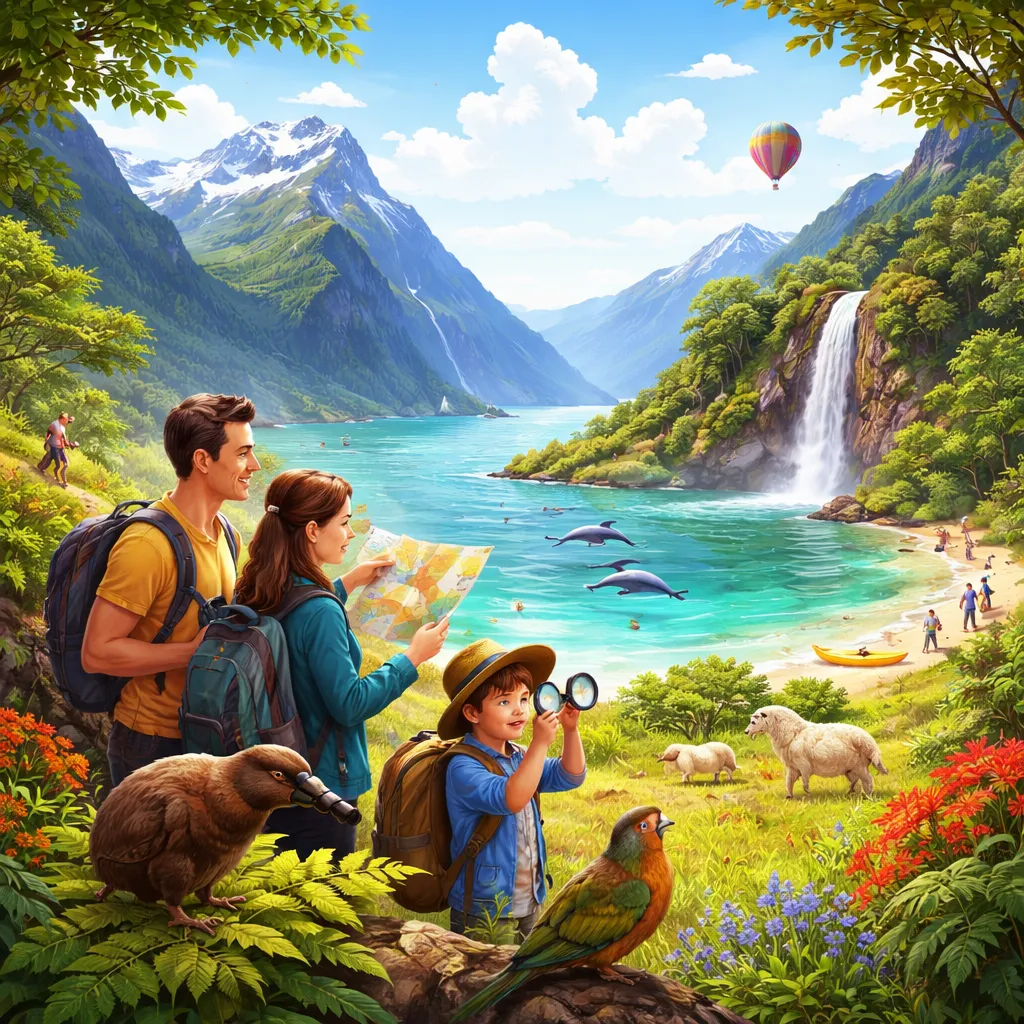

Introduction to New Zealand
Language learning transports us to a land of green hills, snow-capped peaks, and sparkling blue waters. Today we explore two main islands in the South Pacific. This country holds some of the most dramatic landscapes on Earth. Children will discover a place where volcanic geysers shoot steam into the air. They will learn about the Māori people and their rich traditions. Exploring New Zealand builds reading skills while revealing a land of adventure and natural beauty. Every fact uncovers something spectacular. Every word invites young readers to imagine this island nation.
Where Is New Zealand?
New Zealand lies in the South Pacific Ocean southeast of Australia. It consists of two main islands—the North Island and the South Island. The country also includes over six hundred smaller islands. The capital city is Wellington. Wellington sits at the southern tip of the North Island. The largest city is Auckland in the north. The country covers over one hundred thousand square miles. It sits isolated from other landmasses. The Tasman Sea separates it from Australia. Finding New Zealand on a map shows two long islands at the bottom of the Pacific. Its isolation allowed unique plants and animals to develop.
Interesting Facts About New Zealand
New Zealand offers countless remarkable facts for young learners. It was the last major landmass settled by humans. Māori people arrived from Polynesia about seven hundred years ago. Another interesting fact involves the kiwi bird. This flightless bird serves as the national symbol. Kiwis have hair-like feathers and lay eggs nearly as large as their bodies. New Zealanders even call themselves "Kiwis."
New Zealand also has incredible landscapes. The country served as the filming location for The Lord of the Rings movies. The rolling hills, mountains, and forests brought Middle-earth to life. Another fun fact involves geothermal activity. The North Island has geysers, hot springs, and bubbling mud pools. Rotorua smells of sulfur from the geothermal vents.
The country also has a unique tree. The kauri tree ranks among the largest trees in the world. Some living kauri trees are over two thousand years old. Another interesting fact involves the national sport. Rugby holds a special place in New Zealand culture. The All Blacks team performs a haka—a traditional Māori war dance—before each match. New Zealand also has no native land mammals except bats. Birds evolved without ground predators. Many became flightless. These facts show children a country of unique wildlife, geothermal wonders, and rich cultural traditions.
Key Vocabulary About New Zealand
Let us build vocabulary for this island nation. These words help children describe what they learn.
Geothermal: relating to heat from inside the Earth.
Kiwi: a flightless bird native to New Zealand.
Māori: the indigenous people of New Zealand.
Haka: a traditional Māori war dance.
Glacier: a large mass of moving ice.
Fjord: a long, narrow inlet with steep cliffs.
Sheep: an animal raised in large numbers on farms. Introduce these words with pictures and stories. Show a kiwi bird with its long beak. Show the All Blacks performing the haka. Let children say each word aloud. These vocabulary words give children the language to explore New Zealand's landscapes and culture.
Simple Sentences for Reading Practice
Short sentences help new readers build confidence. Use these sentences about New Zealand for practice.
New Zealand is a country in the South Pacific.
The capital city is Wellington.
The North Island and South Island form the country.
Kiwi birds cannot fly.
Māori people first settled New Zealand.
Geysers shoot steam from the ground.
Many movies filmed here show beautiful landscapes. Read each sentence together. Let children point to the words. Encourage them to repeat after you. Use pictures to show each fact. These simple sentences prepare young readers for longer passages.
Short Reading Passage About New Zealand
Here is a short passage for children to read together.
“New Zealand rises from the South Pacific Ocean. Two main islands form this country. The North Island holds volcanoes, geysers, and hot springs. Steam rises from the ground in Rotorua. The South Island holds the Southern Alps. Snow covers these mountains year-round. Glaciers creep down the slopes. Fjords cut deep into the coastline. Milford Sound draws visitors with its towering cliffs and waterfalls. The kiwi bird lives only here. This flightless bird hunts at night. New Zealanders call themselves Kiwis with pride. Māori people first arrived in canoes from Polynesia. Their language and traditions remain strong today. The haka dance shows strength and unity. New Zealand also has many sheep. Sheep outnumber people by several times. The country's green hills and clear waters make it a place of natural wonder.”
Read this passage slowly together. Pause to talk about each idea. Ask children to find vocabulary words in the text. This activity builds reading fluency and deepens understanding.
Fun Questions About New Zealand
Questions make reading interactive and engaging. Use these to start conversations with young learners.
What two main islands form New Zealand?
What is the capital city of New Zealand?
What flightless bird is the national symbol?
Who were the first people to settle New Zealand?
What is the haka?
What mountain range runs through the South Island? Let children answer in complete sentences. Encourage them to use new vocabulary. Ask them to imagine visiting a geothermal park. What would they see and smell? Creative questions make the topic personal and exciting.
Tips for Learning English with This Topic
Use New Zealand to create rich English learning experiences. Start with a map activity. Let children find New Zealand in the South Pacific. Point out the North and South Islands and the distance from Australia. Discuss how isolation led to unique wildlife.
Next, introduce the vocabulary through a hands-on activity. Create a simple geothermal model using baking soda and vinegar. Let children watch as bubbles and steam simulate geysers. For the kiwi bird, draw or craft a flightless bird with a long beak. Use the words "geothermal," "kiwi," and "glacier" during the activity.
Read the passage aloud with wonder and excitement. Let your voice reflect the geothermal energy and the quiet forests. After reading, let children draw a scene from New Zealand. One child might draw a geyser shooting steam into the air. Another might draw a kiwi bird in the forest. Let them label their drawings with vocabulary words. Add green for the hills and blue for the fjords.
Incorporate a cultural connection. Talk about Māori traditions like the haka. Discuss how indigenous cultures preserve their heritage. Ask children about traditions in their own families.
Use music and movement to enhance the experience. Listen to Māori music with chanting and percussion. Let children perform their own haka with stomping and gestures. Pretend to climb a glacier or sail through a fjord. Physical activity reinforces learning in joyful ways.
Encourage children to share their knowledge. Let them tell a family member about the kiwi bird or the geothermal wonders. They can explain what makes New Zealand unique. Teaching others builds confidence and deepens understanding.
Connect New Zealand to your child's world. Ask, “What unique animals live near us?” Compare them to the kiwi. Ask about mountains or hot springs you have visited. Compare to the Southern Alps and geothermal areas. These connections help children see that language learning reading is about understanding different places and cultures. By exploring New Zealand together, you give children a rich experience. They learn new words, discover a land of adventure, and grow their love for reading. This island nation becomes a cherished part of their learning journey.