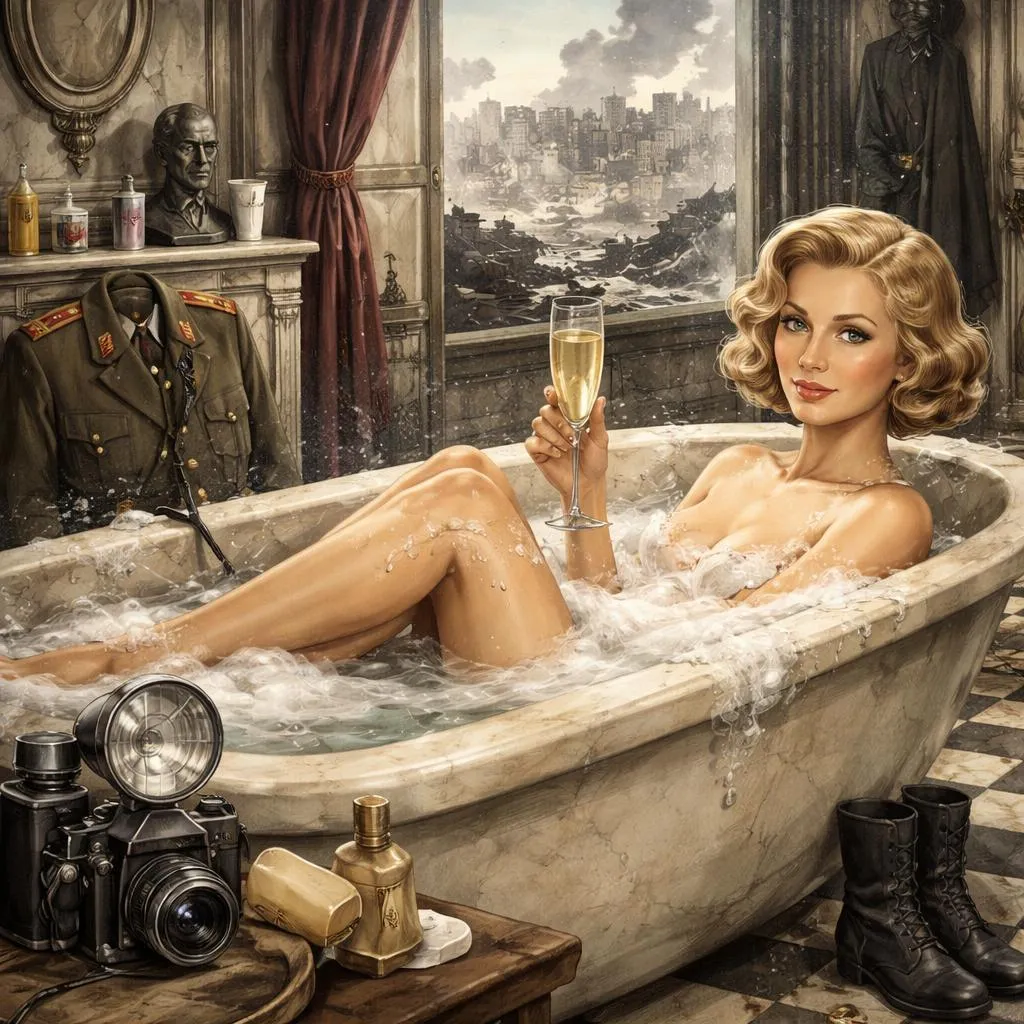

Have you ever seen a photo of a woman sitting in a bathtub with muddy boots on the rug? The tub is in Hitler's apartment. The woman is a photographer named Lee Miller. She had just photographed the horrors of the Dachau concentration camp. She was exhausted and traumatized. She took off her dirty boots. She got into Hitler's bath. This Celebrity Story: Lee Miller will introduce you to a woman who lived many lives. She was a model in New York. She was a surrealist artist in Paris. She was a war correspondent for Vogue magazine. She was a gourmet cook in England. She was all of these things. She survived trauma. She made art. She told the truth.
Let us meet the woman who could not be contained. Lee Miller said, "I want to be a free woman."
Who Is This Celebrity?
Lee Miller was an American photographer and photojournalist. She lived from 1907 to 1977. She was a fashion model in the 1920s. She became a surrealist artist in the 1930s. She became a war photographer in the 1940s. She was one of the only female war correspondents to cover World War II.
Why is she famous? She photographed the horrors of the Dachau concentration camp. Her images are among the most important documents of the Holocaust. She also took the famous photo of herself sitting in Hitler's bathtub. That image is a symbol of victory over fascism. Before the war, she was a muse to the artist Man Ray. She helped invent the solarization technique in photography. She was a muse and an artist. She was not just a pretty face.
Early Life and Childhood
Lee Miller was born in Poughkeepsie, New York. Her father was an engineer. He was also an amateur photographer. He took many photos of Lee. Some of them were inappropriate. She was traumatized.
When she was seven years old, she was sent to live with family friends. She was raped. She was infected with gonorrhea. Her family did not talk about it. She carried the trauma for life.
She was a rebellious teenager. She was expelled from school. She loved to draw. She loved to paint. She also loved fashion.
Her father introduced her to photography. She learned to use a camera.
When she was 19, she moved to New York City to study theater. She was walking down a street. The publisher of Vogue magazine saw her. He asked her to model. She became a model. Her face appeared on covers. She was a star.
But she was bored. Modeling was passive. She wanted to be behind the camera.
Education and Learning Journey
Lee Miller moved to Paris in 1929. She wanted to study photography. She sought out the artist Man Ray. He was a famous surrealist. He used photography to make art.
She walked into his studio. She said, "I am your new student." He said, "I do not take students." She said, "Well, I am staying." She stayed.
She became his muse. She also became his collaborator. They invented a technique called solarization. It creates a halo effect around dark areas of a photograph. The technique became famous.
She also fell in love with Man Ray. Their relationship was passionate and stormy. She returned to New York in 1932. She opened her own photography studio. She photographed artists and celebrities. She was successful.
But she was restless. She married a wealthy Egyptian businessman. She moved to Cairo. She lived there for three years. She took photographs. She explored.
In 1939, World War II broke out. She left her husband. She went to London. She worked as a freelancer for Vogue magazine. She photographed the London Blitz. She showed the courage of the British people.
How Did They Become Successful?
Lee Miller became successful as a war photographer in the 1940s. Vogue accredited her as a war correspondent. She was one of the few women to get official credentials.
She followed the American army across Europe. She photographed the siege of Saint-Malo in France. She climbed into foxholes. She risked her life. Her photos were published in Vogue. They showed the reality of war.
In April 1945, she arrived at the Buchenwald concentration camp. She was with the American army. She saw the piles of bodies. She saw the survivors. She photographed everything. She was horrified. She kept shooting.
She then went to Dachau. The camp had just been liberated. She photographed the train cars filled with corpses. She photographed the survivors behind barbed wire. She photographed the SS guards who were killed by the prisoners.
After photographing Dachau, she went to Munich. The city was in ruins. She went to Hitler's apartment. It was intact. She took off her dusty boots. She got into his bathtub. She asked her colleague to take her photo. The photo shows her washing away the horror. It is a powerful image.
After the war, she returned to London. She married the artist Roland Penrose. She gave birth to a son. She struggled with depression. The war had broken her. She stopped taking photographs. She destroyed many of her negatives.
She became a gourmet cook. She wrote cookbooks. She raised chickens.
She died in 1977. Her son found her negatives in the attic. He published them. The world discovered Lee Miller again.
Big Ideas and Achievements
Lee Miller's biggest idea was that a woman could be everything. Model. Artist. War correspondent. Cook. She did not have to choose.
Her greatest achievement is her war photography. Her images of Dachau and Buchenwald are essential historical documents. They are hard to look at. They must be seen.
Another huge achievement is the Hitler's bathtub photo. That image is surreal. It is also triumphant. The tyrant is gone. The photographer sits in his bath.
She also contributed to surrealist art. Her solarization technique is still used.
She also photographed the London Blitz. Her images of firefighters and rubble are iconic.
She influenced later photographers. Her combination of fashion and war photography was revolutionary.
Challenges and Difficult Times
Lee Miller faced terrible challenges. First, she was raped as a child. The trauma never healed.
Second, she was a woman in a male-dominated field. She had to fight for credentials. She had to fight for respect.
Third, she saw the concentration camps. She never recovered. She had PTSD. She drank too much. She was depressed.
Fourth, she stopped working. She hid her negatives. She kept her talent a secret.
Fifth, she died before she was recognized as a great artist. Her son discovered her work.
Fun Facts About the Celebrity
Lee Miller was a gourmet cook. She wrote a cookbook. She served dinner to Pablo Picasso.
Another fun fact: She was friends with the artist Max Ernst. They made art together.
She had a pet rabbit. She took it with her everywhere.
She hated small talk. She was blunt. She was honest.
One more fact: Her son, Antony Penrose, wrote a biography of her. He also runs the Lee Miller Archives.
Why Is This Celebrity Important Today?
Lee Miller is important because she was a witness. She saw the worst of humanity. She photographed it. She did not look away.
She is also important because she lived a full life. Model. Artist. War correspondent. Cook. She did it all. She is a role model for anyone who wants to do many things.
Her influence is seen in contemporary photography. The mix of fashion and documentary photography comes from her.
Parents should be cautious with Miller. Her war photos are graphic. Her biography contains sexual trauma. It is for older children. But her story of resilience is for everyone.
What Can Kids Learn from This Story?
Kids can learn powerful lessons from Lee Miller. First, you can be many things. Miller was a model, an artist, a war correspondent, and a cook. You do not have to choose one thing. Be a painter and a scientist. Be a writer and a dancer.
Second, witness the truth. Miller did not look away from suffering. She photographed it. When you see something wrong, do not look away. Document it. Speak up.
Third, heal yourself. Miller used her art to process trauma. She also cooked. Find ways to heal. Draw. Write. Cook. Garden.
Finally, keep your work. Miller destroyed many of her negatives. Her son found the rest. Do not destroy your work. Keep it. Someday, it will matter.
Quick Quiz or Practice Time
Let us see what you learned from this Celebrity Story: Lee Miller. Answer these questions with a parent or by yourself.
In whose bathtub did Lee Miller famously pose after photographing Dachau?
What artist did Miller study with in Paris?
What photography technique did Miller help invent?
What magazine did Miller work for as a war correspondent?
Who discovered Miller's negatives in her attic after her death?
Here is a fun activity for older children with parental guidance. Look up Lee Miller's "Hitler's Bathtub" photo online with your parent. Talk about why it is a powerful image. Then draw a picture of what victory looks like to you.
Another activity. Think of a difficult thing you have overcome. Draw a picture of it. Then draw a picture of yourself washing it away. You are processing your feelings like Lee Miller.
Lee Miller was born in New York. She was raped as a child. She became a model. She moved to Paris. She studied with Man Ray. She invented solarization. She became a war correspondent. She photographed Dachau. She sat in Hitler's bathtub. She was traumatized. She stopped photographing. She became a cook. She died. Her son found her work. The world discovered her. Her story teaches us to be many things. To witness the truth. To heal ourselves. To keep our work. That is the real lesson of this celebrity story. Note: Lee Miller's war photographs are graphic. Her personal history includes sexual trauma. Please preview before sharing with younger children. Focus on her many careers and her resilience for younger audiences.