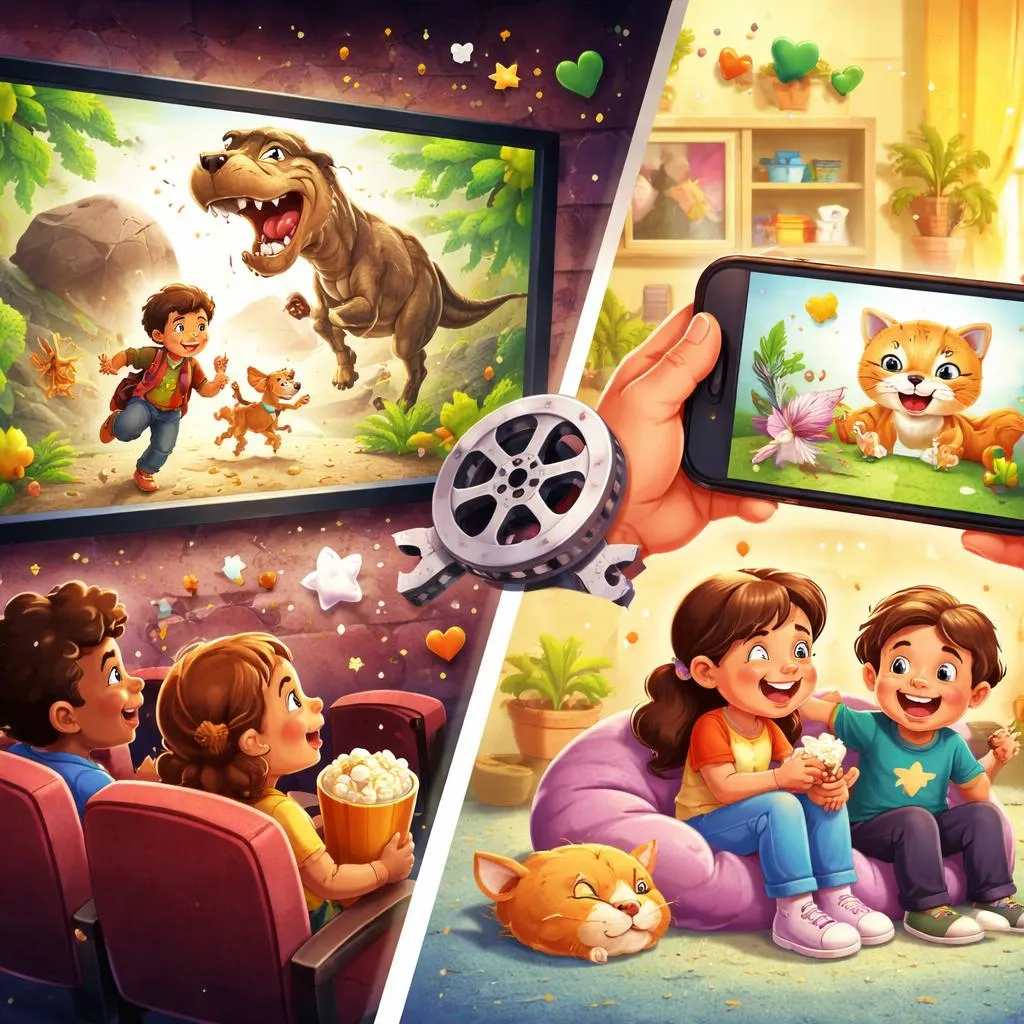

Children watch moving images every day. They see cartoons on tablets. They watch movies in theaters. Parents hear kids say, "I watched a video" or "Let us see a film". These two words seem the same. But they have different histories and uses. Knowing the difference between a "video to" and a "film to" helps children understand how moving pictures work. Let us explore these two important words together.
What Do These Expressions Mean?
A "video to" means a recording of moving images stored digitally or on tape. Videos play on phones, computers, and TVs. Most videos today are digital. For example, a TikTok clip is a video. A YouTube tutorial is a video. A "film to" means a movie made for theaters or as art. Film originally meant celluloid material in cameras. Now film also means any long, story-based movie. For example, a Disney movie is a film. A superhero adventure is a film. For a child, a video feels like something short you watch on a small screen.
A film feels like something long and special you watch on a big screen. Both show moving pictures with sound. That is why the two expressions seem similar. You can watch a film on a phone as a video file. You can watch a video on a big screen. The words overlap today. But film still feels more artistic and important. Video feels more everyday and casual. Understanding this difference helps children talk about what they watch.
What's the Difference?
The main difference lies in length and purpose. A "video to" is often shorter. It can be a few seconds or minutes. Videos are for sharing moments, teaching, or entertaining quickly. A "film to" is usually longer, often over an hour. Films tell complete stories with characters and plots. One is more about quick content. The other is more about deep storytelling. Think of a video as a short story you read in five minutes. Think of a film as a whole novel you read over several days.
Another difference is how they are made. Videos are often made by anyone with a phone. Films are made by professional crews with cameras, lights, and actors. Video feels homemade or casual. Film feels professional and polished. This difference is changing as phones get better. But the feeling remains. A wedding video is a video. A Hollywood movie is a film. Both can be wonderful. But they feel different.
When Do We Use Each One?
Use a "video to" for everyday recordings. At home, a child watches a video of a baby laughing. Use video for school projects. "We made a video about the solar system." Use video for short clips. "I saw a funny cat video online." Use video for any digital moving image that is not a long movie. Video is the word for the modern age. Almost everything you watch on a phone is a video.
Use a "film to" for longer, story-based movies. In a theater, a child says "Let us see a film." Use film for award shows. "The film won an Oscar." Use film for art. "That film made me think about friendship." Use film when you want to sound serious about movies. Film feels more important than video. A student says "I am studying film" meaning the art of movies. They do not say "I am studying video" for that.
Real-life situations use both naturally. A parent says "We will watch a short video about how to bake cookies. Then tonight we will watch a film together as a family." The video teaches. The film entertains with a story. Another example: a child makes a stop-motion animation with toys. That is a short film. It could also be called a video. Both words work. But calling it a film makes it sound more like art. Calling it a video makes it sound more like a casual recording.
Example Sentences for Kids
Here are simple examples of a "video to":
"I watched a video of a puppy learning to walk."
"Please record a video of my science experiment."
"The video game has cutscene videos between levels."
Here are simple examples of a "film to":
"My favorite film is about a lion cub who becomes king."
"We studied an old black-and-white film in class."
"The film lasted two hours and had a happy ending."
Notice how the video examples are short, casual, and often educational. The film examples are longer, story-driven, and feel more like art. A video of your birthday party is a video. A film about a birthday party mystery is a film. One is real life. One is a story. That is a helpful clue for children.
Common Mistakes to Avoid
Many children call every moving image a video. They say "Let us watch a video" when going to a movie theater. That is common but not precise. The correct way is to say "film" for a theater movie. Video feels too small for the big screen. Save video for phones, computers, and TVs at home. Save film for cinema and serious storytelling. This distinction helps children match words to experiences.
Another mistake is thinking film is old and video is new. Both are used today. The correct way is to know that film originally meant the physical celluloid in cameras. Movies shot on that material are still called films even when shown digitally. The word "film" now means a certain kind of long, story-based movie. It is not about the technology anymore. It is about the feeling and the length. A Disney movie is a film, even if you watch it on a phone.
A third mistake is using "film" for any video. A child calls a 30-second toy commercial a film. That is not correct. The correct way is to save "film" for works that tell a story or have artistic intent. A commercial is a video. A home movie is a video. A documentary can be a film if it is long and serious. A short funny clip on social media is a video. Length and purpose matter.
Easy Memory Tips
Here is a simple trick. Imagine a "video to" as a note you write quickly. It is short. It says one thing. You throw it away later. Imagine a "film to" as a book you write carefully. It takes a long time. It tells a whole story. You keep it on your shelf forever. So video = quick note. Film = special book. This comparison helps children remember the difference in length and importance.
Another tip uses the first letters. Video starts with V. Think of "V for Very short." Video is often very short. Film starts with F. Think of "F for Full story." A film tells a full story with a beginning, middle, and end. Practice with your child. Ask "Is this very short?" If yes, call it a video. Ask "Does this tell a full story?" If yes, call it a film. This question-based trick works every time.
Quick Practice Time
Try these simple exercises with your child.
Fill in the blank: Choose "video" or "film".
"I took a __________ of my sister opening her birthday gift." (Answer: video)
"The __________ about the underwater world was two hours long." (Answer: film)
Multiple choice: Pick the correct description.
Which one is usually shorter and often watched on phones?
A) A film
B) A video
(Answer: B)
Which one is usually longer, tells a story, and often plays in theaters?
A) A video
B) A film
(Answer: B)
These quick questions take only two minutes. They help children separate short clips from long stories. Look at your watch history on a phone. Ask your child to find a video (short, casual). Then think of a film you saw together (long, story). That real practice builds lasting understanding of these two important words.
Wrap-up
The key difference is simple. A video is a short, often casual recording, usually digital and watched on small screens. A film is a longer, story-based movie, often made with professional care and watched in theaters or as an event. Learning this difference helps children talk about what they watch and understand the art of storytelling. Keep watching both videos and films. Each one has a special place in your family's life.