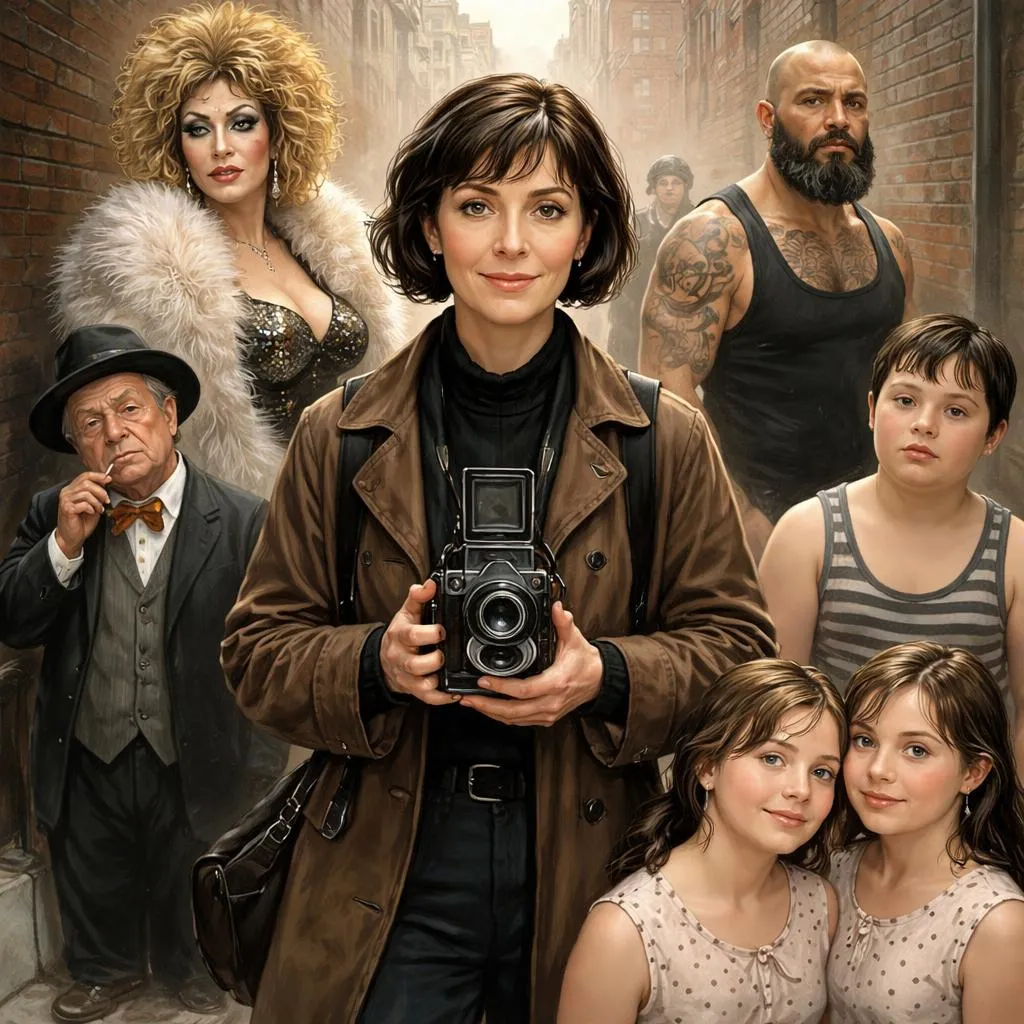

Have you ever taken a photo of someone who looked different? Someone with a tattooed face? Someone in a costume? Someone who made you curious? Diane Arbus took those photos. She photographed people on the margins. Circus performers. Twins. Nudists. People with disabilities. She did not look away. She looked directly at them. This Celebrity Story: Diane Arbus will introduce you to a photographer who believed that everyone deserves to be seen. She grew up in a wealthy family. She had everything. She was miserable. She left her comfortable life. She walked the streets of New York. She talked to strangers. She asked to photograph them. Her photos are strange and powerful. They make you uncomfortable. They also make you think.
Let us meet the photographer of outsiders. Diane Arbus said, "I really believe there are things nobody would see if I didn't photograph them."
Who Is This Celebrity?
Diane Arbus was an American photographer. She lived from 1923 to 1971. She is best known for her black and white photographs of people on the fringes of society. She photographed dwarfs, giants, transgender people, circus performers, and people with mental disabilities.
Why is she famous? She looked at subjects that most photographers ignored. She did not judge them. She did not pity them. She photographed them as equals. Her work was controversial. Some people called her work exploitative. Others called it compassionate. She became famous after her death. A retrospective at the Museum of Modern Art in 1972 was seen by millions. Her work changed how we think about photography.
Early Life and Childhood
Diane Arbus was born in New York City. Her name was Diane Nemerov. Her family was very wealthy. Her father owned a famous department store. She grew up in a penthouse on Fifth Avenue. She had maids. She had tutors. She had everything.
She was unhappy. Her parents were distant. Her mother was depressed. Her father had affairs. The family did not show affection. Diane felt invisible.
She loved to draw. She loved to paint. She also loved to take photos. Her father gave her a camera when she was 13. She took pictures of her family. She took pictures of the city.
She went to school at the Ethical Culture Fieldston School. She was a good student. But she was restless. She wanted to escape her privileged life.
At 18, she married Allan Arbus. He was a photographer. She was 18. He was 23. They had two daughters. They started a fashion photography business. Diane worked as a stylist. Allan took the photos. They were successful. They were miserable.
Education and Learning Journey
Diane Arbus studied photography with the great photographer Berenice Abbott. She also studied with Lisette Model. Model was a tough teacher. She told Diane to photograph what she was afraid of. Diane listened.
She quit the fashion business. She was 35 years old. She wanted to be an artist. She took a camera and walked the streets of New York.
She went to Coney Island. She found a circus. She asked to photograph the performers. She photographed a tattooed man. She photographed a dwarf. She photographed identical twins.
She went to drag balls. She photographed men dressed as women. This was in the 1950s. It was illegal. She was brave.
She went to nudist colonies. She photographed families without clothes. She took off her own clothes too. She wanted to be one of them.
She was relentless. She would follow people until they agreed to be photographed. She would wait hours for the right moment. She was obsessed.
How Did They Become Successful?
Diane Arbus became successful in the 1960s. Her work was published in Esquire, Harper's Bazaar, and the New York Times Magazine.
In 1967, she was included in a major exhibition at the Museum of Modern Art. The show was called "New Documents." She showed her photographs of a dwarf, a giant, and a nudist family. The audience was shocked. People walked out. Others were fascinated.
She became famous. She was also criticized. Some people said her work was cruel. They said she made fun of her subjects. They did not understand her. She loved her subjects. She saw herself in them.
She won a Guggenheim Fellowship in 1963. She won another in 1966. She was respected by other artists. She was finally successful.
But she was not happy. She struggled with depression. Her marriage had ended. She was raising two daughters alone. She was lonely.
In 1971, she took her own life. She was 48 years old. She swallowed pills and slit her wrists. She was found in her apartment. The art world was devastated. She had so much more to give.
Big Ideas and Achievements
Diane Arbus's biggest idea was that everyone is strange. She said, "The thing that's important to know is that you never know the whole truth about anything." She photographed the "normal" as well as the "abnormal." They all looked strange in her lens.
Her greatest achievement is her body of work. Over 7,000 negatives. They are now in the Metropolitan Museum of Art. Her most famous images include "Identical Twins," "A Jewish Giant at Home," and "Child with a Toy Hand Grenade."
"Identical Twins" shows two young girls standing side by side. They are dressed alike. They look the same. But one smiles. One frowns. The photo is unsettling. It was the inspiration for the movie "The Shining."
"Child with a Toy Hand Grenade" shows a boy in Central Park. He has a toy grenade in his hand. His face is twisted into a snarl. He looks crazy. He looks like a normal kid playing. The photo captures the violence simmering beneath the surface.
She also photographed people with Down syndrome. At the time, these people were hidden away. She showed their faces. She showed their humanity.
Her influence is enormous. Every photographer who photographs outsiders today is walking in her footsteps.
Challenges and Difficult Times
Diane Arbus faced terrible challenges. First, she grew up in a cold, unloving family. She felt invisible.
Second, she struggled with depression her whole life. She called it her "black cloud." She had episodes where she could not work.
Third, her marriage failed. She and Allan divorced. She raised her daughters alone. She had to support them financially.
Fourth, her work was attacked. Critics said she was a vulture. They said she exploited her subjects. She was hurt by those words.
Fifth, she took her own life. That is the greatest tragedy. She could not see how much she had given the world.
Fun Facts About the Celebrity
Diane Arbus was afraid of everything. She used that fear. She photographed what scared her.
Another fun fact: She photographed her own children. Her daughter Doon became a writer. Her other daughter Amy became a photographer.
She loved to walk. She walked for miles every day. She carried her camera.
She was a terrible cook. She burned everything.
One more fact: She had a pet parrot. The parrot learned to say "Diane."
Why Is This Celebrity Important Today?
Diane Arbus is important because she showed us that everyone is a mystery. We are all strange. We are all beautiful. We are all worthy of being seen.
She is also important because she gave a voice to the voiceless. In the 1950s and 60s, people with disabilities were hidden. Circus performers were seen as freaks. She showed them as human beings.
Her influence is everywhere. Photographers who make intimate portraits of marginalized people are following her.
Parents should be cautious with Arbus. Her work is intense. It deals with identity, difference, and sometimes nudity. It is for older children. But her story of compassion and courage is for everyone.
What Can Kids Learn from This Story?
Kids can learn deep lessons from Diane Arbus. First, look at everyone. Arbus looked at the people others ignored. The child on the playground who is different. The elderly person on the bench. Look at them. See them.
Second, do not be afraid of difference. Arbus was afraid. She photographed her fear. Facing fear is brave.
Third, art can change how we see. Arbus's photos made people think. Her work changed attitudes toward disability and difference. Your art can change minds too.
Finally, be kind to yourself. Arbus was not kind to herself. She took her own life. If you feel sad or hopeless, talk to someone. You are not alone.
Quick Quiz or Practice Time
Let us see what you learned from this Celebrity Story: Diane Arbus. Answer these questions with a parent or by yourself.
What kind of people did Diane Arbus like to photograph?
What famous photo shows two girls standing side by side?
What teacher told Arbus to photograph what she was afraid of?
What museum held a major exhibition of her work in 1967?
How did Diane Arbus die?
Here is a fun activity for older children with parental guidance. Look up Diane Arbus's "Identical Twins" online with your parent. Look at the two girls. One smiles. One frowns. Write a short story about them. What are they thinking? What are they feeling?
Another activity. Draw a portrait of someone you think is interesting. It could be a friend. It could be a relative. It could be a stranger at the park. Try to capture something real. Not just a smile. A real expression.
Diane Arbus was born rich. She was unhappy. She left her comfortable life. She walked the streets of New York. She photographed dwarfs and giants. She photographed twins and nudists. She photographed people with disabilities. She looked at them. She did not look away. She made powerful art. She was attacked. She was praised. She was depressed. She took her own life. She was 48. Her work lives on. It challenges us. It makes us think. It makes us see. Her story teaches us to look at everyone. To face our fears. To be kind to ourselves. That is the real lesson of this celebrity story. Note: Diane Arbus's photographs can be intense. Please preview before sharing with younger children. Focus on her message of looking at everyone with compassion for younger audiences.