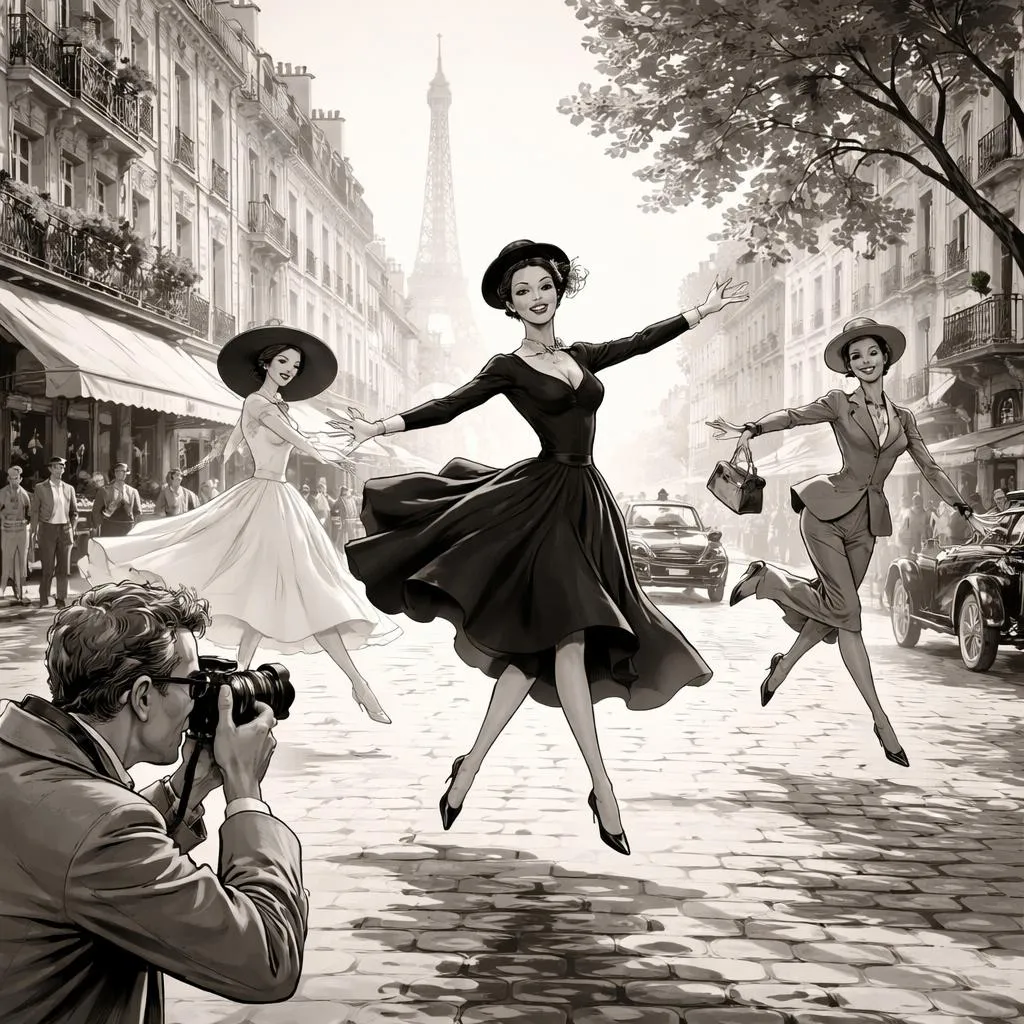

Have you ever seen a photo of a model jumping over a puddle in a beautiful dress? She looks like she is flying. The background is a blur. The dress is a blur. But her face is sharp. That is a Richard Avedon photograph. He made fashion photography into art. This Celebrity Story: Richard Avedon will introduce you to the photographer who changed how we see beauty, fashion, and people. He grew up in New York. His father owned a clothing store. He hated it. He wanted to be a poet. He became a photographer instead. He photographed models in motion. He also photographed ordinary people against white backgrounds. He stripped away everything but the face. He said, "All photographs are accurate. None of them is the truth."
Let us meet the man who made the white background famous. Richard Avedon saw the soul in everyone he photographed.
Who Is This Celebrity?
Richard Avedon was an American fashion and portrait photographer. He lived from 1923 to 2004. He worked for Harper's Bazaar and Vogue magazines. He also photographed the American West. He made huge portraits of drifters, miners, and ordinary people.
Why is he famous? He revolutionized fashion photography. Before him, fashion models stood still. They looked like mannequins. He made them move. He made them run, jump, and dance. His photos were full of energy. He also revolutionized portrait photography. He photographed his subjects against a plain white background. No props. No scenery. Just the person. He said, "There is no such thing as inanimate. Everything is animate." His portraits of the powerful and the powerless are among the most important of the 20th century.
Early Life and Childhood
Richard Avedon was born in New York City. His father was a businessman. His family owned a clothing store. His mother was a homemaker. She was artistic. She encouraged his creativity.
He loved poetry. He wanted to become a poet. He wrote poems in his notebook. He also loved fashion. He loved the way clothes looked. He loved the way they moved.
He went to school at DeWitt Clinton High School in the Bronx. He was the editor of the school's literary magazine. He was also on the yearbook staff. He took photos for the yearbook.
His father wanted him to join the family business. Richard did not want to. He wanted to make art.
He joined the Merchant Marine during World War II. His job was to take identification photos of the sailors. He learned to take a good portrait. He learned to work fast. He took thousands of photos.
After the war, he studied at the New School for Social Research in New York. He took a photography class. His teacher was Alexey Brodovitch. Brodovitch was the art director of Harper's Bazaar. He saw Avedon's talent. He hired him.
Education and Learning Journey
Richard Avedon studied at Columbia University for a short time. He dropped out. He did not like school. He took one photography class at the New School. That class changed his life.
His teacher, Alexey Brodovitch, was tough. He pushed Avedon to experiment. He told him to break the rules. Avedon listened.
He learned by working. He got a job at a department store. He photographed jewelry. He hated it. He kept his own projects for nights and weekends.
He began to take fashion photos on the streets of Paris. He used natural light. He used real backgrounds. He put his models in motion. He told them to run and jump. He captured them mid-air.
His first big break came in 1947. He photographed a model named Dorian Leigh. She wore a Dior dress. She was dancing in the streets of Paris. The photos were published in Harper's Bazaar. They were a sensation. Everyone talked about them.
He became the lead photographer for Harper's Bazaar. He was 24 years old.
How Did They Become Successful?
Richard Avedon became successful very young. He worked for Harper's Bazaar from 1945 to 1965. He then moved to Vogue. He worked there until 1988.
He photographed the most famous people in the world. Marilyn Monroe. Audrey Hepburn. The Beatles. Andy Warhol. His photos are iconic.
He also photographed the civil rights movement. He photographed protesters in the South. He took their portraits against a white background. The photos are stark and powerful.
In the 1980s, he began a project called "In the American West." He traveled to small towns in the western United States. He set up a white backdrop. He photographed anyone who would sit for him. Miners. Drifters. Waitresses. Farmers. The photos are huge. They are life-sized. You cannot look away.
The project was exhibited at the Amon Carter Museum in Fort Worth, Texas, in 1985. The show traveled to New York, Washington, and Los Angeles. It was a sensation. Some people called it cruel. Others called it compassionate. He was showing the faces of ordinary America.
His career lasted 60 years. He never stopped working. He died in 2004 while on assignment for The New Yorker magazine. He was 81 years old.
Big Ideas and Achievements
Richard Avedon's biggest idea was that the white background reveals the truth. No props. No scenery. Just the person. He said, "I've been asked to photograph people's souls."
His greatest achievement is "In the American West." Over 750 portraits. Each one is a story. The faces are weathered. The eyes are tired. The clothes are worn. He did not judge them. He just showed them.
Another huge achievement is his fashion photography. He made clothes look alive. His photo of a model jumping off a curb in a Dior dress is one of the most famous fashion images ever.
He also made a famous photo of the Beatles. It is stark. The Beatles are in suits. They look tired. They look real. It is not a glamorous shot. It is honest.
He also photographed his father dying of cancer. The portrait shows an old man in a hospital bed. It is painful to look at. It is also beautiful. He did not look away from death.
He won many awards. He won the Royal Photographic Society's Centenary Medal. He was honored at the Kennedy Center. He influenced generations of photographers.
Challenges and Difficult Times
Richard Avedon faced many challenges. First, his father wanted him to go into business. He refused. He disappointed his father.
Second, he struggled with depression. He saw so much. He felt deeply. He was often sad.
Third, his work was attacked. Critics said his photos of the American West were cruel. They said he exploited poor people. He said he was showing the truth.
Fourth, he had a difficult marriage. He was married twice. He was not easy to live with. He was obsessed with work.
Fifth, he died while working. He had a brain hemorrhage. He was taking photos for The New Yorker. He would not stop. He worked until the end.
Fun Facts About the Celebrity
Richard Avedon was a terrible dancer. He said so himself. But he loved to photograph dancers.
Another fun fact: He hated flying. He traveled by train whenever possible.
He was a vegetarian. He ate only vegetables and fish.
He had a huge ego. He knew he was good. He was not shy about it.
One more fact: He was friends with the writer James Baldwin. They collaborated on a book called "Nothing Personal."
Why Is This Celebrity Important Today?
Richard Avedon is important because he showed that fashion photography could be art. Before him, fashion photos were just product shots. He turned them into poetry.
He is also important because of his portraits. He photographed everyone the same way. A president stood against the same white background as a coal miner. He erased the props of power. Only the person remained.
His influence is everywhere. Every time you see a portrait against a plain background, you are seeing Avedon's influence.
Parents can use his story to teach children about seeing the person, not the clothes. Avedon looked past the surface.
What Can Kids Learn from This Story?
Kids can learn powerful lessons from Richard Avedon. First, see the person. Avedon photographed a waitress the same way he photographed a movie star. Everyone matters. Treat everyone equally.
Second, keep it simple. Avedon used a white background. Nothing else. Simple can be powerful. When you draw a portrait, use a simple background. Let the face tell the story.
Third, move. Avedon's fashion models moved. They ran and jumped. Do not stand still. Dance. Run. Jump. Life is motion.
Finally, work hard. Avedon worked until his last day. He never retired. If you love something, do it every day.
Quick Quiz or Practice Time
Let us see what you learned from this Celebrity Story: Richard Avedon. Answer these questions with a parent or by yourself.
What color background did Richard Avedon use for his portraits?
What famous magazine did Avedon work for first?
What project documented the faces of ordinary people in the American West?
What did Avedon want to be before he became a photographer?
How did Avedon make fashion models pose differently?
Here is a fun activity. Set up a white background. A white wall or a white sheet. Ask a family member to sit in front of it. Take a portrait. No props. No smiles. Just look at the camera. You are photographing like Richard Avedon.
Another activity. Find a photo of someone you admire. Cut it out. Tape it to a white piece of paper. Then write a sentence about them. You have made an Avedon-style portrait.
Richard Avedon grew up in New York. He wanted to be a poet. He became a photographer instead. He made models dance in the streets of Paris. He made fashion into art. He photographed Marilyn Monroe and the Beatles. He photographed his father dying. He traveled to the American West. He photographed miners and waitresses against a white background. He showed their faces. He showed their souls. He worked until he died. His story teaches us to see the person. To keep it simple. To move. To work hard. That is the real lesson of this celebrity story.