
Have you ever seen a photograph of a gold mine so vast that the workers look like ants? Thousands of men climb up and down a massive hole. They carry bags of dirt on their shoulders. The image is black and white. It is beautiful and terrible. That is a Sebasti?o Salgado photograph. This Celebrity Story: Sebasti?o Salgado will introduce you to a photographer who turned his lens on the dignity of human labor and the majesty of nature. He was born in Brazil. He trained as an economist. He became a photographer by accident. He spent decades documenting the lives of workers around the world. Then he became depressed. He had seen too much suffering. He nearly gave up. Then his wife suggested he photograph the wilderness. He did. That project saved his life.
Let us meet the photographer who finds beauty in humanity and hope in nature.
Who Is This Celebrity?
Sebasti?o Salgado is a Brazilian photographer. He was born in 1944. He is still alive and still working. He is one of the most respected documentary photographers in the world. He has published several major bodies of work: "Workers," "Migrations," and "Genesis."
Why is he famous? He documents the human condition with epic scale and profound beauty. His photographs of gold miners in Brazil, refugees in Africa, and indigenous peoples in the Amazon are iconic. He also turned his camera on nature. He spent eight years photographing landscapes, animals, and indigenous tribes. That project became "Genesis." He also helped reforest a large area of the Brazilian rainforest. He and his wife planted over two million trees. He is a photographer and an environmentalist.
Early Life and Childhood
Sebasti?o Salgado was born in Aimorés, Brazil. His family owned a small farm. He grew up in the countryside. He loved nature. He loved animals. He loved the land.
He was one of eight children. His father wanted him to become a lawyer. He went to university. He studied economics. He graduated in 1964.
Brazil was under a military dictatorship. Salgado was opposed to the regime. He was a leftist activist. He felt unsafe. He moved to Paris in 1969. He was 25 years old. He continued his studies. He earned a PhD in economics.
He worked as an economist for a coffee company. He traveled to Africa for his job. He took a camera with him. He started taking photographs. He was not trained. He was just curious.
He loved it. He began to photograph more. He took pictures of the miners and farmers he met on his trips. He realized that economics was about numbers. Photography was about people. He quit his job. He became a photographer.
Education and Learning Journey
Sebasti?o Salgado did not study photography. He learned by doing. He was self-taught. He read magazines. He studied the work of other photographers. He practiced constantly.
His first big project was in Latin America. He photographed the aftermath of the military dictatorships. He spent years documenting the poor and the displaced.
He joined the photo agency Magnum in 1979. Magnum was founded by Robert Capa and Henri Cartier-Bresson. It is the most prestigious photo agency in the world. He was accepted. He learned from other members.
He left Magnum in 1994. He and his wife, Lélia, started their own agency. They called it Amazonas Images. They wanted to control his work.
He began to work on long-term projects. A project could take eight years. He would travel for months. Then he would return home. Then he would leave again.
His first major book was "Other Americas" in 1986. It showed the traditional cultures of Latin America. His second major book was "Sahel: The End of the Road" in 1988. It showed the famine in Africa. Those images are heartbreaking.
How Did They Become Successful?
Sebasti?o Salgado became successful in the 1990s. His book "Workers" was published in 1993. It showed manual laborers around the world. Gold miners in Brazil. Shipbreakers in Bangladesh. Fishermen in Sicily. The photos are epic. The workers look like heroes.
The book was a sensation. It sold hundreds of thousands of copies. He became famous.
His next book was "Migrations" in 2000. It showed refugees and displaced people around the world. The photos are painful. You see people fleeing war, famine, and disaster. But you also see their dignity.
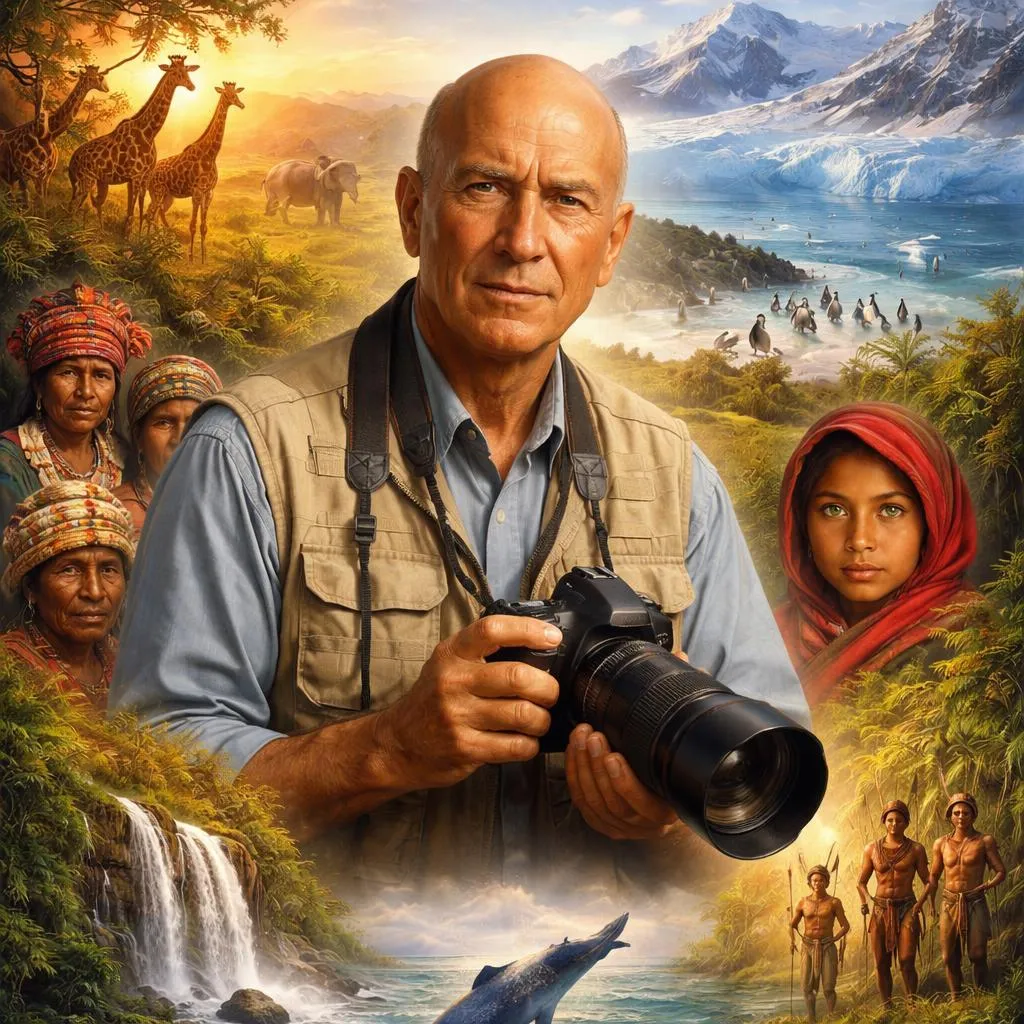
Then he started "Genesis." He wanted to photograph the planet before it was destroyed. He wanted to show nature in its purest form. He traveled to the most remote places on Earth. The Arctic. The Amazon. Antarctica. New Guinea. He photographed animals, landscapes, and indigenous tribes.
"Genesis" was published in 2013. It is a massive book. The photos are stunning. Penguins in the snow. The face of a Yanomami warrior. An iceberg glowing blue. The book was a bestseller.
He also gave many TED Talks. His talk about "Genesis" has been viewed millions of times. He speaks about the need to protect the planet.
Big Ideas and Achievements
Sebasti?o Salgado's biggest idea is that human beings are beautiful. We are flawed. We suffer. But we are also magnificent. His photographs of workers show the dignity of labor. His photographs of refugees show the strength of the human spirit.
His greatest achievement is "Genesis." This project is his gift to the planet. He shows us what we are losing. He reminds us of the beauty that still exists. The book is a call to action.
Another huge achievement is his reforestation project. In the 1990s, his family's land in Brazil was a desert. The rainforest had been cut down. He and his wife decided to replant it. They started a foundation. They planted over two million trees. The forest is coming back. Animals are returning. The springs have started to flow again. He proved that one family can make a difference.
He has won numerous awards. He won the Prince of Asturias Award for the Arts. He won the Peace Prize of the German Book Trade. He was made a member of the Brazilian Academy of Letters. That is a very high honor for a photographer.
He also influenced a generation of photographers. Many young photographers cite him as their hero.
Challenges and Difficult Times
Sebasti?o Salgado faced terrible challenges. First, he witnessed terrible suffering. He photographed the genocide in Rwanda. He saw bodies floating down rivers. He was traumatized. He lost faith in humanity.
Second, he became very ill. He had a severe infection. He nearly died. He was in the hospital for months.
Third, he became depressed. He could not pick up his camera. He said his soul was sick. His wife suggested he photograph nature. He was resistant at first. He did not think nature was important compared to human suffering. He was wrong.
Fourth, he had to learn to photograph animals. He was not a wildlife photographer. He had to learn new techniques. He was patient.
Fifth, he has faced criticism. Some people say his photos are too beautiful. They say he aestheticizes suffering. He disagrees. He says beauty is a form of respect.
Fun Facts About the Celebrity
Sebasti?o Salgado was trained as an economist. He worked for the World Bank.
Another fun fact: He did not touch a camera until he was in his 30s.
He loves classical music. He listens to Bach while he edits photos.
He and his wife live on a farm in Brazil. They sleep in a house they built themselves.
One more fact: He takes only black and white photos. He says color is distracting.
Why Is This Celebrity Important Today?
Sebasti?o Salgado is important because he shows us the beauty of our planet and the dignity of our species. In a time of despair, he offers hope.
He is also important because he took action. He did not just photograph the destruction of the rainforest. He replanted it. He showed that one person can make a difference.
His influence is seen in documentary photography. Photographers now take a more epic, beautiful approach to social issues.
Parents can use his story to teach children about hope. Salgado lost hope. He found it again in nature.
What Can Kids Learn from This Story?
Kids can learn beautiful lessons from Sebasti?o Salgado. First, hope can be found. Salgado lost his faith in humanity. He found it again in nature. If you are sad, go outside. Look at the trees. Look at the sky. Nature can heal you.
Second, take the long view. Salgado’s projects take years. He does not rush. Good things take time. Be patient.
Third, you can make a difference. Salgado and his wife planted two million trees. That is a lot of trees. But they started with one. You can start with one.
Finally, see the beauty. Salgado finds beauty everywhere. In a gold miner. In a refugee. In a penguin. Beauty is there. You just have to look.
Quick Quiz or Practice Time
Let us see what you learned from this Celebrity Story: Sebasti?o Salgado. Answer these questions with a parent or by yourself.
What was Salgado's profession before he became a photographer?
What is Salgado's most famous book about untouched nature called?
How many trees did Salgado and his wife plant?
What country is Salgado from?
Why did Salgado become depressed?
Here is a fun activity. Go outside. Find one thing in nature. A tree. A flower. A cloud. Photograph it. Try to make it beautiful. Do not edit it. Just see it. You are photographing like Sebasti?o Salgado.
Another activity. Look up Sebasti?o Salgado's "Genesis" photos online with your parent. Find the photo of the Yanomami warrior. Look at his face. He looks strong. He looks dignified. Then draw a portrait of someone you admire. Show their dignity.
Sebasti?o Salgado grew up on a farm in Brazil. He became an economist. He worked for the World Bank. He took a camera on a trip. He fell in love. He quit his job. He photographed workers. He photographed refugees. He saw too much suffering. He lost hope. He could not pick up his camera. His wife said, "Photograph nature." He went to the ends of the Earth. He photographed penguins, icebergs, and indigenous people. He made "Genesis." He planted two million trees. The forest grew back. The animals returned. He found hope. He is still working. He is in his 70s. He will not stop. His story teaches us to see beauty. To take action. To find hope. That is the real lesson of this celebrity story. Note: Salgado's photos of suffering are intense. For younger children, focus on "Genesis" and his environmental work.