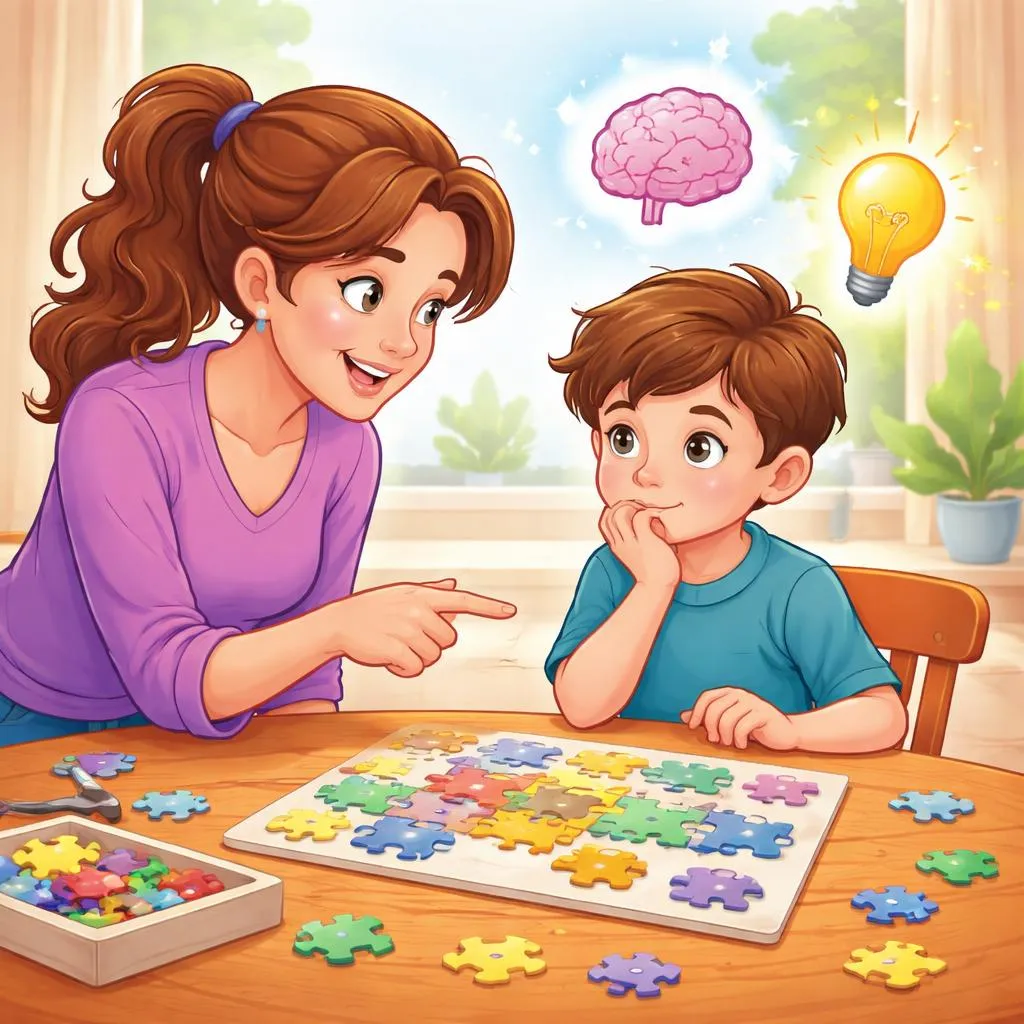

What Do These Expressions Mean? “Use your brain” and “think hard” both mean to apply mental effort to solve a problem or understand something. They tell a child to concentrate, reason, and not give up when something is difficult. Children hear these words during homework, puzzles, or tricky questions. Both build focus.
“Use your brain” is a direct instruction to engage your mind. A parent says it when a child says “I don’t know.” It is informal and common.
“Think hard” means to put strong mental effort into finding an answer. It is softer and focuses on the effort, not the organ. A parent says it when a child is stuck. It feels more supportive.
These expressions seem similar. Both mean “use your mental power.” Both encourage effort. But one is informal and direct while one is softer and effort-focused.
What's the Difference? One is more direct and informal. One is softer and focuses on effort. “Use your brain” is a common phrase, but it can sound a little harsh to some ears. It is very direct. It is best for older children or in playful contexts.
“Think hard” is about the effort of thinking. It is softer and kinder. It does not mention body parts. It is more about trying.
Think of a child struggling with a riddle. “Think hard. You can figure it out” is kind. “Use your brain” could sound like you think they aren’t using it. One is supportive. One is direct.
One is for encouragement. The other is for a quick push. “Think hard” for a child who is trying. “Use your brain” for a child who is not trying at all. Use the first for support. Use the second for directness.
Also, “use your brain” can be playful between older children. “Think hard” is safer for all ages.
When Do We Use Each One? Use “think hard” for most encouragement. Use it when a child is stuck but trying. Use it to be supportive. It fits kind talk.
Examples at home: “Think hard. You know the answer.” “Take your time and think hard.” “If you think hard, you will figure it out.”
Use “use your brain” rarely and carefully. Use it in a playful tone or with older children. Use it to be direct. Be careful not to sound mean.
Examples for directness: “Come on, use your brain. You can solve this.” (playful) “You’re not trying. Use your brain.” (direct) “Use your brain and think of a solution.”
Children can use both. “Think hard” for kindness. “Use your brain” for playfulness. Both encourage thinking.
Example Sentences for Kids Think hard: “Think hard before you answer.” “I tried to think hard, and I got it.” “Think hard. The answer is inside your head.”
Use your brain: “Use your brain. You are smart enough.” (playful) “Come on, use your brain.” “Use your brain to figure out this puzzle.”
Notice “think hard” is kind and supportive. “Use your brain” is direct and playful. Children learn both. One for kindness. One for play.
Parents can use both. Struggling child: “think hard.” Playful challenge: “use your brain.” Children learn different encouragement words.
Common Mistakes to Avoid Some children think “use your brain” means they weren’t using it. That can hurt feelings. Say it with a smile and a playful tone.
Wrong: (angry voice) “Use your brain!” Better: (playful smile) “Come on, use your brain. You’ve got this.”
Another mistake: telling a child to “think hard” when they are already overwhelmed. Too much pressure shuts down thinking. Take a break first.
Wrong: “Think harder!” (child is crying) Better: “Let’s take a break and then think hard together.”
Some learners think “think hard” means strain your face. It means focus your mind. Teach them to close their eyes, take a breath, and think.
Also avoid saying “use your brain” to a very young child. They may not understand. Say “let’s think” instead.
Easy Memory Tips Think of “think hard” as a light bulb glowing brighter. Effort. Focus. Support. For encouragement.
Think of “use your brain” as a comic book character tapping their head. Playful. Direct. Informal. For older kids.
Another trick: remember the tone. “Think hard” = kind. “Use your brain” = playful. Kind gets “think hard.” Playful gets “use your brain.”
Parents can say: “Think for a friend. Brain for a playful end.”
Practice at home. Stuck on math: “think hard.” Playful puzzle: “use your brain.”
Quick Practice Time Let us try a small exercise. Choose the better phrase for each situation.
A child is trying to remember a word but is stuck. They are not giving up. a) “Use your brain.” b) “Think hard. It will come to you.”
A child is playing a logic game and says “I can’t.” The parent wants to be playful and encouraging. a) “Think hard.” b) “Come on, use your brain! You’re a thinker.”
Answers: 1 – b. A child who is trying needs the kind “think hard.” 2 – b. A playful, older-child moment fits the direct “use your brain.”
Fill in the blank: “When my child is stuck on a spelling word but trying, I say ______.” (“Think hard” is the kind, supportive, effort-focused choice.)
One more: “When my older child gives up too easily on a fun puzzle, I say ______ playfully.” (“Use your brain” fits the direct, playful, informal description.)
Thinking is a muscle. “Think hard” builds it gently. “Use your brain” flexes it playfully. Teach your child both. A child who learns both will think with effort and with joy.