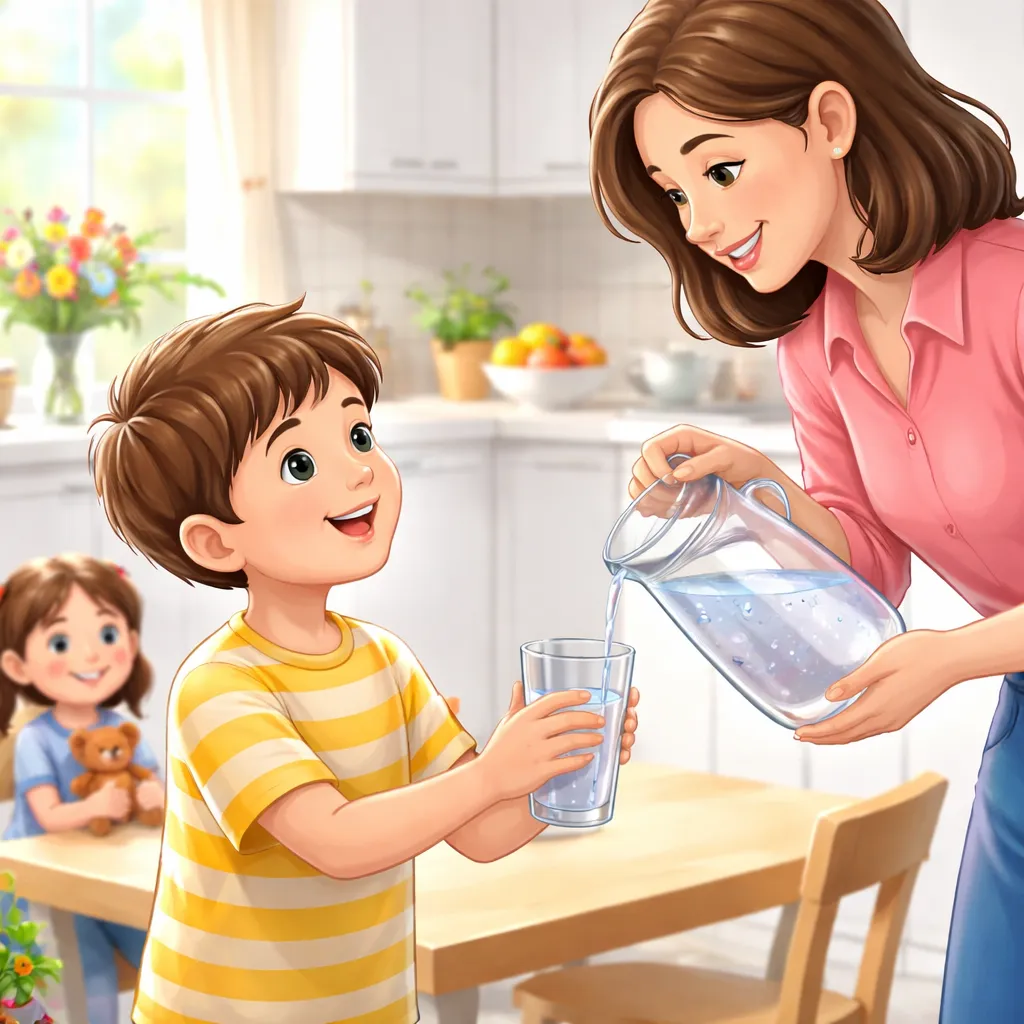

What Is This Situation? Thirst happens many times a day. After running outside, a child needs water. During a meal, they want a drink. In the middle of the night, they wake up thirsty. Water is a basic need. Asking for it should be simple and kind.
How to ask for water in English politely gives children the words to express this need with respect. Instead of demanding "Water!" they learn to say "Water, please." Instead of whining, they learn to ask "Can I have some water?" These small changes make a big difference.
This situation happens at home, at restaurants, at school, at friends' houses, and anywhere else a child might be. Every day brings opportunities to practice polite requests. Water is a perfect first word for this skill because children ask for it often.
These phrases are short and simple. They teach the magic of "please" and "thank you." They show children that asking nicely gets a better response. With these words, your child learns that politeness is powerful.
Key English Phrases for This Situation Use phrases for the basic request. "Water, please" is the simplest. "Can I have some water?" is a full sentence. "May I have water, please?" is very polite.
Use phrases for adding details. "Cold water, please" asks for temperature. "A glass of water, please" specifies the container. "Water with ice, please" adds another detail.
Use phrases for different settings. At home: "Can I get some water?" At a restaurant: "I would like water, please." At a friend's house: "May I have a drink of water?"
Use phrases for after receiving water. "Thank you" is essential. "Thank you very much" adds warmth. "Thanks, Mama" personalizes it.
Use phrases for asking again politely. "More water, please" asks for a refill. "Can I have a little more?" is another option. "Could I have another glass, please?" works for a second serving.
Simple Conversations for Kids Dialogue 1: At Home Child: "Water, please." Parent: "You said please. Good job. Here is your water." Child: "Thank you." Parent: "You are welcome. Now you have water."
This conversation shows a simple request. The child uses "please." The parent praises the politeness. The child says "thank you." The interaction is positive and clear.
Dialogue 2: At a Restaurant Server: "What would you like to drink?" Child looks at parent. Parent: "You can tell her." Child: "Water, please." Server: "Of course. With ice?" Child: "Yes, please." Server brings water. Child: "Thank you."
This conversation takes place with a server. The child uses "please" twice. The child answers a question. The child says thank you. The request is polite and successful.
Dialogue 3: At a Friend's House Child: "I am thirsty." Parent: "What can you say to our friend?" Child: "Can I have some water, please?" Friend: "Yes, of course. Let me get you a glass." Friend brings water. Child: "Thank you."
This conversation shows a child stating a need. The parent prompts the polite request. The child uses a full sentence with "please." The child says thank you. The request is kind and clear.
Vocabulary You Should Know Water is the clear drink you need every day. You can say "Water, please." This is the basic word for this situation.
Please is the magic word that makes requests polite. You can say "Water, please." This word changes a demand into a request.
Thank you is what you say after receiving something. You can say "Thank you for the water." This word shows gratitude.
Thirsty means you need a drink. You can say "I am thirsty." This word names the feeling.
Glass is the container you drink from. You can say "A glass of water, please." This word specifies what you want.
Ice is frozen water that makes drinks cold. You can say "Water with ice, please." This word adds a detail.
How to Use These Phrases Naturally Use a friendly and patient tone. Politeness should feel natural, not forced. Your tone shows your child that asking nicely is normal and good.
Say the phrases when you ask for things too. "Could I have some water, please?" Your child hears you use polite words. They learn by watching you.
Prompt but do not demand. If your child says "Water," you can say "Water, please?" with a gentle tone. Prompt them to add the word. Do not scold.
Praise when they use polite words. "I heard you say please. That was very kind." Specific praise reinforces the behavior. They will want to do it again.
Practice during calm moments. Do not wait until your child is very thirsty. Practice when everyone is relaxed. The words will be there when they need them.
Common Mistakes to Avoid One mistake is demanding politeness with a harsh tone. "Say please!" said sharply teaches fear, not manners. A gentle prompt works better. "Can you say please?"
Another mistake is accepting demands. If your child says "Water!" without politeness, do not give it right away. Pause. Wait for the polite version. "Can you ask nicely?"
Some parents forget to model politeness themselves. Your child learns from you. If you demand things without please, they will too. Use polite words in your own requests.
Avoid making politeness feel like a big deal. It should be normal, not a performance. If you make a big fuss every time they say please, it feels unnatural. Simple praise is enough.
Tips for Parents and Practice Ideas Start with the word "please." It is the most important polite word. Practice adding it to requests. "Water, please." "Help, please." "Open, please."
Use the phrase "Can I have..." This sentence structure is useful for many requests. "Can I have water?" "Can I have a snack?" "Can I have a turn?" It teaches a pattern.
Practice during play. Use dolls. "Teddy is thirsty. What should he say?" Your child makes the doll ask politely. Play makes practice fun.
Praise other people's politeness. "Did you hear how nicely your friend asked for water? That was kind." Your child learns that politeness is valued.
Be patient. Learning politeness takes time. Children forget. They get tired. They get very thirsty. Keep modeling. Keep prompting gently. They will learn.
Fun Practice Activities Play restaurant. You are the server. Your child is the customer. Your child orders water politely. "Water, please." "With ice, please." "Thank you." This playful practice builds skills.
Make a politeness chart. Each time your child asks politely for water, they add a sticker. The chart makes politeness visible and rewarding.
Sing a politeness song. "Please and thank you, please and thank you. That is the way to ask. Please and thank you, please and thank you. Water in my glass." Music makes the words stick.
Use a special cup. When your child asks politely, they get water in the special cup. The special cup makes the polite request more rewarding.
Role-play different situations. At home. At a restaurant. At a friend's house. Each situation uses the same polite words but different contexts. Practice builds flexibility.
How to ask for water in English politely is a small skill with big impact. It teaches children that words matter. It shows them that asking nicely gets a better response. It builds habits of respect that will serve them in every conversation, for the rest of their lives. Water is just the beginning. Once they learn to ask for water with please, they can ask for anything with kindness. And that is a gift that never runs dry.