
What Is This Situation?
Weather is something children experience every day. They feel the sun on their skin. They hear the rain on the window. They see the wind blowing leaves. Weather is not just a topic. It is a living part of their world.
Weather vocabulary activities for preschoolers take these daily experiences and give them words. A child looks out the window. You say "It is sunny." They feel the cold air. You say "It is windy." The word connects to what they feel and see.
These activities happen indoors and outdoors. They happen when you get dressed for the day. "It is cold today. Let us wear a jacket." They happen during a walk. "Look at the clouds." They happen during quiet time. "Let us draw a rainy day."
Weather words are high-frequency words. Children hear them often. They need them to talk about plans, clothes, and how they feel. Learning these words helps children understand and describe their world.
Key English Phrases for This Situation
Use phrases that describe the weather. "Look, it is sunny today" names what you see. "The wind is blowing" describes movement. "I hear thunder" uses sound to identify weather.
Use phrases that connect weather to actions. "It is raining. Let us put on our boots." "It is hot. Let us drink water." These phrases link weather words to daily decisions.
Use phrases that invite observation. "What is the weather like today?" opens conversation. "Do you see the clouds?" focuses attention. "Is it windy or still?" offers choices.
Use phrases for prediction. "I think it will rain later" builds anticipation. "Let us see what the weather does today" invites curiosity. "The sky looks gray. Maybe rain is coming."
Use phrases for comparison. "Yesterday was sunny. Today is rainy." "Winter is cold. Summer is hot." These phrases help children understand weather patterns.
Simple Conversations for Kids
Dialogue 1: Looking Outside
Parent: "Let us look out the window. What do you see?"
Child: "Sun."
Parent: "Yes, the sun. It is sunny today."
Child: "Sunny."
Parent: "What should we wear when it is sunny?"
Child: "Hat."
Parent: "Good idea. A hat for sunny weather."
This conversation starts with observation. The parent names the weather. The child repeats. The parent connects weather to clothing choices.
Dialogue 2: During a Walk
Child: "Wind!"
Parent: "Yes, the wind is blowing. It is windy."
Child: "Windy."
Parent: "Can you feel the wind on your face?"
Child nods.
Parent: "The wind is strong today. Hold my hand."
Here, the child notices the weather first. The parent confirms and expands. The child learns the adjective "windy." The parent adds safety information.
Dialogue 3: Planning the Day
Parent: "It is raining today. What should we do?"
Child: "Stay inside."
Parent: "Yes. Rainy days are good for inside play. What do you want to play?"
Child: "Puzzles."
Parent: "Puzzles are fun on a rainy day."
This conversation uses weather to plan. The parent names the weather. The child suggests an activity. The parent reinforces the connection between weather and choices.
Vocabulary You Should Know
Sunny means the sun is shining. You can say "It is a sunny day." Children learn this word quickly because they see the sun often.
Rainy means water is falling from clouds. You can say "Put on your boots. It is rainy." This word connects to puddles and umbrellas.
Windy means the air is moving strongly. You can say "The trees are moving. It is windy." This word describes something children can see and feel.
Cloudy means the sky is covered with clouds. You can say "The clouds are gray. It is cloudy." This word often comes before rain.
Snowy means white snow is falling. You can say "Let us build a snowman. It is snowy." This word appears in colder seasons.
Stormy means there is thunder, lightning, or strong wind. You can say "The thunder is loud. It is stormy." This word helps children name dramatic weather.
How to Use These Phrases Naturally
Use an observant and curious tone. Weather is interesting. Show your child that you notice it too. "Oh, look at those clouds" sounds like discovery. Your child learns to be observant too.
Say the phrases when you are outside. Point to the sky. Feel the air. "It is so sunny today. I feel warm." Your child connects the word to the sensation.
Use weather phrases at the same time each day. Morning is a natural time. "Let us see what the weather is today." Routine builds vocabulary. Your child learns to expect the question.
Repeat the same weather words many times. Consistency helps memory. If yesterday was sunny, say "sunny." If today is rainy, say "rainy." Simple repetition works.
Use weather words even when the weather is not extreme. "It is a little cloudy today." "There is a small breeze." Weather exists every day. Every day is a chance to use the words.
Common Mistakes to Avoid
One mistake is using only general words like "nice" or "bad." Be specific. "Sunny" and "rainy" are more useful. Specific words build a richer vocabulary.
Another mistake is ignoring weather when it is not dramatic. Mild weather still has words. "Partly cloudy" or "light wind" are valid weather descriptions. Use them.
Some parents skip weather talk because they think it is too simple. Weather vocabulary is foundational. It connects to clothing, seasons, and feelings. It is worth teaching.
Avoid making weather scary. If there is a storm, stay calm. Use words like "stormy" in a matter-of-fact way. Your child takes cues from your tone.
Tips for Parents and Practice Ideas
Make a daily weather check part of your routine. After breakfast, look out the window. Say "Today is sunny" or "Today is rainy." Your child learns to notice and name.
Dress for the weather together. Say "It is cold. We need jackets." Let your child help choose clothes based on the weather. This connects vocabulary to action.
Read books about weather. Many picture books show sunny days, rainy days, and snowy days. Point to the pictures. Use the weather words as you read.
Sing weather songs. "You Are My Sunshine" is a classic. Make up simple songs about rain or wind. Music helps words stick.
Talk about weather during video calls with family. "It is sunny here. What is the weather where you are?" Your child hears weather used in real conversation.
Fun Practice Activities
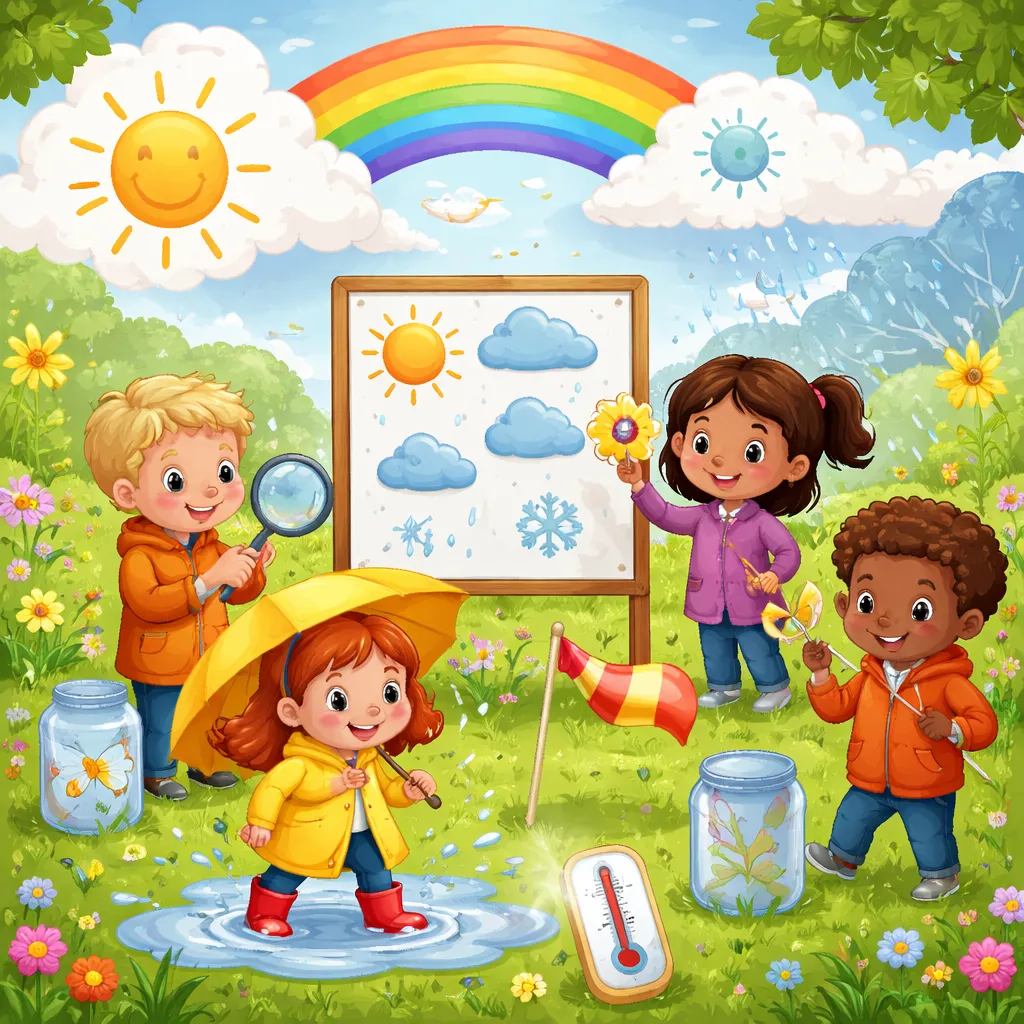
Create a weather chart. Draw or print pictures for sunny, rainy, cloudy, windy, and snowy. Each day, your child puts a marker on the chart. They name the weather as they do it.
Play a weather dressing game. Lay out clothes for different weather. "What do we wear on a sunny day?" Your child picks a hat and sunglasses. "What do we wear on a rainy day?" They pick boots and an umbrella.
Make weather sounds. You make the sound of wind. Your child guesses "windy." You make the sound of rain. Your child guesses "rainy." Then switch roles.
Go on a weather walk. Go outside. Stop at different points. Say "What is the weather now?" Let your child observe and answer. This is active learning.
Draw the weather. Give your child paper and crayons. Say "Draw a sunny day." Another time say "Draw a rainy day." Your child practices the words while creating art.
Weather vocabulary activities for preschoolers turn everyday moments into learning opportunities. The sky above, the wind that blows, the rain that falls—all become teachers. With simple words and gentle observation, your child learns to name the world around them. They learn to talk about whether to bring an umbrella or wear a hat. They learn that language helps them understand not just books and songs, but the sky itself. And every time they look up and say "sunny" or "rainy," they are practicing English and connecting with nature at the same time.