
Have you ever seen a photo of a steelworker sitting on a girder high above New York City? He is eating lunch. His feet dangle over the edge. The city is tiny below him. That is a Margaret Bourke-White photograph. She climbed the Chrysler Building to take it. This Celebrity Story: Margaret Bourke-White will introduce you to a woman who was afraid of nothing. She was born in New York. She loved machines. She loved industry. She became a photographer. She was the first female war correspondent. She was the first woman allowed to fly in a combat mission. She was the first Western photographer allowed to photograph the Soviet Union. She took the cover photo for the first issue of Life magazine. She was a pioneer in every way.
Let us meet the woman who went anywhere and photographed everything. Margaret Bourke-White said, "The only way to get a good picture is to be there."
Who Is This Celebrity?
Margaret Bourke-White was an American photographer and photojournalist. She lived from 1904 to 1971. She was a pioneer of industrial photography and war photography. She worked for Life magazine from its first issue in 1936 until the 1950s.
Why is she famous? She took the cover photo for the first issue of Life magazine. The photo showed the Fort Peck Dam in Montana. She was the first female war correspondent. She flew in bombing missions over North Africa and Germany. She was the first Western photographer to document the Soviet Union's industrial revolution. She also photographed the liberation of the Nazi concentration camps at Buchenwald and Dachau. Her photos of the camps are among the most important documents of the Holocaust.
Early Life and Childhood
Margaret Bourke-White was born in the Bronx, New York. Her father was an engineer. Her mother was a homemaker. She grew up in New Jersey. Her father loved machines. He took her to factories. He showed her how things worked. She was fascinated.
She loved nature too. She collected reptiles. She had a pet alligator. She had a pet snake. She was not afraid of anything.
She wanted to study herpetology, the study of reptiles. She went to Columbia University. She took a photography class. She fell in love with the camera.
She transferred to Cornell University. She studied photography. She also studied biology. She graduated in 1927.
She moved to Cleveland, Ohio. She opened a photography studio. She photographed buildings and bridges. She loved the geometry of industry. She photographed steel mills. She photographed factories. Her images were dramatic. They were beautiful.
She got a job at a magazine. She began to build her reputation.
Education and Learning Journey
Margaret Bourke-White studied at Columbia University and Cornell University. She learned the science of photography. She learned about chemicals and lenses.
She also learned by doing. She taught herself to see. She taught herself to compose.
In Cleveland, she experimented with lighting. She used multiple flashes. She wanted to illuminate the vast interiors of factories. She learned to work with powerful equipment.
She also learned to be tough. She worked in dangerous environments. Steel mills were hot. Construction sites were high. She was not afraid.
Her big break came in 1929. She moved to New York. She got a job at Fortune magazine. Fortune was a new business magazine. It used photography heavily. She was their first staff photographer.
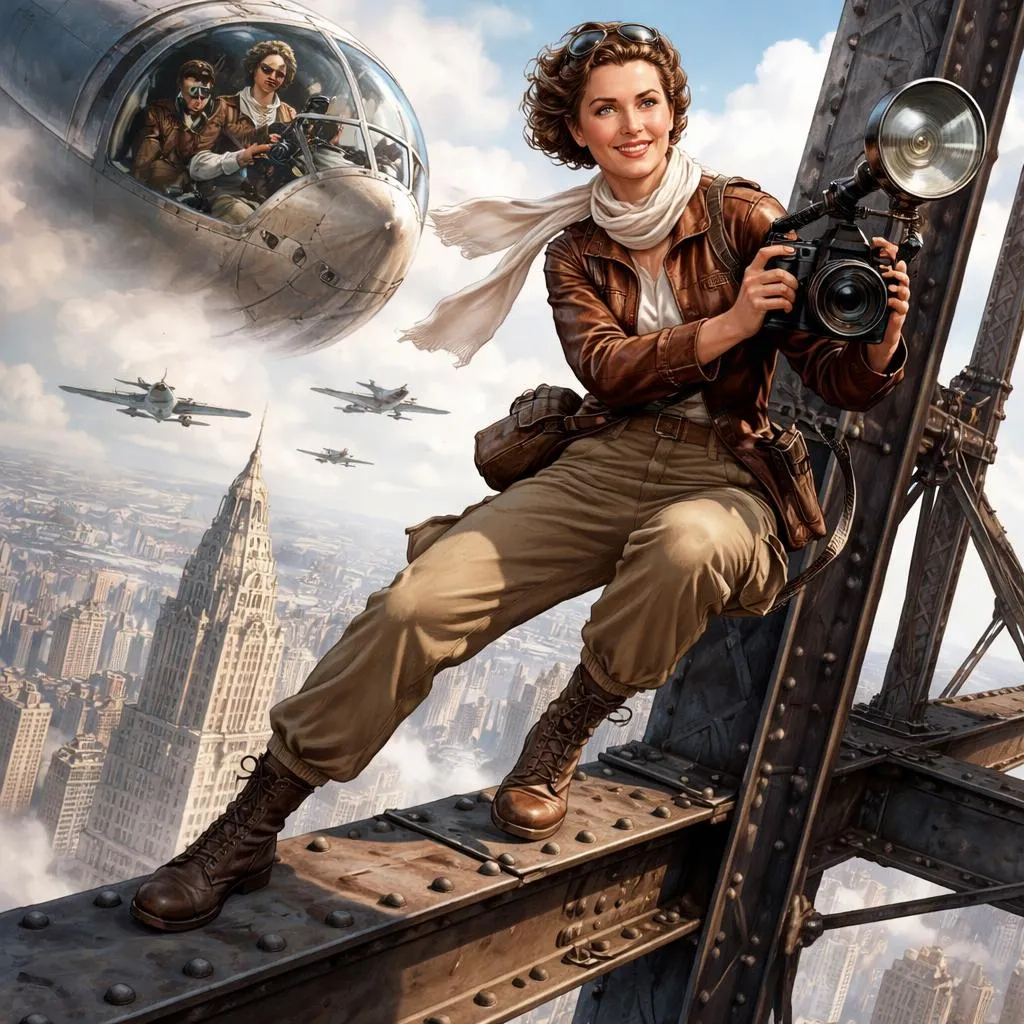
She photographed the Chrysler Building while it was under construction. She climbed onto a giant metal eagle. She was hundreds of feet in the air. She took the photo. It became famous.
How Did They Become Successful?
Margaret Bourke-White became successful in the 1930s. Her industrial photographs were published in Fortune and other magazines. She was famous.
In 1936, Henry Luce hired her to work for a new magazine: Life. Life would tell stories through photographs. Bourke-White was the star photographer. She took the cover photo for the first issue. The issue sold out. Life became the most popular magazine in America.
She traveled to the Soviet Union in 1941. The Soviet Union was an ally against Nazi Germany. She was the first Western photographer allowed to document Soviet industry. She took stunning photos of factories and farms.
When World War II broke out, she became a war correspondent. She was the first woman allowed to fly in a combat mission. She flew over North Africa in a B-17 bomber. She took photos of the bombing runs.
She was on a ship that was torpedoed. She survived. She continued to work.
In 1945, she was with the American army when they liberated Buchenwald. She took photos of the piles of bodies. She photographed the survivors. The photos were published in Life. They shocked the world. They showed the horror of the Holocaust.
After the war, she continued to work. She photographed Mahatma Gandhi in India. She took his portrait the day before he was assassinated.
She developed Parkinson's disease in the 1950s. The disease made her hands shake. She could not hold a camera. She had to retire. She wrote her autobiography. She died in 1971.
Big Ideas and Achievements
Margaret Bourke-White's biggest idea was that industry and machines could be beautiful. Before her, people thought factories were ugly. She showed their majesty.
Her greatest achievement is her war photography. Her photos of Buchenwald are some of the most important images of the 20th century. They are difficult to look at. They are necessary.
Another huge achievement is her cover for the first issue of Life magazine. That single image launched a new era of photojournalism.
She also took the famous portrait of Gandhi. He is spinning thread. The photo is peaceful. It shows his commitment to simple living.
She also photographed the Great Depression. She traveled the American South. She photographed the poverty. She showed the faces of the unemployed.
She wrote several books. Her autobiography is called "Portrait of Myself." It is a classic.
She influenced generations of female photographers. She proved that a woman could do anything a man could do.
Challenges and Difficult Times
Margaret Bourke-White faced many challenges. First, she was a woman in a male-dominated field. She had to work twice as hard.
Second, she was in constant danger. She flew in bombers. She was on ships that were attacked. She survived.
Third, she saw terrible things. The concentration camps haunted her. She never forgot.
Fourth, she developed Parkinson's disease. She could no longer work. That was devastating.
Fifth, she died at 67. She had more to give.
Fun Facts About the Celebrity
Margaret Bourke-White had a pet alligator. She kept it in her apartment.
Another fun fact: She climbed the Chrysler Building without a safety harness. She was 25 years old.
She was married twice. She divorced both times. She said her true love was her work.
She was a terrible cook. She burned everything.
One more fact: She took the famous photo of Gandhi. He was spinning thread. She asked him to turn his face toward the light. He was annoyed. He did it anyway.
Why Is This Celebrity Important Today?
Margaret Bourke-White is important because she showed that women can do anything. She climbed skyscrapers. She flew in bombers. She photographed war. She was fearless.
She is also important because of her documentation of history. The Fort Peck Dam. The Soviet Union. Buchenwald. Gandhi. She was there. She photographed it. Those images are our memory.
Her influence is seen in every female photojournalist today. They stand on her shoulders.
Parents can use her story to teach children about courage. Bourke-White was afraid. She did it anyway.
What Can Kids Learn from This Story?
Kids can learn powerful lessons from Margaret Bourke-White. First, be fearless. Bourke-White climbed skyscrapers. She flew in bombers. You may not need to do those things. But you can be brave in your own life. Stand up for what is right. Try new things. Do not be afraid.
Second, follow your curiosity. Bourke-White loved machines. She loved factories. She followed her interests. Find what you love. Study it. Photograph it. Draw it.
Third, document history. Bourke-White photographed the most important events of her time. You can document your own time. Take photos of your family. Write down what you see. Future generations will want to know.
Finally, do not let anything stop you. Bourke-White was a woman. People told her she could not. She did. You can too.
Quick Quiz or Practice Time
Let us see what you learned from this Celebrity Story: Margaret Bourke-White. Answer these questions with a parent or by yourself.
What magazine did Bourke-White work for from its first issue?
What did Bourke-White climb to photograph the construction of?
What concentration camp did Bourke-White photograph after liberation?
What world leader did Bourke-White photograph the day before his death?
What disease forced Bourke-White to stop working?
Here is a fun activity. Go to a high place in your home. A balcony. A hill. Take a photo looking down. You are photographing like Margaret Bourke-White.
Another activity. Look up Margaret Bourke-White's photo of the steelworkers eating lunch on the girder. It is famous. Talk with your parent about how brave those workers were. Then draw a picture of someone being brave.
Margaret Bourke-White was born in New York. She loved machines. She climbed the Chrysler Building. She photographed factories. She worked for Life magazine. She took the first cover photo. She flew in bombers. She survived a torpedoed ship. She photographed Buchenwald. She photographed Gandhi. She was fearless. She had Parkinson's disease. She could not hold a camera. She wrote her story. She died. Her photos live on. Her story teaches us to be fearless. To follow our curiosity. To document history. To never let anything stop us. That is the real lesson of this celebrity story.