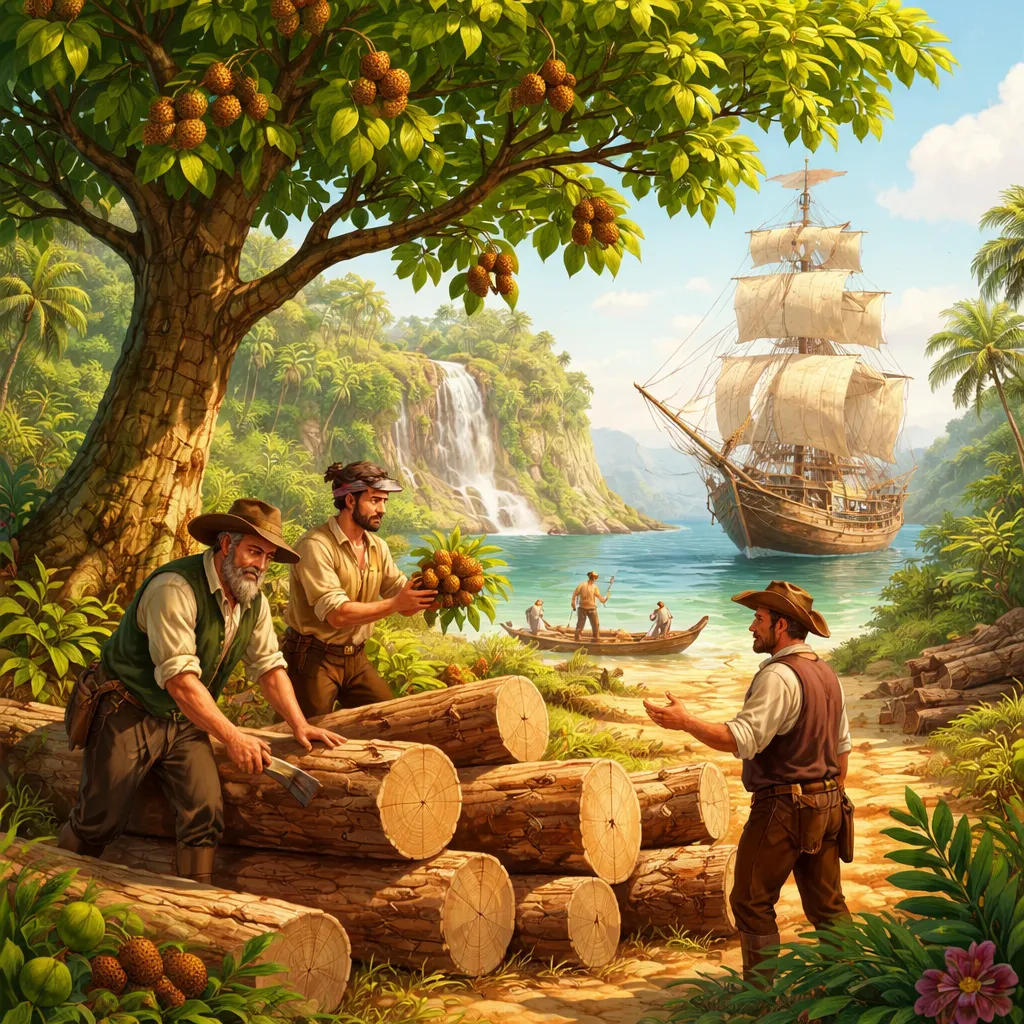

Imagine a tall, straight tree growing in a steamy, green rainforest. Its trunk is so wide, it would take three children holding hands to reach around it. The wood inside is not white or pale yellow. It is a rich, reddish-brown color, like melted chocolate mixed with cherries. For hundreds of years, this wood was the favorite of kings, shipbuilders, and master furniture makers. It is strong, beautiful, and resists rot. This legendary tree is the noble Mahogany. Let’s sail into the past and present to learn about the magnificent Mahogany plant.
Let’s Learn the Word! – Open the Treasure Box of Language
Formal Name and Pronunciation This regal tree is called Mahogany. Its scientific name is Swietenia mahagoni. You can say it like this: /məˈhɒɡ.ə.ni/ (muh-HOG-uh-nee). The “ma” sounds like “muh,” the “hog” is like the animal, and the “ny” is like “knee.” Mah-hog-a-ny. Say it: Mahogany. It’s a rich, rolling word.
The Etymology Tale The word “Mahogany” has a journey from the Caribbean! It likely comes from a word used by the indigenous Taíno people of the Caribbean islands. The Spanish explorers heard the word and adopted it as “caoba” or “mogno.” English traders later turned it into the word we use today, “Mahogany.” Its name carries the whispers of the tropical forests where it was first found.
Nicknames and Friendly Aliases Mahogany is known by grand names. The original Caribbean type is West Indian Mahogany or Spanish Mahogany. The larger Central American type is Honduran Mahogany or Big-Leaf Mahogany. In Africa, a different but similar tree is called African Mahogany (Khaya). Because of its royal use, it is often called the King’s Wood. Its rich color gives it the name Red Gold.
Building Your Word Web: Core Parts Let’s learn the words for Mahogany’s grand body. The Heartwood is the prized inner wood, a beautiful reddish-brown that darkens in sunlight. The Sapwood is the pale, outer wood. The Leaf is pinnately compound—a long stem with many pointed leaflets on each side, like a green feather. The Fruit is a large, woody, egg-shaped capsule. When it dries, it splits open into five parts, like a wooden flower, releasing winged seeds. The Trunk is straight, tall, and often has buttress roots—large, wing-like roots that help support the giant. The Canopy is the tree’s high, leafy roof, creating deep shade.
Action and State Words Mahogany trees are steady giants. They tower over the rainforest canopy. The mature wood resists decay and shipworms, which is why it was perfect for ships. The fruit capsule splits or dehisces with a loud crack to release seeds. The tree provides a valuable resource. A mahogany tree is tall, straight-grained, durable, and slow-growing.
Ecosystem Friends Vocabulary In the rainforest, the mahogany is a habitat giant. Its large canopy is home to birds like parrots and toucans. Monkeys may leap through its branches. Insects and bats might pollinate its small, white flowers. The agouti, a large rodent, is a key friend—it gnaws open the hard fruit capsule to eat the seeds, helping some seeds escape to grow. It is part of a complex forest web.
Cultural Imprint in Language Mahogany is a global symbol of quality, luxury, and craftsmanship. An old saying among sailors was, “A ship of mahogany fears no worm,” meaning its wood was so resistant it could sail for decades. The poet Henry Wadsworth Longfellow, in his poem “The Building of the Ship,” writes of the “mast of seasoned oak” and “keel of mountain pine,” but the finest interiors of such ships were often of mahogany, representing strength and beauty within.
Ready for Discovery We know its royal and seafaring name. Are you ready to explore the rainforest canopy and discover the secrets of this “wood of kings”? Let’s put on our explorer’s hat and find the Mahogany plant.
Discover the Plant’s Secrets! – A Nature Detective’s Notebook
The Plant Passport Mahogany belongs to the Meliaceae family. Its famous group is Swietenia. It is a rainforest giant, one of the tallest trees, reaching for sunlight above the green roof of the forest. Its leaves are large, feathery, and dark green. Its flowers are small, whitish, and grow in clusters. Its fruit is a large, upright, brown, woody capsule. It is an evergreen or semi-evergreen tree and grows very slowly, taking many decades to mature.
Survival Smarts Mahogany’s strategy is to grow tall, fast when young. It shoots up towards the sunlight, rising above other trees. Its wood contains natural chemicals that make it very resistant to rot and wood-boring insects—a perfect built-in defense. Another trick is its seed capsule. The seeds are locked in a hard, woody fruit that only opens when completely dry. This protects them from rain and mold. Often, an animal like the agouti must crack it open, helping the seed find a spot to grow.
Its Role and Gifts In its rainforest home, the mahogany is a keystone species. Its great size means it stores tons of carbon. Its canopy creates micro-habitats for other plants and animals. Its most famous gift is its timber. For centuries, it has been used for the finest furniture, elegant paneling, musical instruments, and, historically, the hulls of sailing ships. It is a wood that combines great strength with great beauty.
Human History and Cultural Symbol From the 1700s onward, mahogany became the most desired furniture wood in Europe and America. It was used in grand mansions, palaces (like the White House!), and on legendary ships. The search for this “red gold” shaped exploration and history in the tropics. Today, it represents classic elegance and quality. Because so much was cut, true mahogany is now endangered, teaching us vital lessons about forest conservation and sustainable forestry.
Fun “Wow!” Facts Get ready for a ship-shape fact! The famous USS Constitution warship, nicknamed “Old Ironsides,” had parts of its hull made from Southern live oak, but its beautiful interior fittings and trim were made from mahogany! And here’s a seed fact: a single mahogany tree can produce over a thousand winged seeds in one season. The seeds spin like little helicopters as they fall from the tall canopy.
From Royal Navy to Your Nursery The Mahogany plant’s story is one of natural wonder and human responsibility. Would you like to help grow the future of the forest? You can nurture a piece of this legacy. Let’s see how.
Let’s Grow It Together! – A Little Guardian’s Action Guide
Good for Home Growing? You can try, but with realistic expectations. A mahogany tree will become a forest giant and is not for a small garden. However, you can grow a seedling in a very large pot for several years as a magnificent learning project. It needs a warm, frost-free, and humid environment, like a greenhouse or a bright sunroom. It is a project of long-term care and learning.
Little Gardener’s Toolkit You will need a fresh mahogany seed with its wing (samara). Get a tall, deep pot to accommodate a long taproot. Use a rich, well-draining potting mix. Have a watering can, a clear plastic bag, and a spray bottle ready. A heat mat can help with germination.
Step-by-Step Growing Guide
Planting Your Future Giant First, you can carefully remove the papery wing from the seed. Soak the seed in warm water for 24 hours. Plant the seed about an inch deep in the deep pot, pointy end down. Water it well. Cover the pot with the clear plastic bag to create a mini-greenhouse. Place it in a very warm spot (around 80°F or 27°C) with bright, indirect light.
Care Calendar Keep the soil consistently warm and moist, but not soggy. Use the spray bottle to mist the surface. Germination can take 2 to 6 weeks. Once the seedling appears, remove the bag. It needs very bright light. Water when the top inch of soil feels dry. Feed it with a weak liquid fertilizer every month during the growing season.
Watch and Be Friends Watch for the two first seed leaves, then the first true, feathery leaf. Measure its growth every month. Notice how the stem is strong and straight. Feel the texture of the young leaves. Imagine your little tree growing in a vast rainforest. This is a slow, rewarding friendship.
Problem Diagnosis If leaves turn yellow, it might be overwatered or need more light. Let the soil dry a bit more between waterings. If growth is very slow, ensure it is warm enough. The seedling is generally tough. The main challenge is providing enough light and humidity if you are growing it indoors.
Your Rewards and Gifts Your gift is a living connection to rainforest ecology and history. You are caring for a tree that teaches global connections, the value of slow growth, and the importance of sustainable choices. Caring for a mahogany seedling cultivates patience, responsibility, and a deep appreciation for one of nature’s most generous gifts.
Creative Fun Start a Shipwright’s Logbook. Draw your seedling and design the famous ship it might have built. Make leaf rubbings of the beautiful compound leaf. Build a tiny model treasure chest from cardboard and color it with mahogany’s rich hues. Research famous furniture styles (like Chippendale) that used mahogany and draw your own design. Write a captain’s log entry about sailing on a mahogany ship.
Growing a Legacy of Care By nurturing a mahogany seedling, you are not just growing a tree. You are growing understanding, respect for natural resources, and hope for the future of our world’s great forests. You are a forester for the future.
Conclusion and Forever Curiosity What an epic voyage through history and the rainforest! You started by learning the word “Mahogany,” you discovered its secrets as the strong, beautiful “wood of kings,” and you learned how to tenderly help a new one begin its century-long life. You now know the Mahogany is not just a tree; it is a piece of history, a symbol of quality, a lesson in conservation, and a legacy that grows. Remember, its true strength is in a healthy forest. Your curiosity helps you understand the delicate balance between using and preserving nature’s gifts. Keep looking at fine wood and wondering about its story. Keep asking how we can protect the magnificent trees of our world. Your adventure to learn about the Mahogany plant shows us that we are all crew members on spaceship Earth, and it’s our job to care for its precious cargo.