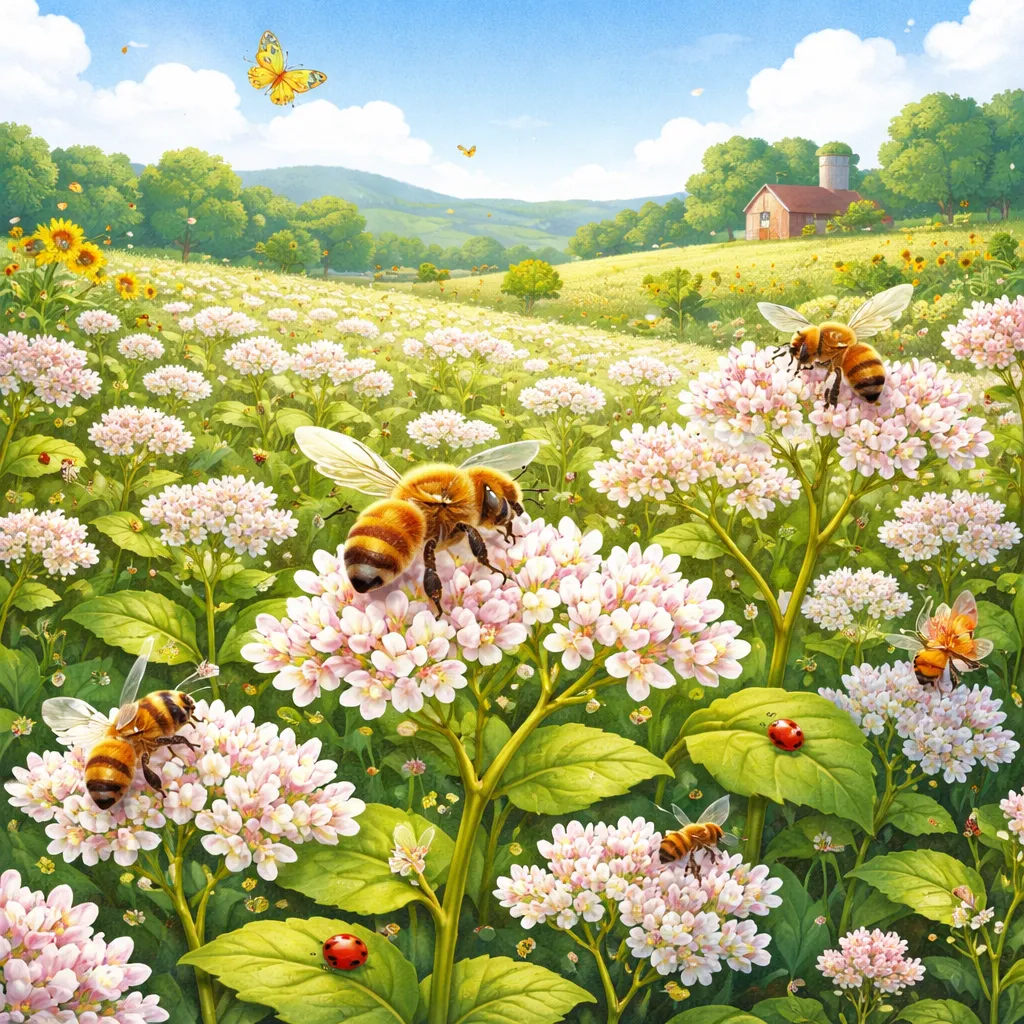

Have you ever walked by a field in summer and seen a low, green plant covered in thousands of tiny, delicate white or pink flowers? The air hums with the sound of happy bees collecting nectar. Later, this plant produces small, dark, pyramid-shaped seeds. Those seeds are not a type of wheat or grass at all, but they can be ground into a special, nutty-tasting flour for delicious pancakes and noodles! This amazing plant is a friend to bees, a food for people, and a quick-growing garden helper. Let’s meet the surprising Buckwheat plant.
Let’s Learn the Word! – Open the Treasure Box of Language
Formal Name and Pronunciation This bee-friendly plant is called Buckwheat. Its scientific name is Fagopyrum esculentum. You can say it like this: /ˈbʌk.hwiːt/ (BUK-hweet). The “Buck” rhymes with “truck,” and “wheat” is the grain. Buck-wheat. Say it: Buckwheat. Its name is a bit tricky, but that’s part of the surprise.
The Etymology Tale The name “Buckwheat” is a puzzle! The “buck” part might come from an old German word “bock,” meaning “beech tree.” Why? Because the small, dark, three-sided seed looks a bit like the tiny nut of a beech tree! The “wheat” part is because its seeds are used like wheat, even though it’s not related. So, its name means “beech-tree wheat,” which describes its seed’s look and its use.
Nicknames and Friendly Aliases Buckwheat has descriptive and fun names. Because it’s not a true cereal, it’s often called a Pseudocereal or a False Cereal. In some places, it’s named for its origin: Sarrasin (French) or Buchweizen (German). Because it grows so fast, farmers call it a Smother Crop or a Cover Crop. The flour is sometimes just called Buckwheat Flour.
Building Your Word Web: Core Parts Let’s learn the words for Buckwheat’s unique body. The Plant is broad and bushy, with hollow stems. The Leaf is shaped like a heart or an arrowhead. The Flower is tiny, white or pink, and grows in clusters. The Achene is the proper name for its small, dry, pyramid-shaped fruit that we call a seed. The Hull is the hard, dark outer shell of the achene. The Groats are the hulled, creamy-white inner seeds. A Field in bloom is a buckwheat field.
Action and State Words Buckwheat is a speedy, busy plant. It grows incredibly fast from seed. It flowers with a beautiful, fragrant bloom that attracts bees. It matures and produces seeds quickly. Farmers plow it into the soil as green fertilizer. The seeds are hulled and ground into flour. Buckwheat is fast-growing, bee-friendly, nutritious, and gluten-free.
Ecosystem Friends Vocabulary A buckwheat field is a pollinator paradise! Honeybees and bumblebees love the flowers and make a special, dark, strong honey from the nectar. Butterflies and other beneficial insects visit too. The dense foliage provides shelter for small ground creatures. As a cover crop, it protects the soil for worms and microbes. It is a true friend to the garden’s tiny workers.
Cultural Imprint in Language Buckwheat is a symbol of simplicity, sustenance, and hard work. There’s an old saying: “Buckwheat and patience make good bread.” This means that good things take time and the right ingredients. In many cultures, like in Russia and Japan, buckwheat noodles (soba) are eaten for luck and long life on special occasions. It represents humble, wholesome nourishment that supports communities.
Ready for Discovery We know its bee-loving, fast-growing name. Are you ready to be a garden detective and discover the secrets of this plant that tricks everyone with its name? Let’s explore the world of the Buckwheat plant.
Discover the Plant’s Secrets! – A Nature Detective’s Notebook
The Plant Passport Buckwheat is not a grass! It belongs to the Polygonaceae family, the same as rhubarb and sorrel. Its genus is Fagopyrum. It is an annual plant with a soft, hollow stem and broad, heart-shaped leaves. The flowers are small, fragrant, and white or pale pink. The fruit is a small, three-sided achene. It grows very quickly, often ready for harvest in just 10 to 12 weeks! It thrives in cool climates and poor, acidic soil where other crops might not grow well.
Survival Smarts Buckwheat’s superpower is speed. It races from seed to harvest before pests or frost can become a big problem. Its wide leaves quickly shade the soil, smothering weeds. It has a special root system that can absorb nutrients from the soil that are unavailable to other plants. After it is grown, when turned into the soil, it decomposes quickly, adding these nutrients back and improving the soil for the next crop. It is a natural soil doctor.
Its Role and Gifts Buckwheat is a multitasking hero. As a cover crop, it prevents erosion, suppresses weeds, and improves soil health. Its flowers are a vital late-summer food source for bees. Its greatest gift to people is its seed. Buckwheat groats are a nutritious, gluten-free pseudo-grain, rich in protein and fiber. They are eaten as kasha, ground into flour for pancakes and soba noodles, and used as a hearty addition to soups and salads.
Human History and Cultural Symbol Buckwheat was domesticated in Southeast Asia thousands of years ago. It spread along trade routes to Europe, where it became a staple for peasants in poor soil areas. It was brought to North America by early European settlers. In many mountainous regions of the world, it became the crucial crop that could grow where wheat and corn could not. It symbolizes resilience, adaptability, and making the most of challenging conditions.
Fun “Wow!” Facts Get ready for a bee fact! Buckwheat flowers produce nectar for only a few hours each day, usually in the morning. Bees have to work quickly, which is why a buckwheat field buzzes with activity! And here’s a speed fact: Buckwheat is one of the fastest-growing green manures. You can plant it and plow it under to feed your soil in the same season!
From Bee Field to Your Breakfast The story of the Buckwheat plant is one of quick growth and sweet rewards. Would you like to grow your own patch of bee food and future pancakes? You can grow buckwheat easily in a pot or garden! Let’s see how.
Let’s Grow It Together! – A Little Guardian’s Action Guide
Good for Home Growing? Absolutely! Buckwheat is one of the best plants for a first-time gardener. It grows incredibly fast, doesn’t need perfect soil, and is very forgiving. You can grow a beautiful, flowering patch in a large pot or a sunny garden bed. You’ll attract bees, improve your soil, and maybe even harvest some seeds. It’s a wonderful, rewarding project.
Little Gardener’s Toolkit You will need a packet of buckwheat seeds (from a garden store or online). Get a wide, medium-deep pot or find a sunny garden spot. Use regular potting soil or garden soil—it’s not picky! Have a watering can and a sunny spot ready. That’s it!
Step-by-Step Growing Guide
Planting Your Speedy Friend Buckwheat loves warm soil but cool weather. Plant it in late spring or early summer. Scatter the seeds evenly over the soil. Cover them lightly with about half an inch of soil. Gently pat the soil down. Water the area gently but thoroughly. Place the pot in full sun.
Care Calendar Keep the soil moist until the seeds sprout, which happens in just 3-5 days! Once growing, buckwheat is quite drought-tolerant. Water it when the top inch of soil feels dry. It loves sunshine. You do not need to fertilize it. In fact, it grows well in poorer soil! Just watch it zoom upward.
Watch and Be Friends Watch for the first heart-shaped leaves. The plant will quickly become a bushy, green mound. The most magical part is when it starts to flower, covering itself in a cloud of tiny white blossoms. Watch and listen for the bees visiting. The flowers will eventually form small, green seeds that turn dark brown or black. You can watch the whole life cycle in just a couple of months!
Problem Diagnosis If the plants get tall and leggy, they might need more sun. Move the pot. They have very few pests or diseases. The most common “problem” is that it grows so fast and sets seed so quickly, it might start a new generation if you let the seeds fall! If you want to use it as a green manure, simply cut the plants down and mix them into the soil when they are flowering.
Your Rewards and Gifts Your gift is witnessing the magic of rapid growth and beneficial partnerships. You are growing a plant that teaches you about soil health, pollinator support, and where your food comes from. Caring for buckwheat teaches patience, observation, and the satisfaction of nurturing a truly helpful plant. You become a grower of life and health.
Creative Fun Start a Bee-Friendly Journal. Draw your buckwheat plant weekly. Press a few of the beautiful heart-shaped leaves and delicate flowers. If you harvest seeds, try grinding a few in a clean coffee grinder (with adult help) to make a tiny bit of your own flour for art. Create “flour art” by mixing the flour with water to make a paste and painting on dark paper. Research a simple recipe for buckwheat pancakes and draw the steps. Write a poem from the perspective of a bee visiting your buckwheat flowers.
Growing a Partnership By planting buckwheat, you are not just growing a plant. You are growing habitat for bees, food for your soil, and a living lesson in sustainable gardening. You are a cultivator of connections.
Conclusion and Forever Curiosity What a speedy, sweet, and surprising journey! You started by learning the word “Buckwheat,” you discovered its secrets as the fast-growing, bee-feeding pseudo-grain, and you learned how to grow your own patch of this versatile friend. You now know the Buckwheat plant is not a wheat; it is a soil doctor, a pollinator paradise, a nutritious gluten-free food, and a symbol of gentle resilience. Remember, its power is in its speed, its partnerships, and its many quiet gifts. Your curiosity helps you see the wonderful helpers in the plant world, the ones that work quickly and kindly. Keep exploring the relationships in nature, asking how plants help each other and us, and tasting the diverse foods of the world. Your adventure to learn about the Buckwheat plant shows us that sometimes the best friends are the quick, humble, and hard-working ones.