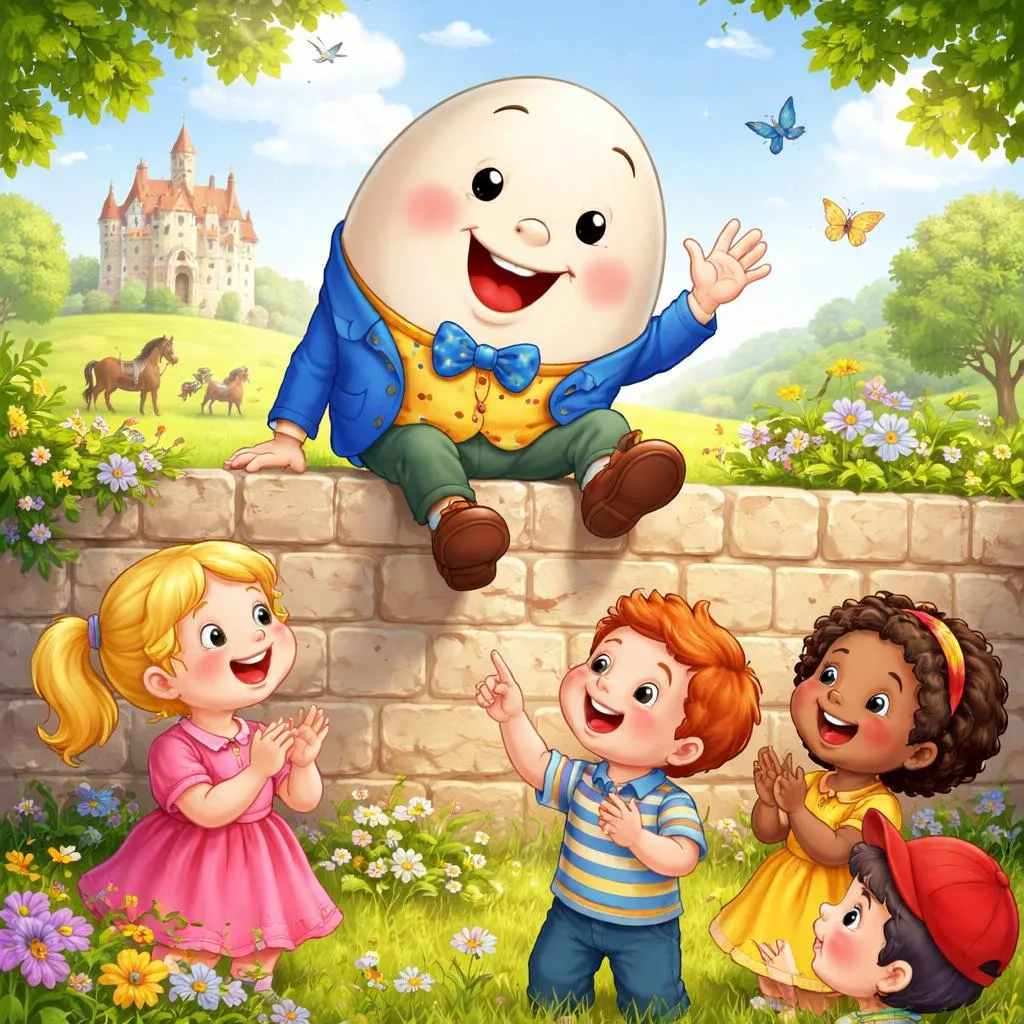

Hello, everyone! Today we meet a very famous character. He is an egg. He sits on a wall. He has a great fall. His name is Humpty Dumpty.
This nursery rhyme is very old. Children all over the world know it. They love the story. They love the rhythm. They love to say the funny words.
As a teacher, I find this rhyme very useful. It helps with many skills. We can learn new words. We can practice sounds. We can talk about stories. Let us explore the world of Humpty Dumpty together.
What Is the Humpty Dumpty Rhyme? This is a very short nursery rhyme. It tells a simple story. But it is a story with a mystery. Let us look at the words first.
The rhyme goes like this:
Humpty Dumpty sat on a wall. Humpty Dumpty had a great fall. All the king's horses and all the king's men Couldn't put Humpty together again.
This is the whole story. It has only four lines. But children love to say it again and again. The words are fun to say. The story is easy to remember.
The character Humpty Dumpty is usually a egg. Pictures in books show an egg with legs and arms. He wears clothes sometimes. He looks funny and friendly. Children like him right away.
The rhyme has a sad ending. Humpty breaks. Nobody can fix him. But children do not feel sad. They like the rhythm of the words. They like to say "Humpty Dumpty" because it sounds silly.
The Lyrics of the Nursery Rhyme Let us read the lyrics together. I will write them clearly. Then we can talk about the words.
Humpty Dumpty sat on a wall. Humpty Dumpty had a great fall. All the king's horses and all the king's men Couldn't put Humpty together again.
These words are very old. Some words are special. "Had a great fall" means he fell down. "Couldn't" means could not. "Put together again" means to fix him.
The rhyme uses simple words. This is good for young learners. They can hear the words. They can say the words. They can understand the story.
When children say this rhyme, they practice speaking. They learn how English sounds. They learn the rhythm of the language. This is very important for young learners.
Vocabulary Learning This rhyme has some wonderful words to learn. Let us look at them one by one.
Humpty Dumpty: This is a name. It is a silly name. Children love to say it. The word has no real meaning. It is just for fun. But it teaches children that names can be funny.
Sat: This is the past tense of sit. Humpty was sitting on the wall. This is a useful word. Children sit every day. They can connect the word to their own lives.
Wall: This is a thing. Walls are in houses and outside. Children know what walls are. They can point to a wall. They can understand why sitting on a wall might be dangerous.
Great: This word means big or very much. A great fall is a big fall. This word is useful for many things. A great day. A great toy. A great friend.
Fall: This is when someone drops down. It can be a noun or a verb. Children fall sometimes. They understand this word from their own experience.
King: This is a person who rules a country. Children learn about kings in stories. The king has horses and men. This teaches about royalty and helpers.
Horses: These are animals. The king has many horses. Children love animals. They like to talk about horses.
Men: These are people. The king's men are his helpers. They are strong and important.
Couldn't: This means could not. It shows that something is impossible. The men could not fix Humpty. This teaches children about ability and inability.
Put together: This means to fix something broken. When something breaks, we try to put it together. Children understand this from toys that break.
Again: This means one more time. Put together again means make it like before.
These words are simple but useful. Children can use them in daily life. They can talk about sitting. They can talk about falling. They can talk about fixing things.
Phonics Points Now let us look at the sounds in this rhyme. Phonics is about how letters make sounds. This rhyme is perfect for phonics practice.
The "U" sound in Humpty Dumpty Look at the words Humpty and Dumpty. They both have the short "u" sound. This is the sound in "cup" and "sun". Say it with me: "uh". Humpty. Dumpty. Children can feel this sound in their mouths. It is a short, quick sound.
The "AT" sound in sat The word "sat" has the "at" sound. This is the same sound in "cat", "hat", and "bat". Children can learn many words with this pattern. Sat, cat, mat, fat. These are easy to read and say.
The "ALL" sound in wall and fall Look at wall and fall. They both end with "all". This is the same sound in "ball" and "tall". Say it with me: "all". Wall. Fall. Ball. Tall. This is a common sound pattern in English.
The "OR" sound in horses The word "horses" has the "or" sound. This is the same in "for" and "more". It is a different sound from short "o". Children learn to hear the difference.
The "EN" sound in men The word "men" has the short "e" sound. This is the same in "ten" and "pen". It is different from "man". This helps children hear small sound differences.
The "AIN" sound in again The word "again" ends with the "ain" sound. This is the same in "rain" and "train". But be careful. The "g" is soft. We say "uh-gen", not "uh-gain" with a hard g.
Practicing these sounds helps children read. They learn that words with same sounds often have same letters. This is a powerful reading tool.
Grammar Patterns This rhyme also teaches some grammar. Let us look at the patterns.
Past Tense Verbs The rhyme uses past tense. "Sat" is the past of sit. "Had" is the past of have. "Couldn't" is the past of can not. This shows children that we use different words for things that already happened.
We can practice this. Today I sit. Yesterday I sat. Today I have an apple. Yesterday I had an apple. Today I can run. Yesterday I could run. This is a simple pattern to learn.
Possessive Form The rhyme says "the king's horses" and "the king's men". The 's shows ownership. The horses belong to the king. The men belong to the king. This is the possessive form in English.
We can practice this. The girl's toy. The boy's book. The cat's food. This is a simple pattern. Children learn to show who owns what.
Negative Form The rhyme uses "couldn't". This is a negative. It means not possible. This teaches children how to make negatives in English. Can becomes can't. Could becomes couldn't. Will becomes won't. This is an important grammar pattern.
Verb Phrases The rhyme uses "put together". This is a verb phrase. Two words together make one meaning. English has many of these. Pick up. Sit down. Eat up. These are useful for children to learn.
Learning Activities Now let us think about activities. How can children learn more from Humpty Dumpty? Here are some ideas.
Activity 1: Act Out the Rhyme Children can pretend to be Humpty Dumpty. They sit on something safe like a chair. Then they fall carefully onto soft pillows. Other children can be the king's horses and men. They try to put Humpty back together. This is fun and active. Children remember the story through movement.
Activity 2: Draw Humpty Dumpty Give children paper and crayons. Ask them to draw Humpty Dumpty. Is he just an egg? Does he have clothes? What does his face look like? After drawing, children can tell their own version of the story. This builds creativity and language skills.
Activity 3: Make a Humpty Dumpty Egg Take a real egg. Let children draw a face on it with markers. This is Humpty. Put him on a small wall made of blocks. Then push him gently. What happens? He breaks! This shows why the king's men could not fix him. It is a memorable lesson.
Activity 4: Fix Humpty Game Cut out paper egg shapes. Break them into two or three pieces. Give children the pieces and ask them to put Humpty together again. This is a puzzle game. It uses the idea from the rhyme. Children practice problem solving while remembering the story.
Activity 5: Rhyming Word Hunt Ask children to find words that rhyme with words from the rhyme. What rhymes with wall? Ball, tall, call. What rhymes with fall? All, small, hall. This builds phonemic awareness. Children learn to hear similar sounds in words.
Printable Materials Teachers and parents can make simple materials for this rhyme.
Flashcards Make cards with pictures. One card shows Humpty on the wall. One card shows him falling. One card shows the king's horses. One card shows the king's men. On the back, write the words. Children can match pictures to words. They can put the cards in story order.
Coloring Pages Find or draw simple pictures from the rhyme. Children can color Humpty Dumpty. They can color the wall. They can color the horses. Coloring helps focus. It also allows time to talk about the story.
Mini Book Fold paper to make a small book. On each page, write one line from the rhyme. Children draw the pictures. They now have their own Humpty Dumpty book. They can read it to family members. This builds pride and reading confidence.
Word Cards Write each vocabulary word on a card. Write the words: Humpty, Dumpty, sat, wall, great, fall, king, horses, men. Children can arrange them in order. They can match words to pictures. They can try to make sentences.
Educational Games Games make learning fun. Here are some games for Humpty Dumpty.
Game 1: Humpty Says This is like Simon Says. The leader says "Humpty says sit on the wall." Children pretend to sit. If the leader just says "Sit on the wall" without "Humpty says," children should not move. This teaches listening skills. It also uses the vocabulary from the rhyme.
Game 2: Fall or Not Fall The leader says different things. "Humpty sat on a chair." Children decide. Is this safe? Will he fall? "Humpty sat on the floor." Safe or not safe? This teaches safety awareness. It also gets children thinking and talking.
Game 3: Put Humpty Together Make a large puzzle of Humpty Dumpty. It could be a picture of an egg. Cut it into pieces. Children work together to put it together again. This builds teamwork. It also connects to the story idea.
Game 4: Rhyme Ball Sit in a circle. Say a word from the rhyme. Throw a soft ball to a child. That child must say a rhyming word. Then they throw the ball to another child with a new word. This is fast and fun. It builds quick thinking about sounds.
Game 5: Story Order Have picture cards from the story. Mix them up. Children must put them in the correct order. First Humpty sits on the wall. Then he falls. Then the horses and men come. Then they cannot fix him. This teaches story structure. It helps children understand beginning, middle, and end.
The Humpty Dumpty rhyme is small but powerful. It gives us so much to learn. Words, sounds, grammar, stories. Children love the silly egg character. They love saying the funny name. They love the simple rhythm.
Teachers and parents can use this rhyme in many ways. Say it together every day. Act it out. Draw pictures. Play games. Each time, children learn something new. They build their English skills while having fun.
So let us keep saying this old rhyme. Let us keep introducing Humpty Dumpty to new children. He has been teaching English for a very long time. He will keep teaching for many years to come. Happy learning, everyone