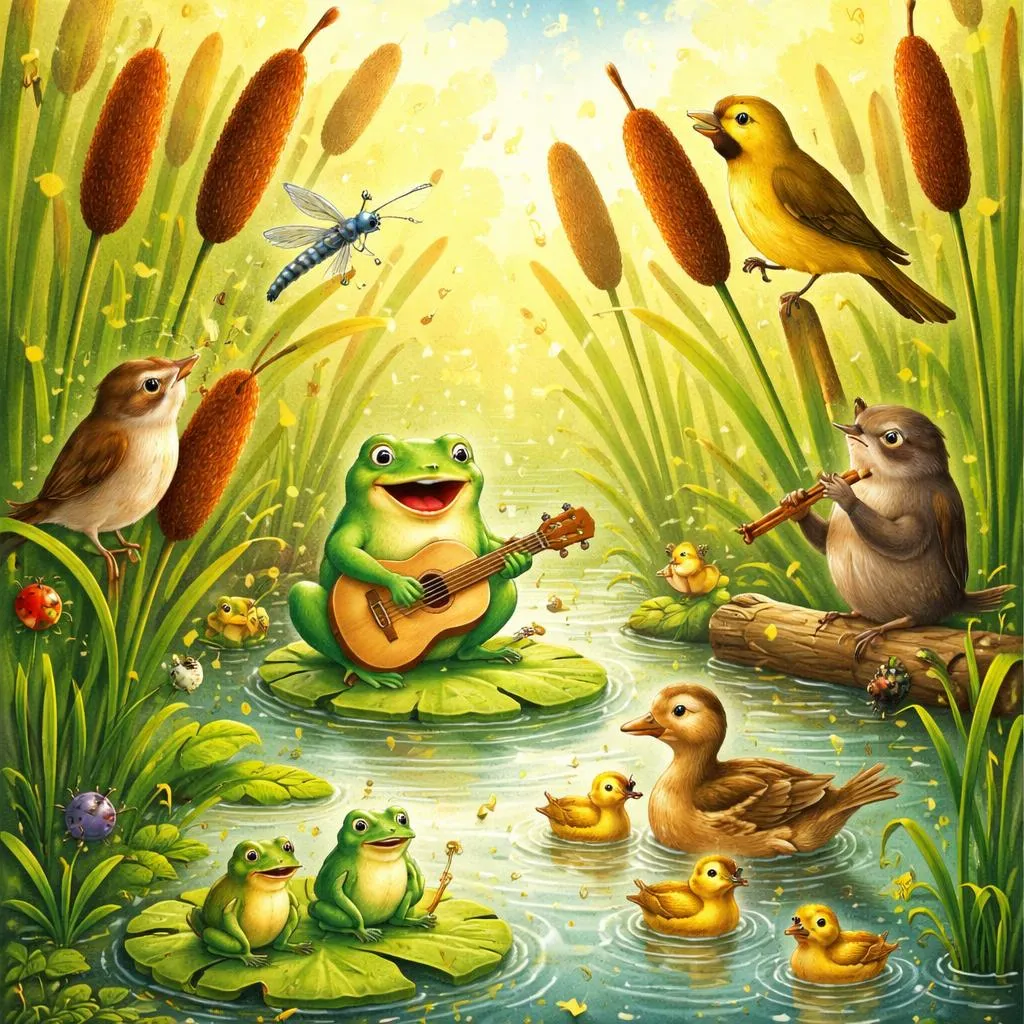

Have you ever stood by a pond, a lake, or a slow-moving river and heard a soft, rustling, whispering sound? Look at the water’s edge. You’ll see tall, straight plants with feathery, brown tops swaying in the breeze, chatting with each other. Their stems are stiff and hollow, and they grow in big, friendly groups. Long ago, people learned to cut and dry these stems to make baskets, roofs, and even musical instruments! This helpful plant of the water’s edge is the wonderful Reed. Let’s wade in and learn about the Reed plant.
Let’s Learn the Word! – Open the Treasure Box of Language
Formal Name and Pronunciation This whispering plant is called a Reed. You can say it like this: /riːd/ (reed). It rhymes with “seed” and “need.” Reed. Say it: Reed. It’s a short, strong, and simple word.
The Etymology Tale The word “Reed” is very, very old. It comes from the Old English word “hrēod,” which meant a reed or a rush plant. This word is related to old words in other languages, like the Old Norse “reyr.” For thousands of years, people living near water have had a name for this tall, useful plant. Its name is a whisper from the ancient wetlands.
Nicknames and Friendly Aliases Reeds have names that describe their home and their jobs. The common reed is often called the Phragmites (frag-MY-teez), which is its scientific name. Because it makes a great fence, it’s called a Screen. Some are called Bulrushes or Cattails, though these are different water plants. People also call them Thatching Reeds for roofs, or Wind Reeds for the sound they make.
Building Your Word Web: Core Parts Let’s learn the words for a Reed’s body. The Culm is the tall, stiff, hollow stem. It’s like a natural straw. The Leaf is long, thin, flat, and strapshaped, growing up the stem. The Inflorescence is the fluffy, feathery, brown or purple flower head at the very top. The Rhizome is the thick, creeping underground stem that spreads and sends up new shoots. A Stand is a large group of reeds growing together. The Node is the solid joint on the stem where a leaf grows. The Sheath is the part of the leaf that wraps around the stem.
Action and State Words Reeds are graceful and busy. They sway and rustle in the wind. They form dense stands in shallow water. Their rhizomes spread quickly. They filter and clean the water. People harvest and weave them. A reed plant is tall, hollow, flexible, and aquatic.
Ecosystem Friends Vocabulary The reed bed is a bustling city! Red-winged blackbirds build their nests safely between the stems. Dragonflies lay their eggs on the stalks. Frogs and fish hide among the underwater roots. Muskrats and water voles use reeds to build their homes. Ducks and geese find shelter in the thick stands. It’s a crucial nursery for water life.
Cultural Imprint in Language Reeds are symbols of music, flexibility, and resilience. A beautiful verse in the Bible says, “A bruised reed he will not break.” This means something fragile and bent can still be strong and valuable. The poet William Wordsworth wrote of a “lonely reed” standing by a lake, making music for anyone who listens. In stories, the hollow reed is often a hiding place for secrets or a tool for making music.
Ready for Discovery We know its whispering, musical name. Are you ready to put on your boots and discover the secrets of this water cleaner and animal hotel? Let’s explore the life of the Reed plant.
Discover the Plant’s Secrets! – A Nature Detective’s Notebook
The Plant Passport Reeds belong to the grass family, Poaceae. A common type is Phragmites australis. A reed is a tall, perennial grass that loves water. It can grow over 10 feet tall! The stems are round, smooth, and hollow. The leaves are long and flat. The flower head is a large, fluffy panicle that starts purple and turns silver-brown. It grows in huge colonies from spreading rhizomes. In winter, the brown stems and feathery tops remain, looking beautiful against the snow.
Survival Smarts The reed is a wetland wizard. Its hollow stems act like snorkels, carrying air down to its roots, which are often in soggy, airless mud. This is called aerenchyma. Its secret weapon is the rhizome. These underground stems spread far and wide, forming a massive network. This lets the plant quickly cover a wet area, store food, and send up new shoots even if the tops are cut or burned. It is a master of wet, challenging ground.
Its Role and Gifts The reed bed is an environmental superhero. It is a natural water filter. The roots trap silt and absorb excess nutrients and pollutants, cleaning the water. The dense stems break wave action, protecting shorelines from erosion. It provides vital food and shelter for more animals than almost any other wetland plant. For people, reeds have been used for thousands of years for thatching roofs, weaving mats, and making arrows, pens, and musical instruments.
Human History and Cultural Symbol For millennia, reeds have been a symbol of resourcefulness. Ancient Egyptians wrote on papyrus, a reed. They also made boats from bundles of reeds. In Europe, reed thatch roofs have kept houses dry for centuries. In Asia, reed mats are common. Perhaps most beautifully, the hollow reed stem is the original material for flutes, pan pipes, and clarinets. The reed is a plant of practical art and music.
Fun “Wow!” Facts Get ready for a building fact! The Marsh Arabs of Iraq built entire floating islands and houses from giant bundles of reeds called quffa. And here’s a musical fact: the thin piece of wood that vibrates in a clarinet or saxophone to make sound is called a “reed” because it was originally made from a piece of reed stem!
From Water’s Edge to Your Window The Reed plant’s story is one of water, wind, and weaving. Would you like to bring a little piece of the wetland to your home? You can grow reeds in a container pond! Let’s see how.
Let’s Grow It Together! – A Little Guardian’s Action Guide
Good for Home Growing? Yes, but with careful control! Reeds are vigorous spreaders and can take over a garden pond. The best way is to grow them in a large, sturdy container without holes, placed in a sunny spot. This could be a half-barrel or a special water planter. This way, you can enjoy their beauty and watch the wildlife they attract, without letting them spread too far.
Little Gardener’s Toolkit You will need a small reed plant from a water garden specialist. Get a large, water-tight container (like a plastic tub or a barrel liner). Use heavy aquatic planting soil or clay. Have some small pebbles or gravel ready to top the soil. You’ll also need a sunny spot and access to water to fill your container pond.
Step-by-Step Growing Guide
Planting Your Water Friend Fill your container about two-thirds full with aquatic soil. Make a hole and place your reed plant in the center. Cover the roots with more soil. Gently press the soil down. Spread a layer of gravel or pebbles on top to keep the soil in place. Slowly fill the container with water until the water level is just above the soil. Place it in a sunny spot.
Care Calendar Keep the container filled with water; rainwater is best. Reeds love standing in water and full sun. You do not need to fertilize often; too much food makes algae grow. In the fall, you can cut the dead stems back to just above the water level. In winter, if it freezes, the container might crack, so you can move it to a sheltered spot or let it be if it’s a sturdy material.
Watch and Be Friends This is a window into wetland life! Watch for new green shoots in spring. See how the stems grow tall and straight. Listen for the rustling sound. Watch for insects like dragonflies visiting. You might even see a bird stop by! Draw the different stages of growth. Measure how tall your reed gets over the summer.
Problem Diagnosis If the leaves turn yellow, the plant might need more sun. If the plant looks crowded and doesn’t grow well, it might need dividing after a couple of years. The main problem is algae, which happens with too much sun and nutrients. You can add a few water snails or a small water lily to provide shade and compete with the algae.
Your Rewards and Gifts Your gift is your own mini-wetland ecosystem. You are growing a natural water purifier and a wildlife habitat. Caring for reeds teaches you about aquatic plants, responsible containment, and the quiet, vital life at the water’s edge. You become a steward of a tiny, whispering world.
Creative Fun Start a Wetland Watcher’s Journal. Draw the insects and birds that visit. Make a simple pan flute by cutting reed stems (or giant straws) to different lengths and taping them together. Weave a small coaster or a picture frame from dried grasses, pretending they are reeds. Write a song or a poem about the sounds of the marsh. Build a tiny model raft from twigs and string, inspired by ancient reed boats.
Growing a Habitat By planting reeds in a container, you are not just growing a plant. You are creating a habitat, learning about water ecosystems, and bringing the peaceful music of the wind through the stems to your home. You are a creator of small worlds.
Conclusion and Forever Curiosity What a soothing, whispering journey! You started by learning the word “Reed,” you discovered its secrets as the tall, filtering musician of the wetlands, and you learned how to responsibly grow a piece of this aquatic world. You now know the Reed plant is not just a tall grass; it is a water cleaner, an animal sanctuary, a weaver’s material, and a musician’s first instrument. Remember, its strength is in its community and its flexibility. Your curiosity helps you hear the music in nature’s quiet places. Keep listening to the rustle of plants, watching the edges of ponds, and wondering about the simple, generous plants that make our world work. Your adventure to learn about the Reed plant shows us that even in soggy ground, magnificent things can grow tall and strong.