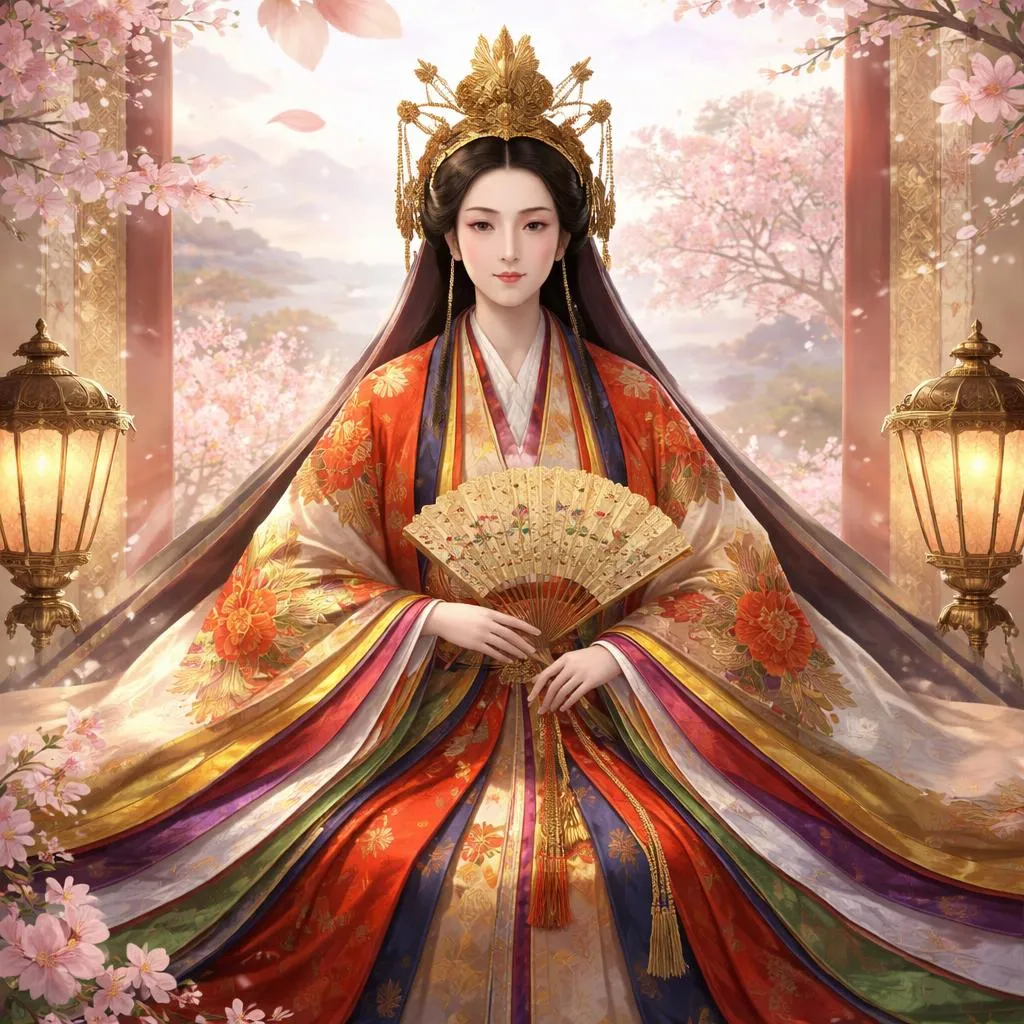

Who Is This Celebrity?
Empress Go-Sakuramachi was the last woman to rule Japan as a reigning empress. She sat on the Chrysanthemum Throne from 1762 to 1771. She came from a long line of Japanese emperors. Her reign came over 1,000 years after Japan's first empresses. She inherited the throne from her older brother. She later passed the throne to her nephew. She ruled during a peaceful time in Japanese history. Her story reminds us that women have led nations for centuries.
Early Life and Childhood
Empress Go-Sakuramachi was born in 1740 in Kyoto, Japan. Her birth name was Toshiko. She grew up inside the imperial palace in Kyoto. Her father was Emperor Sakuramachi. Her mother was a noblewoman from a powerful family. Young Toshiko lived a very protected life. She rarely left the palace walls. She loved playing traditional Japanese instruments. The koto, a stringed instrument, was her favorite. She also enjoyed writing poetry about flowers and seasons. She had an older brother who would become emperor first. She did not expect to rule. She expected to live quietly in the palace.
Education and Learning Journey
Empress Go-Sakuramachi received an excellent education for a princess. She studied classical Japanese literature and poetry. She also learned Chinese classics and calligraphy. Her teachers taught her about Shinto rituals and Buddhist teachings. She learned the complex ceremonies of the imperial court. She studied history, especially about previous empresses. She learned that eight women had ruled Japan before her. The first was Empress Suiko in the 500s. These stories inspired her. She also learned about politics and governance. She understood that emperors had limited power. Powerful samurai families made most decisions. She accepted this reality and worked within it.
How Did They Become Successful?
Empress Go-Sakuramachi became empress because of family need. Her older brother, Emperor Momozono, died young. He left a young son, only five years old. Court officials worried that a child emperor could not rule. They needed an adult on the throne. Toshiko was the logical choice. She was the emperor's sister and had royal blood. She accepted the role despite not seeking it. In 1762, she became Empress Go-Sakuramachi. The "Go" in her name means "later." It connected her to a previous Empress Sakuramachi. She ruled for nine years. In 1771, she stepped down. She passed the throne to her nephew. She spent her final years as a retired empress.
Big Ideas and Achievements
Empress Go-Sakuramachi's biggest achievement was preserving imperial traditions. She maintained the rituals and ceremonies of the court. She ensured the imperial family continued without conflict. She also supported the arts during her reign. She invited poets and musicians to perform at the palace. She commissioned beautiful calligraphy and paintings. She also helped restore several Shinto shrines damaged by fire. She made donations to Buddhist temples across Japan. She used her position to promote cultural activities. She understood that the emperor's power was ceremonial. But she believed ceremonies mattered. They connected Japan to its ancient past. Her reign was peaceful and stable. No wars or rebellions occurred during her rule.
Challenges and Difficult Times
Empress Go-Sakuramachi faced challenges as a female ruler in a male-dominated society. Powerful samurai lords ran the country. They did not always respect a woman on the throne. She had to work carefully with these lords. She could not order them around. She had to persuade them with grace and patience. She also faced the challenge of producing no children. She never married or had a family. This was unusual for an empress. She had to find a successor outside her direct line. She chose her nephew and raised him well. She also faced the difficulty of limited power. She wanted to do more for her people. But the shogun, the military leader, made most decisions. She accepted her role and did what she could.
Fun Facts About the Celebrity
Empress Go-Sakuramachi loved practicing calligraphy every morning. Her brush writing was famous for its elegance. She also enjoyed playing hide-and-seek in the palace gardens. She played with young court ladies to keep them happy. She never ate raw fish, which surprised many people. She preferred cooked vegetables and rice. She also loved wearing colorful silk robes. She designed some of her own patterns. She kept a pet songbird in a bamboo cage. The bird would sing along when she played the koto. She also enjoyed folding origami paper cranes. She made over 1,000 cranes during her lifetime. She believed they brought good luck.
Why Is This Celebrity Important Today?
Empress Go-Sakuramachi represents the last of an era. After her, no woman has sat on Japan's throne. Japanese law now prevents women from becoming emperor. Her existence reminds us that this was not always the case. For over 1,000 years, Japan allowed empresses. She was one of eight women rulers. Her story inspires girls who dream of leadership. She showed that women can rule with grace and wisdom. Historians study her reign to understand imperial traditions. Her calligraphy and art remain in museums. Her name appears in every Japanese history textbook. She keeps alive the memory of female sovereignty.
What Can Kids Learn from This Story?
You can learn that leadership comes in many forms. Empress Go-Sakuramachi had limited power. She still led through example. You can also learn to accept the role you are given. She did not want to be empress. She did her duty anyway. You can learn to preserve good things from the past. She protected traditions that might have disappeared. You can learn that women have led for centuries. Do not let anyone tell you that leadership is only for men. You can also learn that you do not need children to leave a legacy. She had no family. She still changed history.
Quick Quiz or Practice Time
Let's see what you remember about Empress Go-Sakuramachi.
Question 1: How many years did Empress Go-Sakuramachi rule Japan?
Answer: Nine years.
Question 2: What instrument did Empress Go-Sakuramachi love playing?
Answer: The koto, a traditional Japanese stringed instrument.
Question 3: From whom did Empress Go-Sakuramachi inherit the throne?
Answer: Her older brother, Emperor Momozono.
Question 4: What art form did Empress Go-Sakuramachi practice every morning?
Answer: Calligraphy.
Question 5: How many origami cranes did Empress Go-Sakuramachi make during her lifetime?
Answer: Over 1,000.
Activity: Draw a picture of Empress Go-Sakuramachi playing her koto while her pet songbird sings along. Write one sentence about a tradition from your family or culture that you want to preserve.
Empress Go-Sakuramachi lived in a time when women rarely ruled. She did not seek power. Power found her. She accepted her duty without complaint. She ruled for nine peaceful years. She kept ancient traditions alive. She supported art and poetry. She raised her nephew to be a good emperor. Then she stepped aside quietly. She did not cling to power. She understood that leaders come and go. What matters is what you leave behind. She left behind a stable throne, preserved culture, and proof that women can lead. Her name may not be as famous as male emperors. But her story matters. It reminds us that history is full of female leaders. They just need to be remembered. Remember her. Then go write your own story. Lead in your own way. Whether you are a boy or a girl. Whether you seek power or it finds you. Do your duty. Be graceful. And leave something good behind. That is what Empress Go-Sakuramachi did. That is what you can do too.