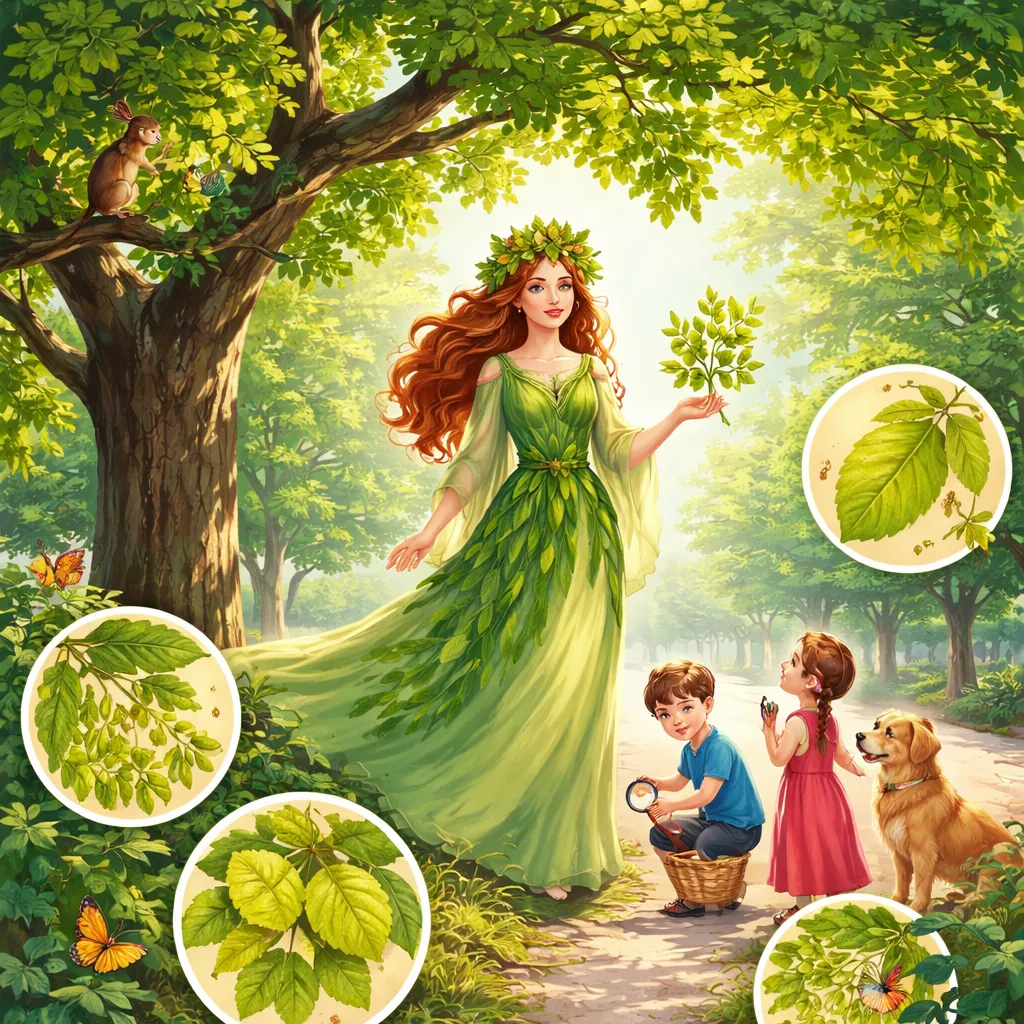

Have you ever walked down an old, quiet street where the trees from each side reach out and touch in the middle? They form a beautiful, green living tunnel, like a cathedral made of leaves. Long ago, one special type of tree was the favorite for this job. It grew tall and graceful, with a trunk that split into many branches, creating a perfect, shady umbrella. Its leaves are rough, like sandpaper, and have a lopsided, uneven base. This tree was a beloved friend to people and animals, but it faced a great challenge. Let’s discover the story of the grand and graceful Elm plant.
Let’s Learn the Word! – Open the Treasure Box of Language
Formal Name and Pronunciation
This graceful giant is called an Elm. You can say it like this: /ɛlm/ (elm). It’s a short, strong, and simple word. It rhymes with “helm” and “realm.” Say it: Elm. It sounds solid and calm, just like the tree.
The Etymology Tale
The word “Elm” is ancient. It comes from the Old English word “elm,” which has relatives in Latin (“ulmus”) and Greek. The name is so old, it is almost the same in many languages. For thousands of years, people across Europe and Asia have used a similar-sounding word for this important tree. Its name is a whisper from the deep past.
Nicknames and Friendly Aliases
Elms have noble and descriptive names. The most famous in America is the “American Elm” or “White Elm.” In Europe, it is the “English Elm” or “Wych Elm.” Because of its beautiful, fountain-like shape, people often called it the “Street Elm” or the “Umbrella Tree.” After a disease affected many, new, strong types were named “Liberty Elm” and “Princeton Elm,” names full of hope.
Building Your Word Web: Core Parts
Let’s learn the words for an Elm’s elegant body. The Leaf is oval with a pointed tip and a very uneven, lopsided base. The edges are doubly toothed, like two sets of tiny saw teeth. The Samara is the papery, round seed. It has a wing all around it, like a little, green flying saucer. The Trunk is often straight, with bark that becomes deeply grooved, like rough, gray ropes. The Bark is dark gray and furrowed. The Crown is the tree’s famous shape—a high, spreading, vaselike fountain of branches. A Sucker is a new shoot that grows from the roots or base of the tree. The Grain of the wood is interlocked, making it very tough.
Action and State Words
Elms are known for their form. They arch over roads to form a green tunnel. They tower gracefully, providing deep, cooling shade. In spring, they produce clusters of small flowers and then the samaras. They were once planted in long, proud lines called allees. An elm tree is stately, vase-shaped, majestic, and, sadly, vulnerable to a certain disease.
Ecosystem Friends Vocabulary
The elm is a bustling habitat. Songbirds like orioles and warblers love to nest in its high branches. Squirrels eat the buds and seeds. The leaves are food for the caterpillars of many butterflies and moths, like the beautiful Comma and Peacock butterflies. Woodpeckers search for insects in its bark. Even after an elm dies, its wood is a home for beetles and fungi that recycle it.
Cultural Imprint in Language
An old proverb says: “Elm hateth man, and waiteth.” This odd saying meant people thought waiting under an elm was unlucky because a dead branch might fall. But this shows how large and old they were! The poet Joyce Kilmer wrote in “Trees”: “A tree that may in Summer wear, A nest of robins in her hair.” While about all trees, the image fits the elm’s high, hairlike crown perfectly. In many old stories, the elm was a symbol of dignity, strength, and melancholy.
Ready for Discovery
We know its noble name and its grand shape. Are you ready to uncover the secrets and the sad-and-hopeful story of this tree? Let’s investigate the life of the Elm plant.
Discover the Plant’s Secrets! – A Nature Detective’s Notebook
The Plant Passport
Elms belong to the Ulmaceae family. Their group name is Ulmus. A mature elm looks like a giant, green vase or a fountain of leaves, with a tall trunk that divides into many upward-arching branches. Its leaves are dark green, rough on top, and have that famous uneven base. In very early spring, it grows tiny, reddish-purple flower clusters. The fruit is the circular, papery samara that spins like a helicopter when it falls. It is a deciduous tree, losing its leaves in winter, and it can grow very old and large, becoming a landmark.
Survival Smarts
The elm’s classic vase shape is smart. The branches grow up and out, not down. This lets lots of sunlight reach the leaves inside the crown and also allows the tree to grow tall without its heavy branches breaking. The wood is incredibly tough and flexible because the grain twists together. This made it perfect for things that need to bend, like wagon wheels. A challenge is Dutch elm disease, a sickness spread by a tiny beetle. Scientists and tree doctors work hard to help elms fight this disease.
Its Role and Gifts
The elm is a generous giant. Its leaves feed many caterpillars, which are baby bird food. Its seeds are eaten by birds and small mammals. Its vast, dense canopy provides critical nesting sites and cools the air below. As an environmental engineer, a row of elms creates a windbreak. A single elm can cool a street as well as several air conditioners! Its roots help hold the soil, especially along riverbanks where some types like to grow.
Stories and Symbols
For centuries, the elm was a symbol of community, dignity, and strength. In America, the “Liberty Tree” in Boston, a famous meeting spot before the Revolution, was an elm. In many towns, the largest elm was the gathering spot for meetings and celebrations—the “Town Elm.” Its incredibly tough, water-resistant wood was prized for ship keels, bridge pilings, and the seats of Windsor chairs. It was the wood of strong, everyday things.
Fun “Wow!” Facts
Get ready for a tough fact! Elm wood is so flexible and strong that it was the favorite wood for making the hubs of old wooden wagon wheels. It could withstand the incredible twisting force without splitting! And here’s a hopeful one: the “Liberty Elm” in Boston was so important that after it was cut down, pieces were made into souvenir boxes, and its story helped inspire the planting of new, disease-resistant “Liberty Elms” across America today.
From History to Hope
The Elm plant’s story is one of beauty, loss, and hope. Would you like to be part of its hopeful future? You can help plant a new chapter for this noble tree. Let’s see how.
Let’s Grow It Together! – A Little Guardian’s Action Guide
Good for Home Growing?
Yes, with careful choice! You should plant a disease-resistant elm cultivar, like a ‘Princeton’ or ‘Valley Forge’ American elm. These trees still get very large, so they need a big garden, a park, or a schoolyard—a true “forever home.” You can start a sapling in a large pot for a few years, but it will need to be planted in the ground to become a giant. It is a legacy project.
Little Gardener’s Toolkit
You will need a young, disease-resistant elm sapling from a good nursery. Get a very large, deep pot if starting in a container. Use good-quality, well-draining garden soil. Have a watering can, a sturdy stake, and soft tree ties ready. A bag of mulch (wood chips) is also helpful.
Step-by-Step Growing Guide
Planting Your Tree of Hope
The best time to plant is in early spring or fall. Dig a hole in your chosen spot that is twice as wide as the root ball but no deeper. Gently place the tree in the hole. Fill it with soil, pat it down firmly, and water it deeply to settle the roots. Attach the tree to the stake with the soft ties to help it grow straight in the wind.
Care Calendar
Your young elm needs regular water, especially for its first two to three years. Water it deeply once a week if it doesn’t rain. It loves full sun. In early spring, you can give it a slow-release tree fertilizer to encourage strong roots. Spread a ring of mulch around the base (but not touching the trunk) to keep the soil moist and cool.
Watch and Be Friends
Watch for the beautiful vase shape to develop. Notice how the leaves are rough on top. In early spring, look for the tiny flowers before the leaves. In late spring, watch the green samaras spin down. Measure your tree’s height each year on its planting day. Take a photo with it every year to see how you both grow.
Problem Diagnosis
The main problem is Dutch elm disease. Choosing a disease-resistant variety is the best prevention. If you see a branch with leaves wilting and turning brown in summer, tell an adult gardener immediately. They might need to call an arborist (tree doctor). For bugs like elm leaf beetles (which make holes in leaves), spraying the tree with a strong jet of water can help.
Your Rewards and Gifts
Your gift is planting living history and hope. You are helping to bring back a beloved tree. Caring for an elm teaches you about resilience, the importance of community (for trees and people), and being a steward for the future. You are growing a future shady umbrella for generations to come.
Creative Fun
Start a Legacy Tree Journal. Draw your tree and write about why you planted it. Make samara spinners by gently tossing the seeds and watching them twirl. Do a detailed leaf rubbing to see the lopsided base and the toothed edge. Research the history of the “Liberty Tree” and draw your own version. Write a short story about the animals living in your elm’s crown.
Planting for the Future
By planting a disease-resistant elm, you are not just planting a tree. You are planting a symbol of resilience, a piece of living history, and a gift of cool shade for the future. You are a hope planter.
Conclusion and Forever Curiosity
What a journey of strength and hope! You started by learning the word “Elm,” you discovered its secrets as the noble, arching queen of the streets, and you learned how to help bring this graceful giant back to our communities. You now know the Elm is not just a shade tree; it is a symbol of community strength, a home for wildlife, a piece of our history, and a story of scientific hope. Remember, its beauty is in its arching grace and its tough resilience. Your curiosity helps write new, hopeful chapters for the plants and animals around us. Keep looking for the grand, vase-shaped trees, keep asking questions, and keep planting hope. Your adventure to learn about the Elm plant teaches us that even when things are tough, with care and knowledge, we can help nature heal and grow strong again.