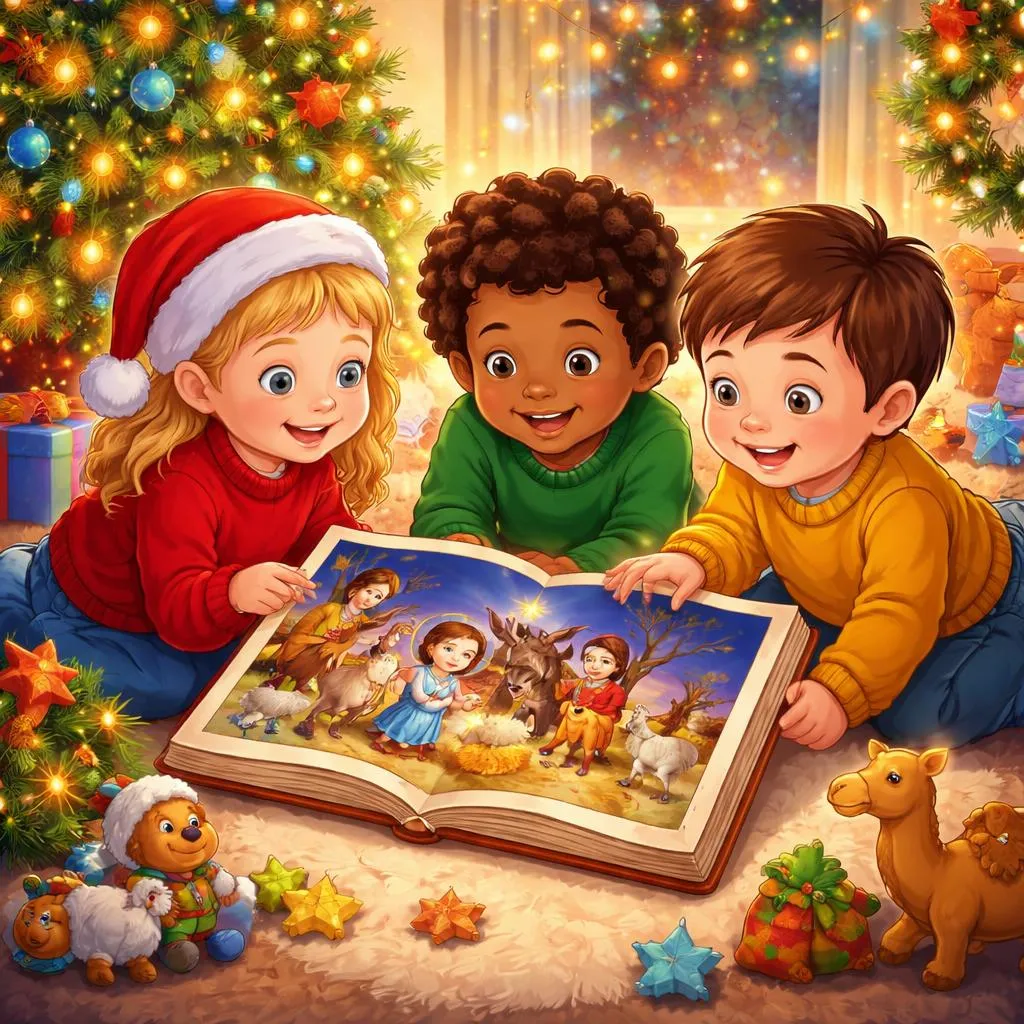

The Christmas season fills the air with special words. Angel, shepherd, star, manger. These words appear in songs, decorations, and conversations. Children's bible stories for christmas provide the context for all this vocabulary. They tell the story behind the celebrations. They introduce characters and events in simple language. They connect holiday traditions to their origins. For language learners, this connection is powerful. Words gain meaning through narrative. Traditions become understandable. The holiday itself becomes a language lesson. Let us explore how these stories support vocabulary development, cultural understanding, and joyful learning during the Christmas season.
What Are Children's Bible Stories for Christmas?
These are simplified retellings of the Christmas narrative from the Bible. They focus on the birth of Jesus. The stories begin with Mary learning she will have a special baby. An angel visits her. She says yes to this important task. Joseph learns about the baby in a dream. They travel to Bethlehem for a census. The town is crowded. There is no room at the inn. They stay in a stable. Jesus is born there. Shepherds in the fields see angels who tell them the good news. They hurry to see the baby. Later, wise men see a special star. They follow it to find the new king. They bring gifts of gold, frankincense, and myrrh. The stories emphasize love, joy, and peace.
Categories of Christmas Bible Stories
Understanding different story types helps in selecting appropriate materials for specific learning goals.
The Annunciation Story: This tells of the angel visiting Mary. Gabriel brings news. Mary asks questions. She accepts her role. This story teaches dialogue patterns and words like angel, greet, favor, afraid, believe.
The Journey to Bethlehem: Mary and Joseph travel. The road is long. Bethlehem is crowded. No room is available. This story teaches travel vocabulary. Donkey, journey, inn, stable, crowded, tired.
The Birth Story: Jesus is born in a stable. Animals are present. Mary wraps him in cloths. He lies in a manger. This story teaches animal words and baby words. Manger, hay, ox, donkey, swaddle, newborn.
The Shepherd Story: Shepherds watch their flocks at night. Angels appear with glorious light. They hear good news. They run to see the baby. This story teaches night vocabulary and reaction words. Flock, field, afraid, glorious, news, hurry.
The Wise Men Story: Wise men see a star. They follow it. They ask King Herod for help. They find Jesus and give gifts. They return home a different way. This story teaches travel, royalty, and gift vocabulary. Star, follow, king, gold, frankincense, myrrh, gift.
Vocabulary Learning from Christmas Stories
These narratives introduce rich vocabulary across multiple domains. Words connect to the story, the season, and emotions.
Story Words: angel, Mary, Joseph, Jesus, Bethlehem, stable, manger, shepherd, wise men, star, Herod, census. Place Words: Nazareth, Bethlehem, Jerusalem, stable, field, inn, town, road, house, palace. Animal Words: donkey, sheep, lamb, ox, camel, flock, herd. Gift Words: gold, frankincense, myrrh, treasure, gift, present, give, offer. Emotion Words: afraid, joyful, amazed, curious, thankful, peaceful, hopeful, surprised, loved. Time Words: night, midnight, morning, winter, Christmas, birthday, forever.
Each story element introduces connected vocabulary. The stable scene teaches animal and place words. The wise men story teaches gift vocabulary. The angels bring emotion words.
Phonics Points in Christmas Stories
Specific sound patterns appear through key vocabulary. Identifying these helps build decoding skills.
The /j/ sound: Jesus, Joseph, journey, joy. The central figure starts with this sound. Practice saying Christmas words together.
The /m/ sound: Mary, manger, miracle, midnight, myrrh. Mary is central. The manger holds Jesus. Miracles happen. The sound appears frequently.
The /s/ sound: star, shepherd, stable, savior, silent. Stars guide. Shepherds watch. The stable shelters. The sound carries meaning.
The /sh/ sound: shepherd, shine, share, shelter. Shepherds appear. Stars shine. Families share. Shelters provide.
Rhyming words: star/far, night/bright, born/morn, king/bring. Simple rhymes help children remember key elements.
Grammar Patterns in Christmas Stories
Children's bible stories for christmas model various grammatical structures within their narratives.
Past Tense Narrative: The story uses simple past tense throughout. "An angel appeared to Mary." "Joseph traveled to Bethlehem." "The shepherds hurried to find the baby." This provides extensive past tense modeling.
Dialogue Patterns: Characters speak to each other. "Do not be afraid," the angel said. "I am the Lord's servant," Mary answered. "Where is the newborn king?" the wise men asked. Dialogue models conversational language.
Time Sequence Words: The story follows a clear timeline. "First, the angel came to Mary." "Then, they traveled to Bethlehem." "That night, Jesus was born." "Later, the wise men arrived." This builds temporal understanding.
Questions and Answers: Characters ask questions. "How can this be?" Mary asked. "Where is the one born king of the Jews?" the wise men inquired. Questions and answers model conversational exchange.
Because Sentences: Causal language explains events. "Mary was afraid because the angel appeared." "They went to Bethlehem because of the census." "The shepherds rejoiced because Jesus was born." This builds causal understanding.
Learning Activities for Christmas Stories
Active engagement helps children internalize vocabulary and themes through hands-on learning.
Nativity Scene Building: Create a simple nativity scene. Add one piece each day or week. Mary. Joseph. The stable. Animals. Shepherds. Angels. Wise men. Discuss each new addition using descriptive language. This builds vocabulary gradually.
Angel Wings Craft: Create simple angel wings from paper or fabric. Act out the angel appearing to Mary and the shepherds. Use angel vocabulary. "Do not be afraid. I bring good news!" This builds active language use.
Shepherd's Staff Craft: Make simple shepherds' staffs from paper or sticks. Pretend to be shepherds watching flocks. Use shepherd vocabulary. "Watch the sheep." "Protect them from danger." "Run to see the baby!"
Wise Men Crowns: Create simple crowns from paper. Decorate with stars and jewels. Practice being wise men. "We see a star!" "Let's follow it!" "We bring gifts for the king!" This builds royalty and travel vocabulary.
Star Art: Create star paintings or collages. Discuss the star that guided the wise men. Use star vocabulary. Bright, shine, guide, follow, light, dark, sky, night.
Learning Activities for Group Settings
Collaborative learning builds language through interaction and shared experiences.
Christmas Story Sequencing: Create picture cards showing main events. Angel visits Mary. Journey to Bethlehem. Jesus is born. Shepherds visit. Wise men arrive. Groups arrange in order and retell the story together.
Character Interviews: Students take turns playing characters. Mary, Joseph, shepherd, wise man. Classmates interview them. "Mary, how did you feel when the angel came?" "Shepherd, what did you see that night?" This builds question formation and perspective.
Nativity Role Play: Assign roles and act out the Christmas story. Use simple costumes or props. Narrator reads while characters act. This builds comprehension and oral language through embodiment.
Gift Discussion: The wise men brought gifts. What gifts can we give that are not toys? Kindness. Help. A smile. Time. Share ideas. This builds generosity vocabulary and character.
Educational Games for Christmas Stories
Games make learning playful and memorable.
Christmas Bingo: Create bingo cards with Christmas story pictures. Angel, Mary, Joseph, donkey, stable, shepherd, sheep, star, wise man, camel, gift. Call out words. Students cover matching pictures. First to cover a row wins.
Memory Match with Nativity Cards: Create pairs of cards with nativity pictures. Mary/Mary. Joseph/Joseph. Donkey/donkey. Star/star. Place face down. Students flip two looking for matches. Name pictures when flipping.
Who Am I? Game: Describe a character from the Christmas story. Students guess who it is. "I traveled on a donkey to Bethlehem." Students respond "Mary!" "I saw a star and followed it." "Wise man!" This builds listening and character knowledge.
Pin the Star on the Stable: Create a large stable picture. Make paper stars. Blindfolded students try to place the star where it belongs above the stable. Say "star" when placing.
Printable Materials for Christmas Stories
Ready-to-use printables extend learning beyond story time.
Christmas Vocabulary Flashcards: Create cards with Christmas story pictures on one side and words on the other. Angel, Mary, Joseph, donkey, stable, manger, shepherd, sheep, star, wise man, camel, gift. Use for matching games or quick review.
Story Sequencing Cards: Create cards showing main events in order. Students arrange and retell using complete sentences. This builds narrative skills.
Nativity Coloring Pages: Print outline drawings of Christmas story scenes. Angel with Mary. Journey to Bethlehem. Stable with baby. Shepherds with sheep. Wise men with camels. Students color while discussing with partners.
Christmas Mini-Book: Fold paper to create a small book. Each page shows one part of the story with simple text. "An angel came to Mary." "They went to Bethlehem." "Jesus was born." "Shepherds visited." "Wise men brought gifts." Students illustrate each page.
Gift Cards: Create cards with words for gifts we can give. Love, kindness, help, smile, share, pray. Discuss what each means. This builds abstract vocabulary.
Daily Life Connections to Christmas Stories
Linking story themes to daily experiences makes learning relevant and personal.
Family Traditions: Families celebrate Christmas differently. Students share their family traditions. Use tradition vocabulary. "In my family, we..." This builds cultural awareness and oral language.
Giving and Receiving: The wise men gave gifts. Discuss giving and receiving. What feels good about giving? What feels good about receiving? Use gift vocabulary and emotion words.
Light in Darkness: The star gave light. Christmas lights shine in winter darkness. Discuss light and dark. What gives us light? What gives us hope when things feel dark? This builds metaphorical language appropriately.
Good News: The angels brought good news. What good news have students heard or shared? A new baby. A visit. A special event. Practice sharing good news using complete sentences.
Printable Flashcards from Christmas Stories
Effective flashcards support multiple learning styles.
Picture-Word Cards: Front shows simple Christmas story drawing or printed image. Back shows word in English. Angel, Mary, Joseph, donkey, stable, manger, shepherd, sheep, star, wise man, camel, gift.
Character Cards: Create cards for each character with simple descriptions. "Mary: Jesus's mother." "Joseph: Mary's husband." "Shepherds: visited baby Jesus." "Wise men: brought gifts."
Symbol Cards: Create cards showing Christmas symbols with simple explanations. "Star: guided the wise men." "Gift: wise men brought gifts." "Angel: brought good news." "Manger: bed for baby Jesus."
Sequence Cards: Create cards showing main events. Students arrange in order and retell using complete sentences. "First, an angel visited Mary. Then..."
Phonics Practice from Christmas Words
Use Christmas vocabulary for targeted phonics instruction.
Initial Sound Sort: Provide Christmas picture cards. Angel, Mary, Joseph, donkey, stable, shepherd, star, wise man, camel, gift. Students sort by beginning sound. A words. M words. J words. D words. This builds phonemic awareness.
Syllable Clapping: Clap syllables in Christmas vocabulary. Christ-mas (2). An-gel (2). Ma-ry (2). Jo-seph (2). Beth-le-hem (3). Sta-ble (2). Shep-herd (2). Wise men (2). This builds phonological awareness.
Rhyming Word Hunt: Find words that rhyme with Christmas words. Star/car/far. Night/bright/light. King/bring/ring. Born/morn/horn. Create rhyming pairs and use in sentences.
Vowel Sound Sort: Sort Christmas words by vowel sounds. Star has /ar/. Angel has long /a/ in first syllable. Manger has short /a/ in first syllable. Gift has short /i/. This builds vowel discrimination.
Grammar Patterns Practice
Use Christmas story sentences to practice specific grammar structures.
Past Tense Practice: Write sentences with missing verbs. "An angel ___ to Mary." Students choose from "appear" or "appeared." "They ___ to Bethlehem." Choose from "travel" or "traveled." "Shepherds ___ the baby." Choose from "visit" or "visited." Discuss correct choices.
Question Formation: Practice asking questions about the story. "Who visited Mary?" "What did the angel say?" "Where was Jesus born?" "When did the shepherds come?" "Why did the wise men follow the star?" Students ask and answer with partners.
Because Sentences: Practice causal sentences using "because." "Mary was afraid because the angel appeared." "They went to Bethlehem because of the census." "The shepherds were happy because they saw Jesus." Students create because sentences.
Sequence Practice: Practice using sequence words to retell the story. "First, the angel came to Mary. Next, they traveled to Bethlehem. Then, Jesus was born. After that, the shepherds visited. Finally, the wise men arrived." Students retell using sequence language.
The Gift of Christmas Stories
Children's bible stories for christmas offer unique value in language classrooms during the holiday season. They provide the narrative behind Christmas traditions. They introduce vocabulary that appears in songs, decorations, and conversations. They model past tense narrative naturally. They generate discussion about giving, receiving, and joy. The stories connect classroom learning to family celebrations. Children learn why we give gifts. They understand the star on top of the tree. They know what angels represent. For educators, these stories provide rich material across multiple domains. Vocabulary builds through meaningful narrative. Grammar models appear in authentic contexts. Discussions explore generosity and gratitude. The stories make the season more meaningful while building language skills. That combination creates memorable, joyful learning.