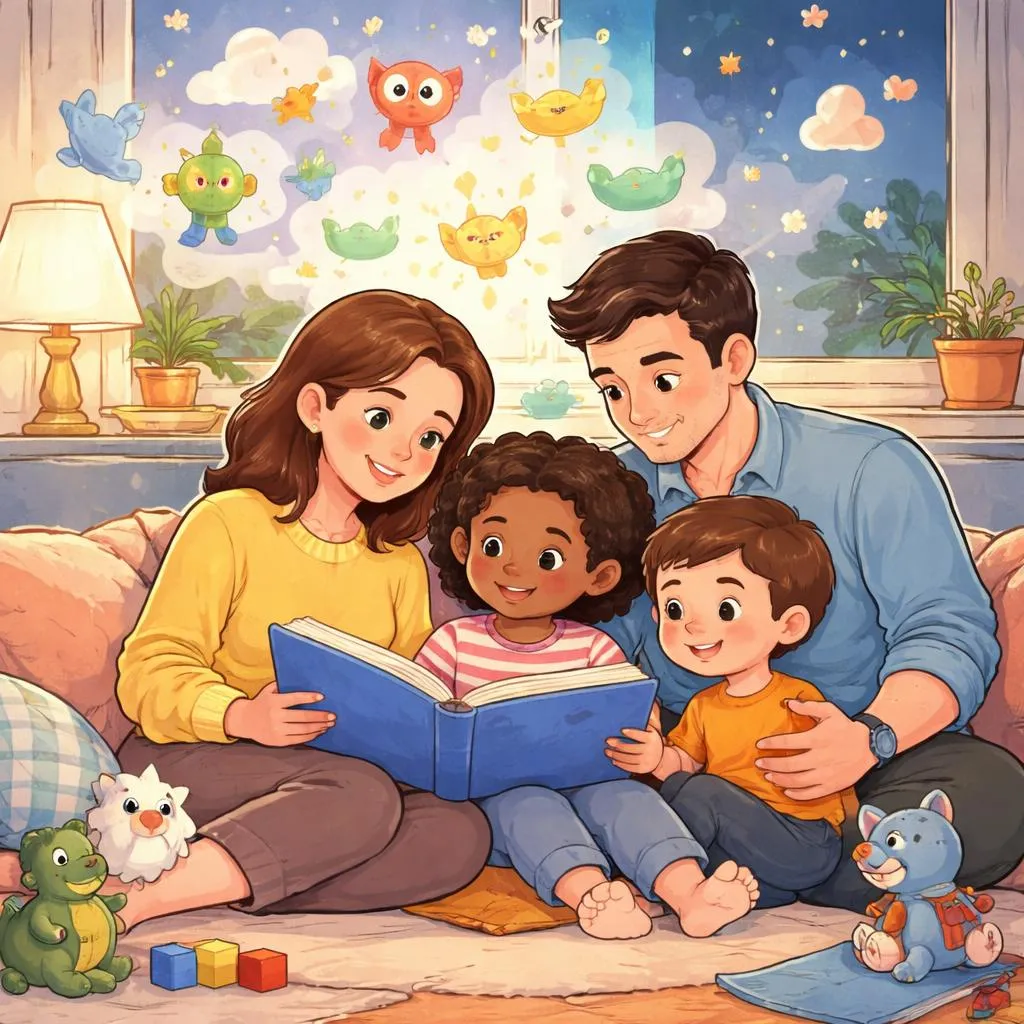

A few minutes before dinner. A short wait at the doctor's office. Five minutes before bed. Children's fiction short stories fit perfectly into这些小 pockets of time. They offer complete adventures in small packages. They satisfy young minds that want a whole story now.
Let us explore together the magic of short stories and how they can enrich your family's daily life.
<h2>What is the story?</h2> Children's fiction short stories come in endless variety. Some are funny. Some are thoughtful. Some are fantastical. All are brief enough to read in one sitting.One classic short story is "The Story of Ferdinand" by Munro Leaf. Ferdinand is a young bull in Spain. All the other bulls want to fight in the bullfights. They run and jump and butt heads. But Ferdinand prefers to sit under his favorite cork tree and smell the flowers.
His mother worries. She asks if he would rather play with the other bulls. Ferdinand says he would rather sit quietly and smell flowers. She understands and lets him be.
One day five men come to choose the fiercest bull for the bullfights. All the other bulls show off. Ferdinand accidentally sits on a bee. He jumps and snorts and acts wild. The men choose him.
They take Ferdinand to Madrid. The band plays. The matador waits. Everyone expects a fierce fight. But Ferdinand runs to the middle of the ring and sits down. He smells the flowers in the ladies' hair. No amount of prodding makes him fight. They take him home, and he returns to his cork tree, happy and peaceful.
Another beloved short story is "The Happy Prince" by Oscar Wilde. A golden statue of a prince stands high above the city. He sees all the suffering below. A swallow rests at his feet. The prince asks the swallow to take the ruby from his sword to a sick woman. Then to take his sapphire eyes to a poor writer and a match girl. Finally, he asks the swallow to take all his gold leaf to the hungry children.
Winter comes. The swallow should have migrated but stays to help. He grows cold and dies at the prince's feet. The prince's lead heart breaks. God tells an angel to bring him the two most precious things in the city. The angel brings the dead swallow and the broken heart.
A modern short story is "The Paper Bag Princess" by Robert Munsch. Princess Elizabeth lives in a castle and plans to marry Prince Ronald. A dragon attacks, burns the castle, and carries Ronald away. Elizabeth puts on a paper bag because her clothes burned. She follows the dragon.
She tricks the dragon into exhausting himself. She goes into the cave and finds Ronald. He tells her to come back when she looks like a real princess. Elizabeth decides he is a bum and dances off into the sunset alone.
<h2>The message of the story</h2> Children's fiction short stories pack powerful messages into few words. Ferdinand teaches that it is okay to be different. It is okay to choose peace over fighting. Being yourself is enough.The Happy Prince teaches about compassion and sacrifice. The prince gives everything he has to help others. The swallow gives his life. They teach that love costs something but is worth it.
The Paper Bag Princess turns fairy tales upside down. Elizabeth saves herself and Ronald. She does not need a prince to rescue her. When Ronald is ungrateful, she walks away. Children learn that they can be heroes of their own stories.
Short stories also teach that size does not matter. Tiny tales can carry big truths. A few pages can change how we see the world.
We can ask our children, What did Ferdinand teach you? Why did the swallow stay with the prince? What would you have done if you were Elizabeth?
<h2>Vocabulary learning</h2> Children's fiction short stories introduce rich vocabulary in compact packages.Ferdinand introduces Spanish words and bullfighting terms. Matador, cork tree, snorts, fierce. Children learn words for a world different from their own.
The Happy Prince introduces poetic vocabulary. Precious, sacrifice, suffering, gilded, sapphire. Children encounter beautiful words in a memorable context.
The Paper Bag Princess introduces playful vocabulary. Dragon, exhausted, ungrateful, rescue, bum. The mix of serious and silly expands word knowledge.
Short stories concentrate vocabulary. Every word matters. Children encounter new words in rich contexts that help them understand meaning.
After reading, we can use these words naturally. When your child chooses quiet play, you might say, You are being like Ferdinand. When someone gives generously, you might say, That is like the Happy Prince.
<h2>Phonics points</h2> The titles and characters in children's fiction short stories give us phonics practice.Ferdinand has three syllables. Fer-di-nand. The F requires teeth on lip. The R curls. The D touches roof of mouth. The N is nasal. The AND makes and sound. Fer-di-nand.
Elizabeth has four syllables. E-liz-a-beth. The E is short. The L lifts tongue. The I is short. The Z buzzes. The A is short. The B pops. The ETH requires tongue out. E-liz-a-beth.
Dragon has two syllables. Drag-on. The D touches roof of mouth. The R curls. The A is short. The G is hard. The ON makes on sound. Drag-on.
Prince has one syllable. Pr-in-ce. The P pops. The R curls. The I is short. The N is nasal. The CE makes S sound. Prince.
We can play with these sounds by finding other words with the same patterns. Ferdinand and fern both start with Fer. Elizabeth and elephant both start with El. Dragon and drag both start with Drag.
<h2>Grammar patterns</h2> Children's fiction short stories use language patterns that make every word count.Simple sentences move action quickly. Ferdinand sat under his cork tree. The dragon breathed fire. Elizabeth walked into the cave. Short sentences keep young attention.
Dialogue reveals character. "I would rather sit quietly and smell flowers," says Ferdinand. "You are a bum," says Elizabeth. What characters say shows who they are.
Repetition emphasizes key ideas. Ferdinand sat under his cork tree. Again and again. The repetition makes the point stick.
Contrast shows difference. Other bulls fought. Ferdinand smelled flowers. The prince was golden. The city was gray. Ronald was vain. Elizabeth was brave. Contrast helps children understand.
After reading, we can notice these patterns. The story said Ferdinand sat under his cork tree again and again. Why does the author keep saying that? To show that Ferdinand always chose peace.
<h2>Learning activities</h2> Children's fiction short stories inspire quick activities that fit busy lives.Draw Ferdinand's flower. Choose a flower to draw and color. Put it where you can see it as a reminder to be yourself.
Make a paper bag princess costume. Decorate a paper bag like a dress. Wear it while you act out the story. Talk about how Elizabeth saved herself.
Create a Happy Prince window. Draw a stained glass window with a prince. Talk about people you could help this week.
Write your own short story. Use one page. Draw pictures. Share it at dinner. You have created your own fiction short story.
<h2>Printable materials</h2> Many wonderful printable materials exist for children's fiction short stories.Look for coloring pages featuring Ferdinand under his cork tree, the Happy Prince with his swallow, and Elizabeth in her paper bag.
Find printable story maps for short stories. Draw the beginning, middle, and end. Ferdinand is happy. Ferdinand is taken. Ferdinand returns home.
Some websites offer printable finger puppets of short story characters. Ferdinand, the swallow, Elizabeth, the dragon. Act out the stories.
You might also find printable bookmarks with quotes from short stories. "Just be yourself." "Love costs something." "I can save myself."
<h2>Educational games</h2> Games based on short stories make learning playful and quick.Play short story charades. Act out a character from a short story. Ferdinand sitting. The dragon burning. Elizabeth walking. Others guess.
Create a short story memory game. Match characters to their stories. Ferdinand to The Story of Ferdinand. Elizabeth to The Paper Bag Princess. The swallow to The Happy Prince.
Play what happens next with a twist. Read half a short story. Ask your child to finish it. Then read the real ending. Compare.
For younger children, play a simple matching game matching characters to their favorite things. Ferdinand to flowers. The swallow to the prince. Elizabeth to her paper bag.
These games show that short stories offer big fun in small packages. Children learn while playing together.
<h2>The gift of short stories</h2> Children's fiction short stories give families a special gift. They fit into busy lives. A complete story in ten minutes. A whole adventure before bed. A satisfying read during a short wait.Short stories also introduce children to many different worlds. In one week, they can visit Spain with Ferdinand, a city with the Happy Prince, and a dragon's cave with Elizabeth. Each story opens a new door.
Short stories build reading confidence too. A child who finishes a whole story feels successful. They want to read another. And another. Short stories create readers.
Most of all, short stories create moments. A few minutes snuggled together. A shared laugh at a funny part. A quiet moment thinking about what the story meant. These moments add up to a lifetime of loving stories.
<h2>What we learn from short stories</h2> Short stories teach us that big things come in small packages. A few pages can hold truth and beauty. A short tale can change how we see the world.Short stories also teach us that every moment can hold a story. While we wait for dinner, we can visit another world. Before sleep, we can have an adventure. Stories fit anywhere.
Most of all, short stories teach us that we always have time for what matters. We always have time for a story. We always have time to be together. We always have time to imagine.
When we share children's fiction short stories with our children, we give them a world that fits in their pockets. We give them friends who visit for a few minutes and stay forever. We give them the joy of a complete story, from once upon a time to the end.
So keep a collection of short stories handy. In the car. By the bed. In your bag. When a few minutes appear, pull one out. Read it together. Let the magic happen. Short story, big memories.