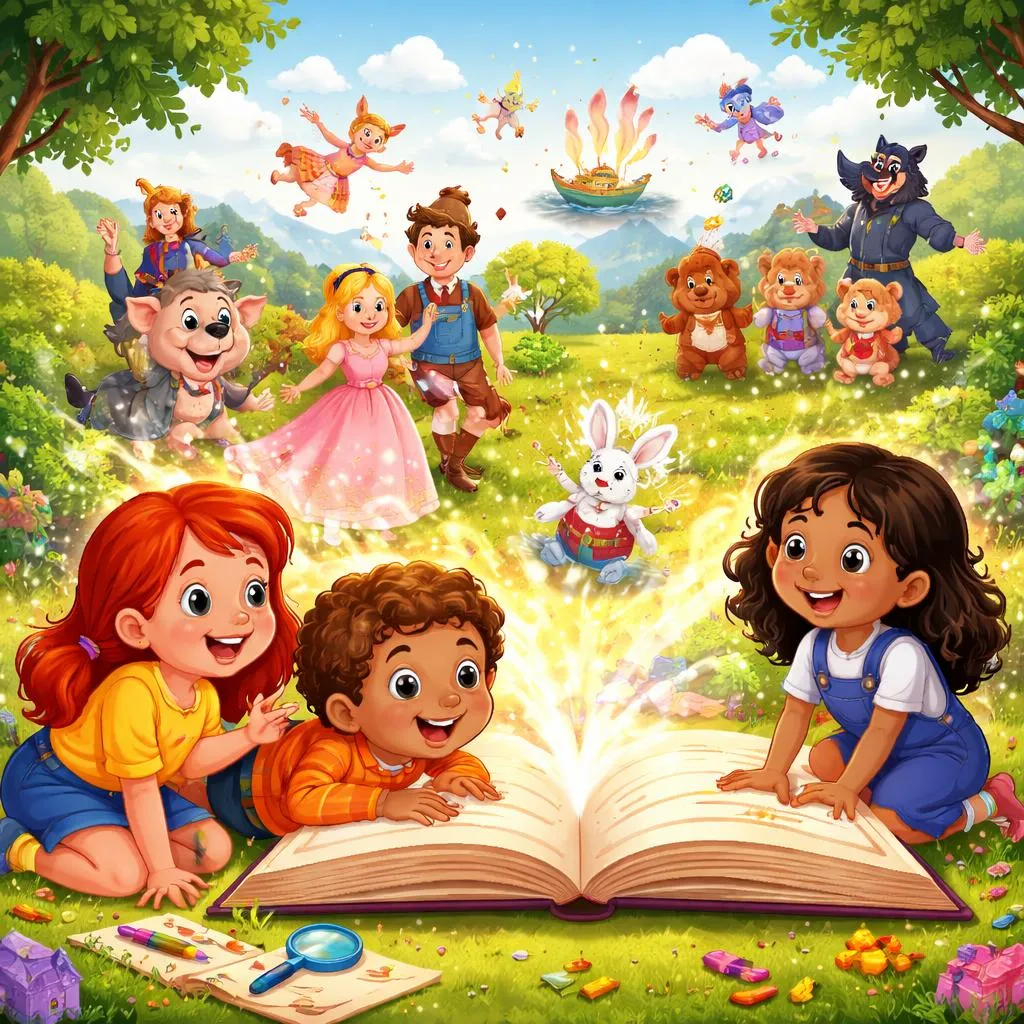

Timeless tales available to everyone. No cost barriers. No permission needed. Children's stories in the public domain belong to all readers forever. They carry forward the best of children's literature. This article explores methods for using these freely available treasures in teaching.
What Defines Public Domain Stories for Children?
Children's stories in the public domain are no longer protected by copyright. Their authors died long ago. Their publishers no longer hold exclusive rights. Anyone can freely read, share, and adapt them.
Classic fairy tales fill this category. Brothers Grimm collected stories from German folklore. Hans Christian Andersen wrote original fairy tales. Charles Perrault recorded French folk stories. These collections provide endless material.
Children's novels from long ago also reside in public domain. Louisa May Alcott's "Little Women." L. Frank Baum's "The Wonderful Wizard of Oz." Kenneth Grahame's "The Wind in the Willows." These longer works challenge developing readers.
Nursery rhymes and poetry belong here too. Mother Goose rhymes. Robert Louis Stevenson's "A Child's Garden of Verses." These short pieces work well for young learners.
Why Use Public Domain Stories for Teaching?
Public domain stories offer several advantages for language teaching. First, they cost nothing. Schools with limited budgets access quality literature freely. This removes financial barriers to rich texts.
Second, these stories have stood time test. They delighted children generations ago. They continue delighting today. Their staying power proves their quality.
Third, multiple versions exist. Teachers find illustrated editions, audio recordings, and adapted versions. Different formats support different learning needs.
Fourth, these stories provide cultural literacy foundation. References to these tales appear everywhere. Children who know them understand countless cultural allusions.
Vocabulary Learning Through Classic Stories
Public domain stories introduce vocabulary from earlier times. Some words have changed meaning. Some have fallen from common use. This historical language enriches word knowledge.
Descriptive language in classic stories often exceeds modern simplicity. Authors used rich vocabulary. Learners encounter words they might not find elsewhere. This exposure builds broader vocabulary.
Dialogue in older stories reflects speech patterns of their time. Characters speak differently than modern people. This variety builds understanding of language change over time.
Children's stories in the public domain also introduce words for historical objects. Items children might not know appear in stories. Candelabra, horse-drawn carriage, and chamber pot name things from past. These words build historical understanding.
Simple Phonics Points in Classic Texts
Public domain stories offer useful phonics material through their language. Rhyming patterns in poetry and fairy tales support sound learning. "Twinkle, twinkle, little star" patterns appear throughout.
Alliteration in classic literature highlights initial sounds. "Beautiful, brilliant butterflies" from nature writing. These patterns support phonemic awareness.
Repetition in folk tales reinforces sound patterns. "I'll huff and I'll puff" repeats across tellings. This repetition builds sound recognition.
Exploring Grammar Through Timeless Narratives
Public domain stories provide clear grammar models. Past tense dominates narration. "Once upon a time, there lived a miller's daughter." This consistent past tense builds narrative familiarity.
Sentence structures from earlier periods sometimes differ from modern usage. Learners encounter varied grammatical constructions. This exposure builds flexibility in understanding.
Dialogue in classic stories models conversational language of different eras. Characters speak in ways reflecting their time. This variety enriches grammatical understanding.
Learning Activities with Public Domain Stories
Active engagement with classic narratives deepens learning. These activities bring timeless tales into productive language use.
Story Comparison Across Versions Many public domain stories exist in multiple versions. Read two versions of same tale. Compare language, details, and endings. Discuss which version learners prefer. This builds comparative analysis.
Illustration Creation Public domain stories often lack modern illustrations. After reading a classic tale, learners create their own illustrations. This builds visualization skills and creative response.
Modern Language Retelling Challenge learners to retell a classic story using modern language. Update old-fashioned words. Make dialogue sound current. This builds understanding of language change.
Play Adaptation Adapt a classic short story into simple play form. Assign roles. Perform for another class. This builds collaborative skills and deepens story comprehension.
Educational Games with Public Domain Stories
Games add playful interaction with timeless narratives. These activities work well for groups or individuals.
Classic Story Bingo Create bingo cards with elements from multiple public domain stories. Pumpkin coach. Glass slipper. Yellow brick road. River bank. As you describe story moments, learners cover matching squares. This builds listening comprehension and story knowledge.
Character Guess Game Describe a classic character without naming them. "This girl has two cruel sisters. She goes to a ball in a pumpkin coach." Learners guess Cinderella. This builds descriptive language and character recall.
Story Scramble Write key events from a classic story on separate cards. Mix them up. Learners arrange events in correct order. This builds comprehension of narrative structure.
Printable Materials for Public Domain Story Learning
Tangible resources support extended exploration of classic themes. These materials work well for independent practice.
Classic Story Word Cards Create cards with vocabulary from public domain stories on one side and simple definitions or pictures on the other. Slipper, coach, wizard, river, badger. Use these for matching games or quick reviews.
My Classic Story Response Page Provide a template for responding to a public domain story. Story title, author, main characters, setting, what happened, what I liked. This builds comprehension and personal connection.
Story Comparison Chart Create a simple chart for comparing two versions of same story. Version, language style, characters, ending, my preference columns. Learners fill in information. This builds analytical thinking.
Classic Character Profile Page Provide a template for profiling a classic character. Character name, story, appearance, personality, what they wanted, what they learned. This builds character analysis skills.
The lasting value of children's stories in the public domain lies in their permanence. These tales belong to everyone forever. No one can take them away. No company can lock them behind payment. They remain available for every child, every classroom, every generation. This accessibility ensures that great literature continues reaching young readers regardless of economic circumstances. Each classic story read together builds vocabulary while connecting to shared cultural heritage. The classroom becomes a place where timeless tales continue their journey to new hearts.