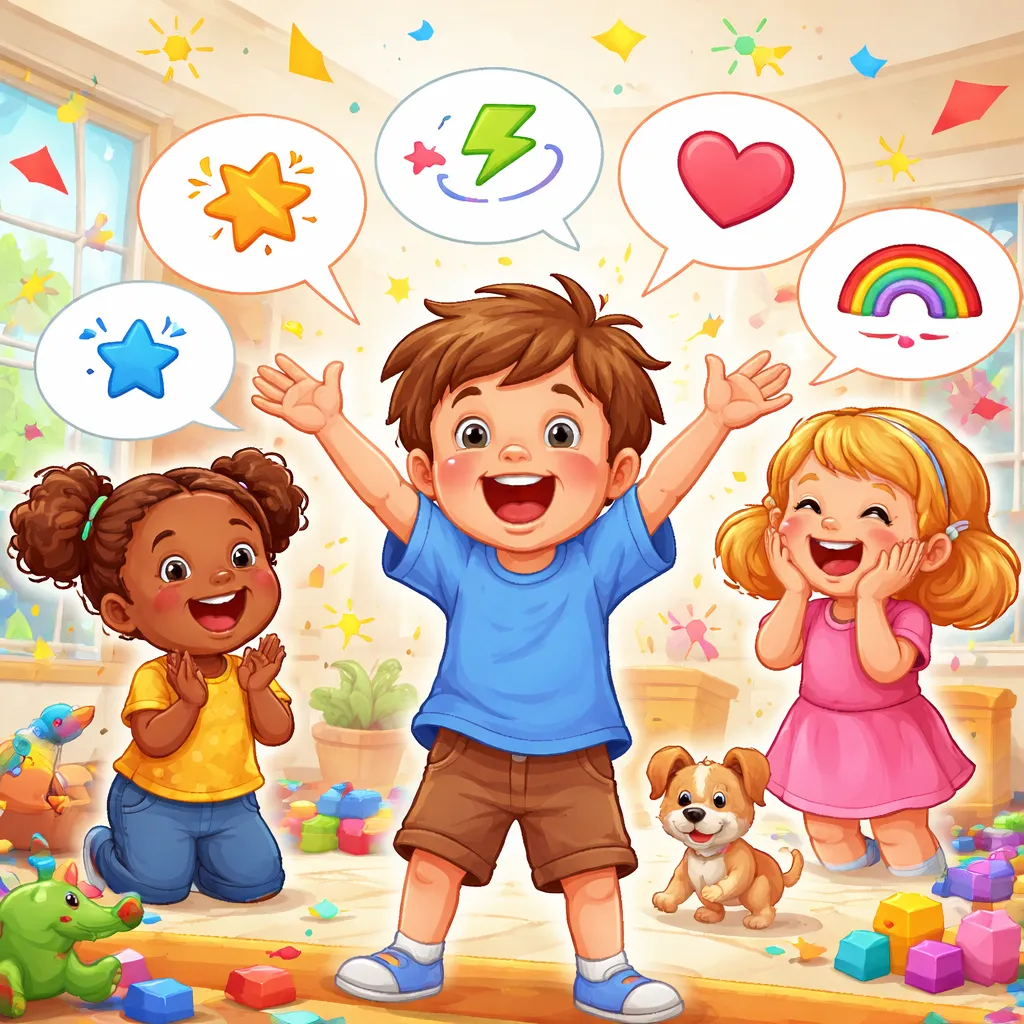

Children feel things deeply. When they are excited, they cannot hide it. When they are surprised, their faces light up. Exclamatory sentences are the words that match these big feelings. They let children shout for joy, express wonder, and share their strongest emotions. For a six-year-old, mastering exclamatory sentences helps them express their feelings fully and connect with others through shared excitement. This guide will help you explore the 70 most common exclamatory sentence for 6-year-old learners in ways that feel natural and joyful for both you and your child.
What Is an Exclamatory Sentence? An exclamatory sentence expresses strong feeling or excitement. It ends with an exclamation point. Its job is to show emotion rather than just state facts. "I am so excited!" "What a beautiful day!" "That is amazing!" "Look at that huge truck!" These sentences all share one thing: they convey strong feelings. They are the sentences that add emotion and energy to our communication.
Meaning and Explanation Think of exclamatory sentences as the shouting sentences. They are the ones we use when we feel something strongly. For a six-year-old, we can explain that these are the sentences that show our feelings. When something wonderful happens, we use an exclamation. "We are going to the zoo!" When something surprises us, we use an exclamation. "Look at that!" When something scares us, we might shout "Watch out!" Exclamations help us share our feelings with others.
Exclamations With What and How Some exclamatory sentences begin with "what" or "how" to show strong feeling. These follow special patterns. "What a beautiful day!" "What a big dog!" "What a delicious cookie!" "How wonderful!" "How exciting!" "How kind of you!" These sentences do not ask questions even though they begin with question words. They express admiration, surprise, or strong feeling about something.
Exclamations as Statements Many exclamatory sentences are simply strong statements. They could be declarative sentences with a period, but the exclamation point shows the speaker feels strongly. "I love this!" instead of "I love this." "That is amazing!" instead of "That is amazing." "We won the game!" instead of "We won the game." The words are the same, but the exclamation point and the excited tone of voice change the meaning completely.
Daily Life Examples Exclamatory sentences burst out of children all day long. In the morning, they might shout "I am awake!" or "Look at the sun!" During play, they yell "I did it!" "That was close!" "Watch me jump!" When something exciting happens, they scream "Yes!" "We are going to the park!" "This is the best day ever!" When they see something amazing, they gasp "Wow!" "Look at that!" "That is so cool!" Each exclamation shares their emotional experience with the world.
Exclamations of Joy Children use exclamatory sentences most often to express happiness and excitement. "I love this game!" "This is so much fun!" "We are going to the beach!" "I got a new toy!" "You are my best friend!" These joyful exclamations let children share their positive feelings and spread happiness to others. They invite others to share in their excitement and celebrate with them.
Exclamations of Surprise Surprise also brings out exclamatory sentences in children. "Wow, look at that!" "I can't believe it!" "You scared me!" "Where did that come from?" "That is so unexpected!" These exclamations help children process unexpected events and share their surprise with others. They show that something has caught their attention and made an impression.
Learning Tips for Parents The best way to help your child master exclamatory sentences is to use them yourself with genuine feeling. When you are excited, show it in your words and tone. "I am so happy we are spending time together!" "Look at that beautiful rainbow!" "You did such a great job!" Your child learns that exclamations are for real feelings, not just grammar exercises.
When your child uses exclamations, match their enthusiasm. If they shout "Look at this!" come and look with genuine interest. "Wow, that is amazing!" This validates their feelings and shows them that exclamations are effective communication tools.
Educational Games Games make learning about exclamatory sentences playful and engaging. One simple game is "Feelings Charades." Take turns acting out different emotions without words. The other person guesses the feeling and then says an exclamatory sentence that matches it. For happy, they might say "I am so happy!" For surprised, they might say "Oh my goodness!" This game connects exclamations with real emotions.
Another favorite is "Exclamation Hunt." Read a book together and see how many exclamatory sentences you can find. Every time you find one, shout it out together with lots of feeling. "Let me see! Wow, that bear is huge!" This game builds recognition while being active and fun.
Using the 70 most common exclamatory sentence for 6-year-old learners, you can create simple "Exclamation Cards." Write each exclamation on an index card with an exclamation point. Take turns drawing cards and saying them with as much feeling as possible. Practice different ways of saying the same exclamation. Say it happy, say it surprised, say it excited. This builds expressive range while practicing exclamatory sentences.
The "What Happened?" game helps children understand what situations call for exclamations. Describe a situation and have your child respond with an appropriate exclamation. "You open a present and it is exactly what you wanted!" "I love it! This is perfect!" "You see a huge elephant at the zoo!" "Wow, look at that enormous elephant!" This game connects exclamations with real-life contexts.
The "Exclamation Story" game builds narrative skills while practicing exclamatory sentences. Start a story and encourage your child to add exclamations at exciting moments. "The children went to the park. Suddenly, they saw..." "A giant slide!" "Wow, that looks fun!" "They ran to the slide and climbed to the top. Then..." "Wheee, here I come!" This back-and-forth storytelling makes exclamations a natural part of narrative.
Movement games work wonderfully with exclamations. Call out an exclamation and have your child act out the feeling. "I am so excited!" Your child jumps up and down with joy. "Watch out!" Your child ducks or covers their head. "I did it!" Your child pumps their fist in victory. This kinesthetic learning connects exclamations with physical expression.
The "Exclamation Mirror" game helps children practice matching tone with feeling. Say an exclamation with a certain feeling and have your child repeat it back with the same feeling. Then switch roles. This builds awareness of how tone conveys meaning in exclamatory sentences.
Remember that exclamatory sentences are the words children use when feelings are too big for ordinary statements. Your child's exclamations are not just words but expressions of their inner emotional life. The goal is not to control or limit them but to help them express feelings appropriately and understand when exclamations are welcome.
Your patience and encouragement make all the difference. When your child uses exclamations, celebrate their emotional expression. When they use exclamations at inappropriate times, gently explain why a quieter voice might work better. Emotional and language growth happen best in an atmosphere of love and acceptance, where all feelings are welcome and learning to express them appropriately is a shared journey. With your support, your child will continue to use exclamatory sentences to share their joys, surprises, and strong feelings with the people they love.