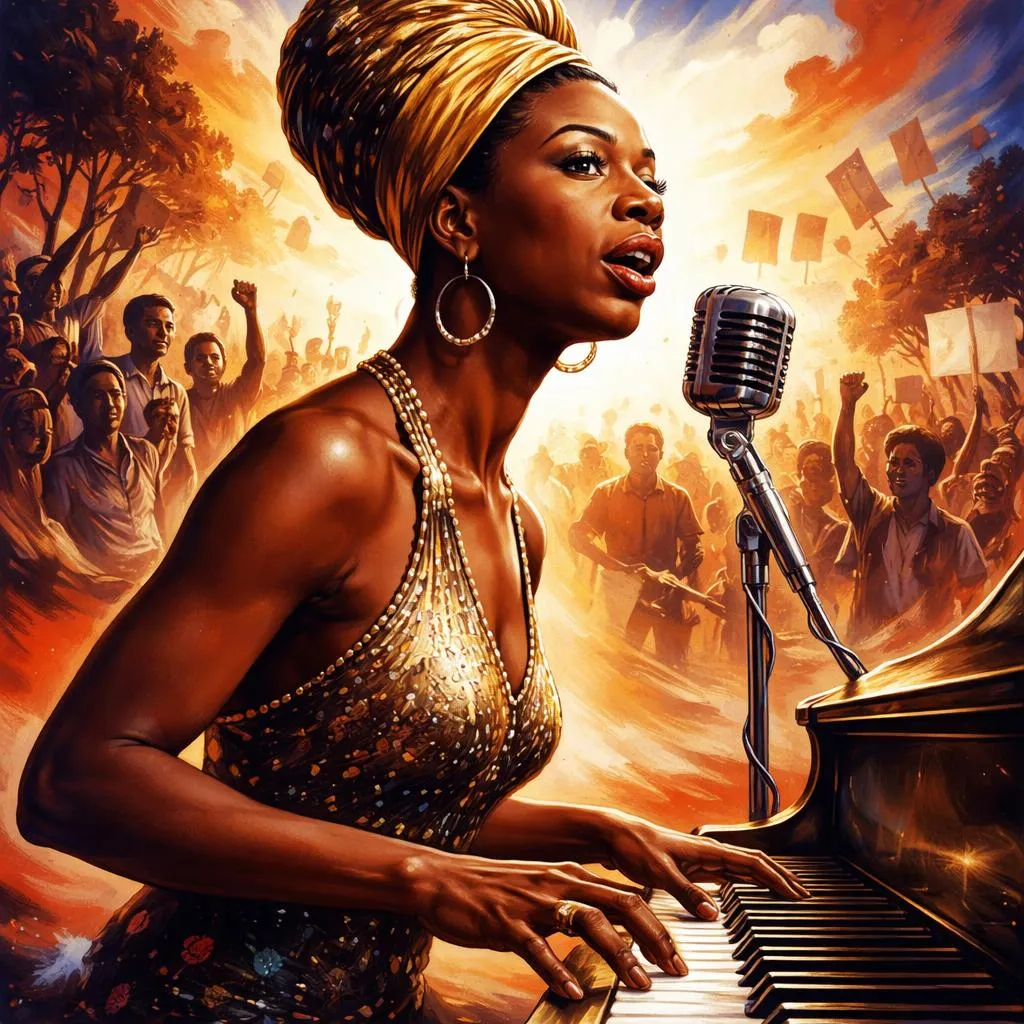

Have you ever felt so angry about something wrong that you wanted to shout? Have you ever used your talent to speak up for what is right? Nina Simone did both. She was a brilliant piano player and a powerful singer. This Celebrity Story: Nina Simone will introduce you to a woman who turned her pain into protest songs. She could have been a classical concert pianist. Instead, she became the voice of the Civil Rights Movement. Her music was fierce. Her message was clear. Freedom matters.
Let us meet the High Priestess of Soul. That was her nickname. Her life was full of music and courage.
Who Is This Celebrity?
Nina Simone was a singer, songwriter, and pianist. She lived from 1933 to 2003. She made music that mixed jazz, blues, classical, and gospel. Nobody sounded like her. Her voice could be soft and sweet. Then it could become loud and angry. She used both sides to tell the truth.
Why is she famous? She wrote and sang protest songs during the Civil Rights Movement. Songs like "Mississippi Goddam" and "To Be Young, Gifted and Black" became anthems for equality. She did not just entertain people. She woke them up. She demanded change. Her music helped fuel a movement. Today, she is remembered as both a genius musician and a fearless activist.
Early Life and Childhood
Nina Simone was born in North Carolina. Her real name was Eunice Waymon. She grew up in a small town called Tryon. Her family was poor but loving. Her mother was a minister. Her father worked many jobs.
Music came to her very early. She started playing piano when she was only three years old. She learned by ear. She listened to church hymns. Then she played them perfectly. Neighbors and family members were shocked. They said she had a gift from God.
She played piano for her mother's church services. The whole town came to hear the little girl play. She dreamed of becoming the first great Black classical pianist. She loved the music of Bach and Beethoven. Classical music felt pure and beautiful to her.
But life was not just music. She also saw racism for the first time. When she gave a piano recital as a child, her parents had to sit in the back. White people sat in the front. Young Eunice refused to play until her parents moved forward. That was her first act of protest.
Education and Learning Journey
Nina Simone was a brilliant student. She studied hard in school. Her teachers saw her talent. They raised money to send her to a famous music school. She attended the Juilliard School in New York City. That is one of the best music schools in the world. She studied classical piano there.
She practiced for hours every day. She dreamed of becoming a concert pianist. But she ran out of money. She could not afford to keep studying. She needed to work.
So she took a job playing piano at a nightclub. The owner said she had to sing too. She was shy about her voice. But she needed the job. She started singing. The audience loved her. That is how Nina Simone the singer was born. She changed her name to hide this work from her religious mother. Her mother thought she was still playing classical piano.
She never stopped learning. She taught herself to arrange songs. She studied other musicians. She combined everything she knew into one unique sound.
How Did They Become Successful?
Nina Simone became successful in an unusual way. She did not chase fame. Fame came to her because she was so unique.
In the late 1950s, she recorded a song called "I Loves You, Porgy." It became a top 20 hit in America. Suddenly, she was famous. She started releasing albums. She toured the country. Her shows were electrifying. She would play classical piano. Then she would jump into a blues song. Then she would sing a protest anthem.
But her real success came when she found her purpose. In 1963, something terrible happened. A bomb exploded in a church in Birmingham, Alabama. Four little girls died. The bomb was set by racists who hated Black people. Nina was furious.
She wrote a song called "Mississippi Goddam" in one hour. The song was angry. It used curse words. It said that change was taking too long. Radio stations banned it. But Black audiences loved it. She had found her voice. She was no longer just an entertainer. She was a revolutionary.
Big Ideas and Achievements
Nina Simone's biggest idea was that an artist cannot stay silent. She believed that musicians must speak about injustice. She once said, "An artist's duty is to reflect the times."
Her greatest achievement was her protest music. "Mississippi Goddam" became a Civil Rights anthem. "To Be Young, Gifted and Black" inspired a generation. She wrote that song for her friend, the playwright Lorraine Hansberry. It told young Black people to be proud of who they were.
She also performed at major Civil Rights events. She sang at the Selma to Montgomery marches. She sang for Dr. Martin Luther King Jr. She gave money to the movement. She risked her career for justice.
Her classical training never left her. She recorded beautiful versions of Bach and other classical pieces. She showed that classical music and Black music belonged together. She broke down walls between musical worlds.
Challenges and Difficult Times
Nina Simone faced many challenges. First, she faced racism her whole life. Record companies tried to control her. They wanted her to sound more pop and less political. She refused. She lost contracts because of that.
Second, she had a difficult marriage. Her husband was also her manager. He was controlling and sometimes hurt her. She eventually left him. That took courage.
Third, she had mental health struggles. She experienced mood swings and depression. Sometimes she could not perform for months. She felt the weight of the world on her shoulders.
Fourth, she left America in the 1970s. She was tired of the racism. She moved to Barbados, then to Africa, then to Europe. She lived in many countries. She felt like an exile. But she never stopped making music. She performed until the end of her life.
Fun Facts About the Celebrity
Nina Simone was a very private person. She did not like interviews. She preferred to let her music speak for her.
Another fun fact: She almost became a classical pianist. She applied to the Curtis Institute of Music in Philadelphia. They rejected her. She believed it was because of her race. Years later, the school gave her an honorary degree.
She had a very deep voice. But when she spoke, her voice was soft and quiet. Only on stage did she become loud.
She loved cooking. She made Southern food like fried chicken and collard greens. She cooked for her friends and band members.
One more fact: Her music has been used in many movies. The film "The Pawnbroker" used her song "Don't Let Me Be Misunderstood." A newer film called "What Happened, Miss Simone?" told her whole life story.
Why Is This Celebrity Important Today?
Nina Simone is important because she showed that art and activism belong together. Today, many musicians sing about politics. They stand on her shoulders. Artists like Beyoncé, Kendrick Lamar, and Alicia Keys have all named Nina Simone as an inspiration.
Her songs are still played at protests. When people march for Black lives, they sing "Mississippi Goddam." When people celebrate Black pride, they sing "To Be Young, Gifted and Black." Her music is not old. It is still alive.
She also inspires young musicians to be themselves. You do not have to fit into one category. Nina was classical, jazz, blues, and soul all at once. You can be many things too.
Parents can use her story to teach children about standing up for what is right. Her life proves that one voice can make a difference.
What Can Kids Learn from This Story?
Kids can learn many lessons from Nina Simone. First, use your gifts to help others. Nina had an amazing musical gift. She could have just made pretty music. Instead, she used her gift to fight for freedom. What are you good at? How can your talent make the world better?
Second, do not let anyone put you in a box. People wanted Nina to be just a jazz singer. She refused. She played classical, blues, and pop too. You do not have to pick one thing. Be a singer and a scientist. Be a dancer and a writer. Be everything at once.
Third, it is okay to be angry about unfair things. Nina was angry about racism. She turned that anger into powerful art. If you see something wrong, you can feel mad. Then do something positive with that feeling. Draw a picture. Write a letter. Talk to an adult you trust.
Finally, keep learning your whole life. Nina studied music until the end. She never stopped growing. You can always learn something new. Always get better.
Quick Quiz or Practice Time
Let us see what you learned from this Celebrity Story: Nina Simone. Answer these questions with a parent or by yourself.
What was Nina Simone's real first name?
What famous protest song did she write after the Birmingham church bombing?
What kind of music did she first study at Juilliard?
Who was the famous Civil Rights leader she sang for?
What is one challenge Nina faced in her life?
Here is a fun activity. Listen to Nina Simone's song "Feeling Good." Pay attention to how her voice changes. She starts soft. Then she grows strong and happy. After listening, make a list of three things that make you feel good. Share your list with your family.
Another activity. Draw a picture of Nina Simone sitting at a piano. Give her a fierce expression. Write one of her song titles below the picture. Choose "Mississippi Goddam" or "To Be Young, Gifted and Black." Talk with your parent about what that title means.
Nina Simone lived a complicated life. She was a genius. She was a fighter. She was sometimes sad and sometimes angry. But she never stopped creating. She never stopped speaking the truth. Her music reminds us that our voices have power. Even a single voice can start a revolution. Next time you feel like something is unfair, think of Nina. Sit down at your own piano. Or pick up your own pen. Sing your own song. Change your own corner of the world. That is the lasting gift of this celebrity story.